How to Perform Effective Competitor Analysis SEO in 2026

Ranking on search engines is not just about optimizing your own website. The real challenge businesses face today is understanding why competitors are outranking them and how to close that gap. Many struggle with declining traffic, missed keyword opportunities, and unclear SEO direction, all of which stem from a lack of proper competitor analysis and SEO strategy.
Competitor analysis SEO is the process of identifying competitors, studying their SEO strategies, and using that data to improve your own rankings. It typically involves identifying competitors, analyzing keywords, evaluating backlinks, and uncovering content gaps, steps discussed in detail below.
This post explains how businesses can perform competitor research, use the right competitor analysis tools, and turn insights into actionable growth strategies.
What Is an SEO Competitor Analysis?
An SEO competitor analysis is the process of evaluating competing websites to understand their strengths, weaknesses, and underlying strategies in search engine rankings. Instead of looking at your website in isolation, this approach compares your performance against others targeting the same keywords and audience. The goal is simple: identify gaps, uncover opportunities, and position your website to outperform competitors in search results.
In practical terms, it means studying how other websites succeed on search engines, what content they publish, how they structure their pages, and how they attract traffic. Since search rankings are highly competitive, analyzing competitors gives you a clearer picture of what is already working in your niche and what it takes to compete effectively.
Instead of guessing what works, businesses rely on competitor website analyzer data and structured insights to uncover critical SEO elements such as:
- Keywords competitors rank for and how they target search intent
- Backlink sources that strengthen their authority
- SEO content strategies that drive engagement and rankings
- Technical SEO performance, like site speed, structure, and indexing
This type of competitor seo analysis helps brands identify gaps and build a smarter SEO roadmap. It also highlights what Google already rewards in your niche, giving you a clear direction.
How to Identify Your SEO Competitors for Digital Growth
Identifying competitors is the foundation of effective seo competitor research. Many businesses assume competitors are only those selling similar products, but in SEO, competitors are any websites ranking for your target keywords, even if they don’t sell the same product.
This is where many strategies fail. If you only track business rivals, you miss blogs, media sites, and directories that are actually taking your traffic. A structured competitor analysis seo approach ensures you focus on the right players.
1. Search Your Primary Keywords
The simplest and most effective way to begin is by searching your core keywords on Google. This gives you a real-time view of who is already winning in search results.
For example, imagine you run a digital marketing agency targeting the keyword “SEO services for small businesses.” When you search this term, you might see:
- Agency websites
- Blog articles from marketing platforms
- Listicles like “Top SEO Agencies”
Even if those blogs don’t offer services, they are still your seo competitors because they attract the same audience.
Now take another keyword like “how to improve website ranking.” You may notice completely different competitors, such as educational blogs or SaaS platforms, ranking instead of agencies.
This clearly shows that your competitors change based on search intent, not just industry.
A practical approach is to create a simple spreadsheet and list the top 10 results for each keyword. Over time, patterns will start to appear.
2. Analyze SERP Consistency
Once you’ve gathered keyword data, the next step is to identify consistency. A single ranking doesn’t mean much, but repeated appearances across multiple keywords indicate strong competitors.
For instance, if you track five keywords like:
- “SEO audit service”
- “technical SEO checklist”
- “on-page SEO guide”
- “SEO competitor analysis”
- “keyword research tips”
And you notice the same domains appearing again and again, those are your primary competitors in competitor site analysis.
Let’s say:
- Website A appears in 4 out of 5 searches
- Website B appears in 3 out of 5
- Website C appears only once
Website A is clearly a stronger SEO competitor because it dominates multiple keyword spaces.
This method works because Google consistently rewards authoritative and relevant sites across related topics. Consistency is what separates real competitors from one-time rankings.
3. Use Competitor Analysis Tools
Manual research gives clarity, but tools take your competitor tracking to another level by uncovering data you can’t easily see.
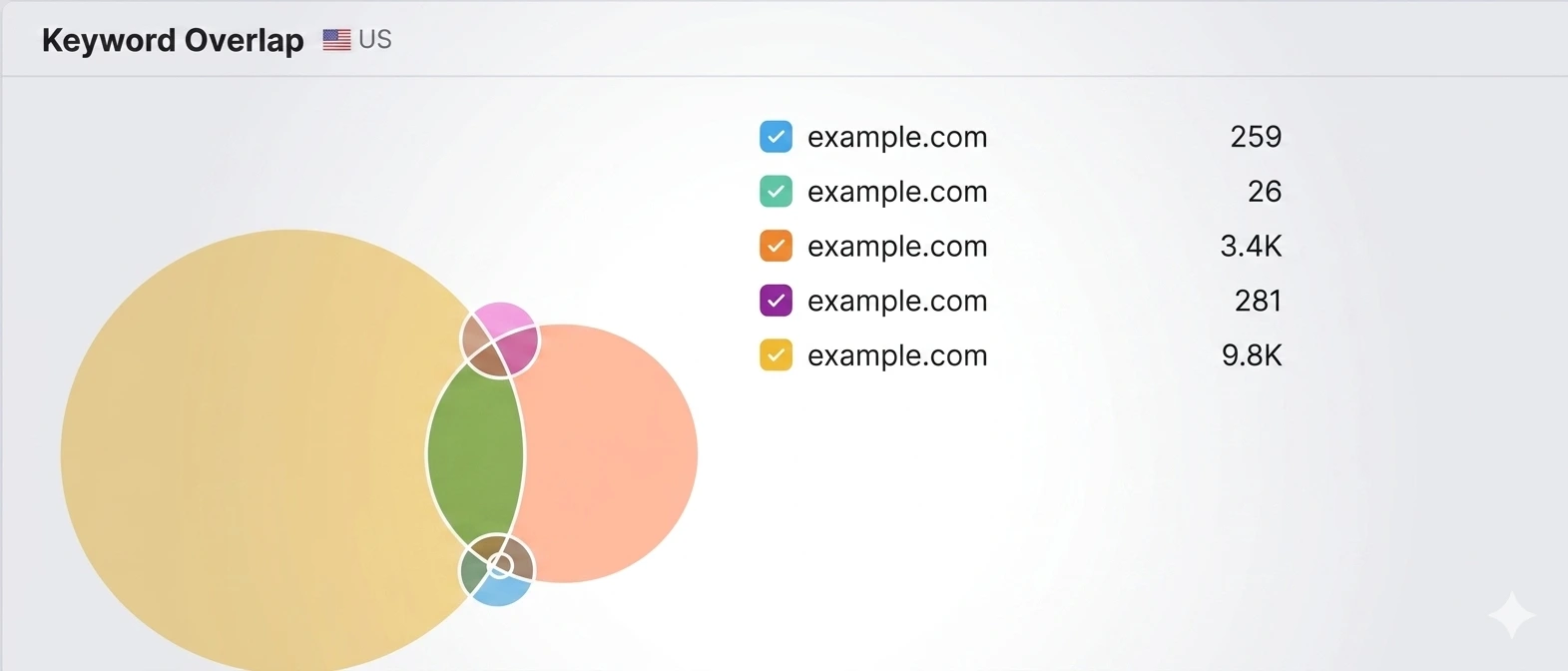
Platforms like Ahrefs or SEMrush allow you to input your domain and instantly generate a list of websites that rank for the same keywords. These tools highlight:
- Keyword overlap
- Traffic estimates
- Ranking positions
For example, if you run an e-commerce store selling fitness gear, a tool might reveal that:
- A fitness blog ranks for 500 of the same keywords
- A marketplace ranks for 300
- A niche competitor ranks for 150
This insight changes your perspective. You might realize that a blog is your biggest SEO competitor, not another store.
Tools also uncover hidden competitors you might never find manually, especially in large niches. Instead of guessing, you now rely on data-driven competitor website analyzer insights.
4. Segment Competitors
Not all competitors should be treated the same. Segmenting them helps you build a smarter and more targeted competitor seo analysis strategy.
There are two main categories:
Direct competitors are businesses offering the same product or service. For example, if you sell handmade candles, another candle store is your direct competitor.
Indirect competitors include blogs, media sites, or marketplaces targeting the same keywords. For the keyword “best scented candles,” you might compete with lifestyle blogs or review websites instead of actual sellers.
A good example: If you run a SaaS tool for email marketing, your competitors might include:
- Direct: Other email marketing platforms
- Indirect: Blogs ranking for “email marketing tips.”
This distinction is crucial because the strategy to outrank each is different. You don’t compete with a blog using product pages; you compete with better content.
Segmenting competitors ensures your seo competitor research remains focused and actionable.
5. Focus on Top 3–5 Competitors
One of the most common mistakes in competitor analysis seo is analyzing too many competitors. While it may seem helpful, it actually creates confusion and slows down execution.
Instead, narrow your focus to the top 3–5 competitors that:
- Appear consistently in SERPs
- Target similar keywords
- Have achievable authority levels
For example, if you identify 12 competitors but only 4 dominate most keyword results, those 4 should be your priority.
Let’s say you’re running a local service business. You might find:
- Large national websites ranking high (hard to beat quickly)
- Mid-sized competitors ranking consistently (ideal targets)
- Small websites ranking occasionally (low priority)
Focusing on mid-sized competitors gives you the best balance between opportunity and feasibility.
Analyzing too many sites often leads to data overload without a clear direction. Keeping your list tight ensures every insight translates into action.
For more useful insights, explore our other blog post, “Competitor Keyword Research: The Smart Way to Win SEO”. Discover more to deepen your understanding.
Components of Competitor Analysis SEO for Search Rankings
A strong competitor analysis SEO strategy is not limited to keywords; it is a multi-layered process that uncovers how competitors rank, attract traffic, and convert users. Each component below plays a direct role in building a data-driven SEO strategy that delivers measurable results.
1. Keyword Analysis & Gap Identification
Keyword analysis is the foundation of any seo competitor research. It involves:
- Identifying keywords competitors rank for
- Finding keyword gaps (terms you are missing)
- Evaluating search intent and difficulty
This process reveals high-value opportunities where you can compete or outperform. Competitor keyword data directly shows what search engines consider relevant in your niche.
2. Content Strategy & Topical Authority
Content analysis goes beyond word count. It focuses on how competitors structure and deliver value. Key elements:
- Content depth and quality
- Topic clusters and internal linking
- Content formats (blogs, landing pages, guides)
- Use of semantic keywords
Analyzing competitor content helps you build more comprehensive, intent-driven pages instead of generic posts.
3. Backlink Profile Analysis
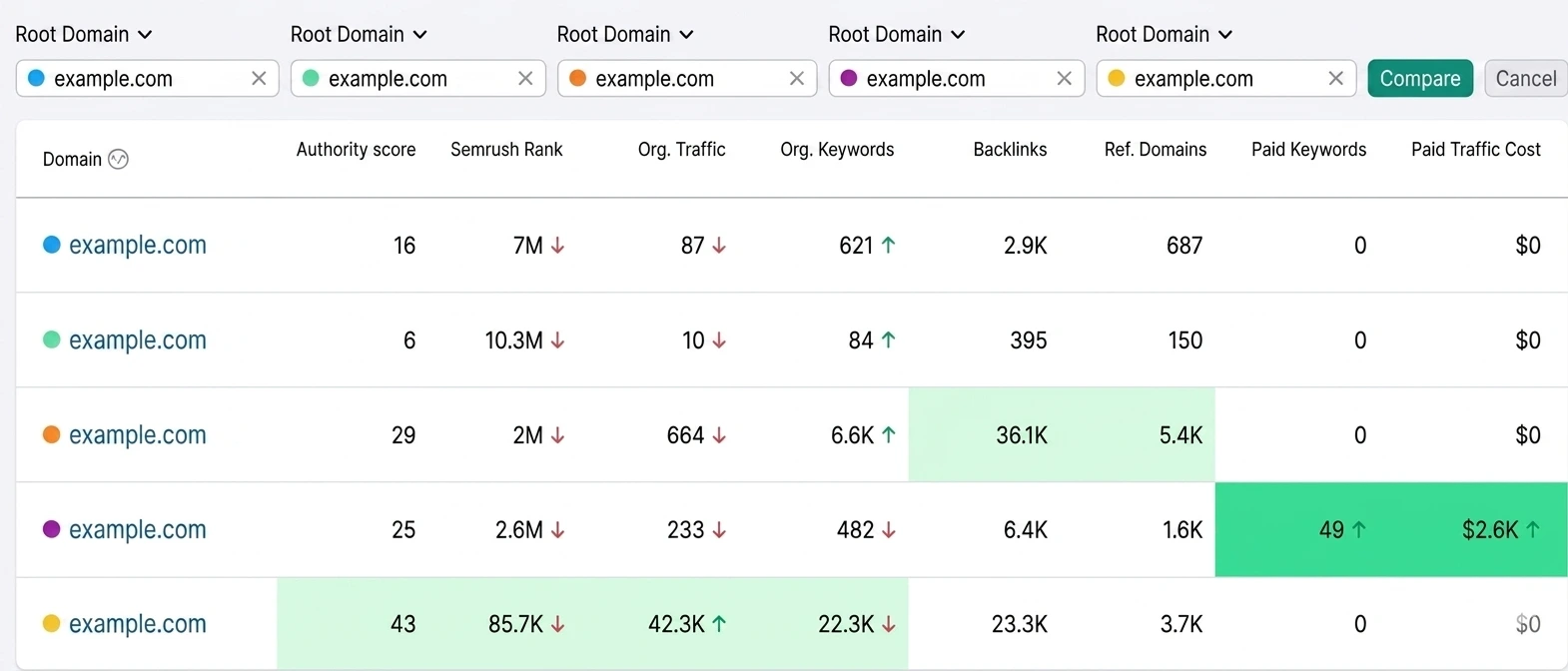
Backlinks remain one of the strongest ranking signals in competitor seo analysis.
You should analyze:
- Number of referring domains
- Authority of linking websites
- Anchor text distribution
- Link-building strategies
This reveals where competitors are gaining authority and where you can replicate or outperform their link sources.
4. Technical SEO Benchmarking Competitor Analysis SEO
Technical performance determines whether your site can compete effectively. Focus areas include:
- Page speed and Core Web Vitals
- Mobile responsiveness
- Crawlability and indexing
- Site architecture
Competitors with better technical optimization often rank higher due to improved usability and search engine accessibility.
5. On-Page SEO Comparison
On-page SEO ensures your pages are aligned with ranking factors. Analyze competitor pages for:
- Title tags and meta descriptions
- Keyword placement and density
- URL structure
- Heading hierarchy
This helps refine your on-page optimization strategy to match or exceed top-ranking pages.
6. User Experience (UX) & Engagement Signals
Search engines prioritize user satisfaction. Evaluate:
- Page layout and readability
- Navigation structure
- Bounce rate indicators
- Content accessibility
Websites with strong UX tend to rank higher because they deliver better user interaction and satisfaction.
7. Competitor Traffic & Visibility Analysis
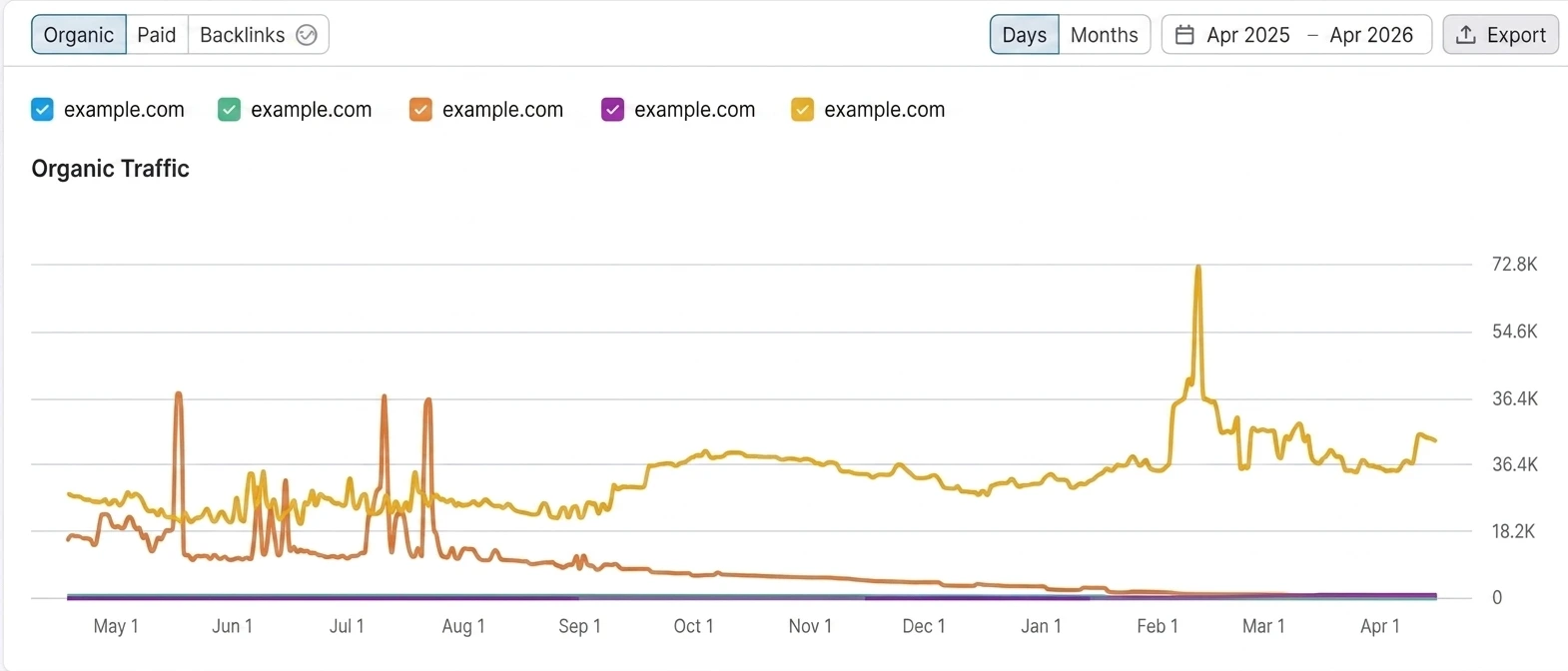
Understanding how competitors gain traffic helps refine your strategy. Track:
- Organic traffic sources
- High-performing pages
- Share of voice in SERPs
This allows you to identify content opportunities and traffic gaps.
8. Off-Page & Brand Authority Signals
Beyond backlinks, competitors build authority through:
- Brand mentions
- Social signals
- PR coverage
These signals contribute to overall domain trust and visibility.
9. Competitor Tracking & Ongoing Monitoring
SEO is dynamic, so competitor tracking is essential. Monitor:
- Ranking fluctuations
- New content updates
- Backlink growth
- Strategy shifts
Regular tracking ensures you stay competitive and adapt quickly.
10. SERP Feature & Search Intent Analysis
Modern SEO includes analyzing how competitors appear in SERP features. Look at:
- Featured snippets
- FAQs and People Also Ask
- Video or image results
This helps you optimize content for enhanced visibility beyond traditional rankings.
Commonly Used Competitor Analysis SEO Tools
| Tool Type | Tools | Key Use |
|---|---|---|
| All-in-One SEO Tools | SEMrush, Ahrefs | Keywords, backlinks, full analysis |
| Traffic Analysis Tools | Similarweb | Traffic sources, audience insights |
| Keyword Research Tools | SpyFu, Serpstat | Keyword gaps, ranking data |
| Content Analysis Tools | BuzzSumo | Top content, engagement trends |
| Technical SEO Tools | Screaming Frog | Site audit, technical issues |
| Free Tools | Google Search, GSC | Basic competitor research |
The right competitor analysis tools are critical for executing a successful competitor analysis SEO strategy. The best tools don’t just provide raw data; they help you uncover keyword gaps, backlink opportunities, content strategies, and performance benchmarks.
Below is a structured breakdown of the most widely used tools, categorized based on their core function in competitor seo analysis.
For more useful insights, explore our other blog post, “SEO Audit Service: Key to Unlocking Your Website’s Full Potential”. Discover more to deepen your understanding.
1. All-in-One SEO Competitor Analysis Platforms
These tools provide a complete ecosystem for competitor research, keyword tracking, and site analysis.
- SEMrush: One of the most powerful platforms for seo competitor research, offering keyword overlap analysis, traffic comparison, and backlink tracking. It helps identify competitors and monitor ranking changes in real time.
- Ahrefs: Known for its massive backlink database and deep competitor insights. It allows you to analyze competitor keywords, top-performing pages, and link-building strategies in detail.
- Moz Pro: Popular for domain authority metrics and backlink analysis. It helps businesses evaluate competitor strength and benchmark performance.
Best For: Businesses needing a complete competitor website analyzer with actionable insights.
2. Traffic & Market Intelligence Tools
These tools focus on traffic behavior, audience insights, and competitive benchmarking.
- Similarweb: Provides detailed insights into competitor traffic sources, visitor behavior, and market share comparisons. It also highlights keyword opportunities and audience trends.
- SparkToro: Helps understand where competitor audiences spend time online and what influences their decisions.
Best For: Understanding where competitor traffic comes from and how users interact with their content.
3. Keyword & PPC Competitor Research Tools
These tools are ideal for uncovering keyword strategies and paid search insights.
- SpyFu: Specializes in competitor keyword tracking, historical ranking data, and ad strategy insights. It reveals what keywords competitors have ranked for over time.
- Serpstat: Offers keyword research, rank tracking, and competitor analysis features, helping identify new keyword opportunities and search trends.
Best For: Businesses focusing on keyword gaps, PPC campaigns, and ranking history.
4. Content & Engagement Analysis Tools
These tools analyze what type of content performs best for competitors.
BuzzSumo: Identifies trending content, top-performing topics, and competitor engagement across platforms.
Best For: Creating high-performing, shareable, and SEO-optimized content strategies.
5. Technical SEO & Site Audit Tools
These tools help uncover technical gaps in competitor websites.
- Screaming Frog SEO Spider: A powerful crawler used for analyzing site structure, broken links, and technical SEO issues.
- Seobility: Provides site audits, backlink tracking, and competitor monitoring in one platform.
Best For: Improving technical performance and identifying SEO weaknesses.
6. Free Tools for Competitor Site Analysis
Not every business needs premium tools. These free options support basic competitor site analysis.
- Google Search: Manual SERP analysis helps identify competitors and ranking patterns.
- Google Search Console: Provides insights into your performance compared to competitors.
- Google PageSpeed Insights: Helps compare site speed and performance metrics.
Best For: Startups and small businesses beginning with competitor tracking.
How to Choose the Right Tool for Your Business
Not every tool fits every business model. The right choice depends on your goals:
- Full SEO strategy: Use SEMrush or Ahrefs
- Backlink-focused analysis: Choose Ahrefs or Moz
- Traffic insights: Use Similarweb
- Content strategy: Use BuzzSumo
- Technical audits: Use Screaming Frog
A strong competitor website analyzer stack often combines multiple tools to cover all aspects of SEO.

What to Do Next with Your Competitive SEO Analytics
Completing a competitor analysis SEO is only valuable if you convert insights into action. Raw data, keywords, backlinks, and rankings mean little unless it directly shapes your SEO strategy, content decisions, and growth roadmap.
1. Keyword Strategy Implementation
Use competitor keyword gaps to build a targeted keyword strategy focusing on high intent terms, long tail queries, and search relevance, improving visibility and driving qualified organic traffic growth consistently fast.
2. Content Optimization
Optimize existing content based on competitor analysis by improving structure, adding semantic keywords, enhancing readability, and aligning search intent to outperform competing pages in search engine rankings now strongly.
3. Technical SEO Fixes
Fix technical SEO issues identified from competitor benchmarking, including page speed, mobile usability, indexing errors, crawlability problems, and Core Web Vitals improvements for better search performance and rankings, overall visibility.
4. Backlink Building
Build high-quality backlinks by analyzing competitor link sources, identifying outreach opportunities, guest posting domains, and replicating strong, authoritative links to improve domain authority and search rankings consistently over time.
5. Competitor Tracking & Iteration
Continuously monitor competitor rankings, content updates, backlink growth, and strategy shifts using SEO tools to refine your approach and maintain long-term visibility in search results for sustained SEO success.
Conclusion
SEO success is rarely accidental. Businesses that consistently rank on top are those that study competitors, adapt quickly, and execute strategically.
A structured competitor analysis seo approach helps you:
- Identify ranking opportunities
- Avoid wasted effort
- Build data-driven strategies
Instead of competing blindly, you gain clarity on what works, what doesn’t, and where to focus next.
FAQs
How do I perform an SEO competitor analysis?
Identify competitors, analyze keywords, study content structure, evaluate backlinks, check technical SEO, and use competitor analysis tools to find gaps and improve rankings strategically.
How often should I conduct SEO competitor analysis?
Perform SEO competitor analysis every three to six months, or monthly in competitive niches, and also after algorithm updates or major ranking changes occur.
What metrics should I track when analyzing competitors?
Track keyword rankings, organic traffic, backlink profiles, domain authority, page speed, content performance, SERP visibility, and engagement signals to measure competitor SEO strength accurately.