10 Content Outreach Link Building Tips for SEO Success 2026
In 2026, content outreach link building has become one of the most profitable SEO investments for businesses aiming to grow online visibility. Brands that focus on earning quality backlinks through structured outreach strategies often see higher organic rankings, stronger authority signals, and sustainable traffic growth. Unlike outdated tactics that rely on mass directory submissions or random link placements, modern outreach focuses on manual outreach campaigns, niche relevance, and strategic relationship building.
From our experience working with European and Spanish market clients, structured outreach consistently improves backlink velocity and builds long-term brand trust. Businesses that adopt a scalable outreach framework benefit from editorial backlink placements, improved domain authority signals, and consistent inbound link growth systems.
What Makes Content Outreach Link Building So Critical for Modern SEO?
Content outreach link building involves connecting with bloggers, publishers, and website owners to secure contextual backlinks within relevant content. This proactive approach ensures that your brand earns links from credible sources rather than relying on passive discovery.
Search engines consider backlinks a major ranking factor, and outreach helps businesses gain high authority backlinks that improve visibility and credibility.
Traditional link schemes, such as bulk submissions or spam comments, can harm rankings and even lead to penalties. Instead, personalized outreach focused on editorial placements and contextual backlinks helps businesses attract targeted referral traffic and strengthen their SEO foundation.
For commercial brands, this strategy is not just about rankings. It directly influences lead generation, brand positioning, and long-term digital growth.
Top 10 SEO Link Building Hacks for Massive Success
Here are the best scalable link building strategies for the SEO growth of your business.
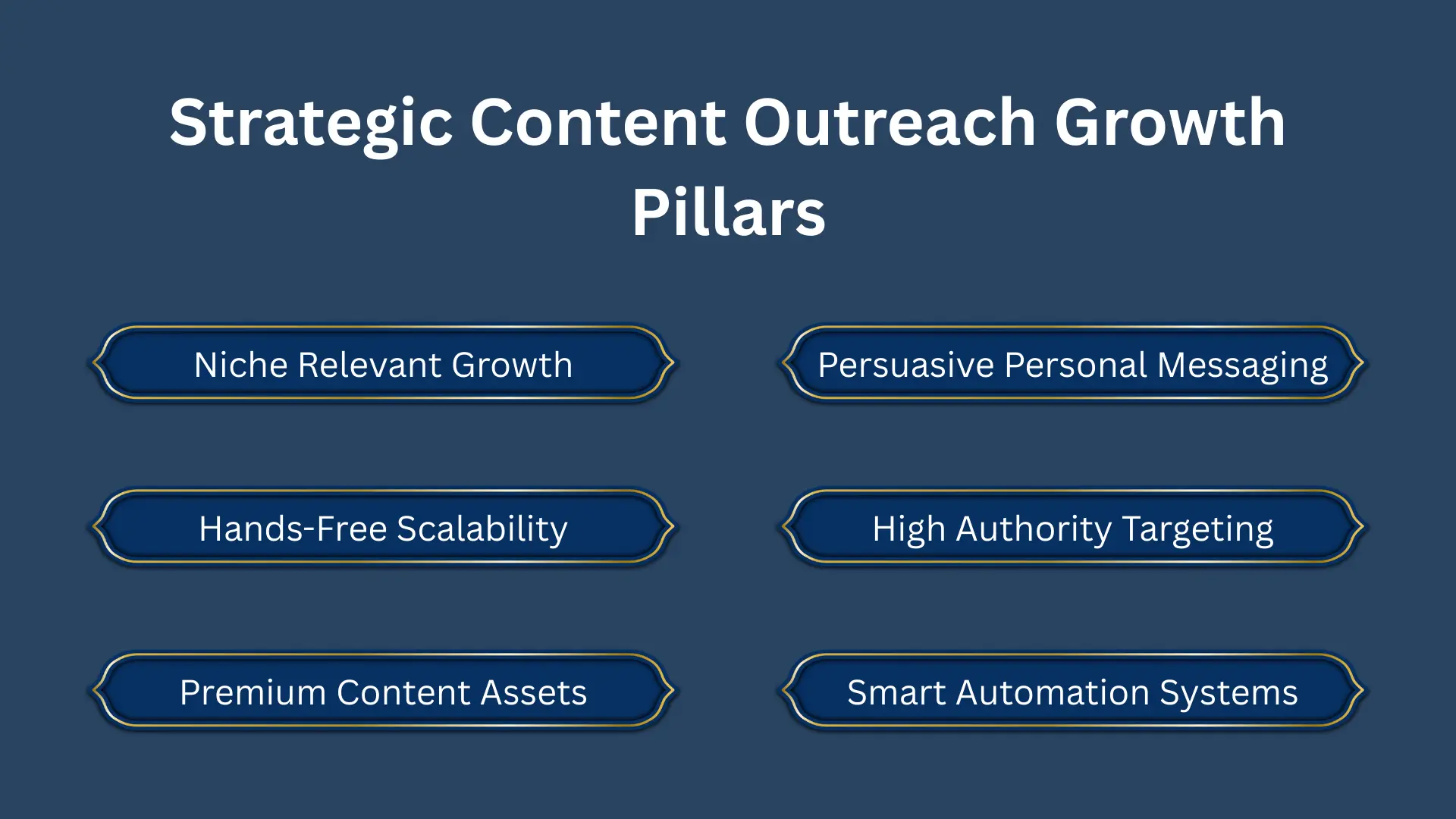
1: Prioritize Niche-Relevant Blogger Outreach
Relevance beats volume. A single link from a site that closely matches your industry carries more ranking weight than dozens of links from unrelated directories. Search engines assess backlinks based on topical alignment, audience intent, and content value, not just quantity.
A SaaS company featured on a marketing automation blog, for example, is far more likely to attract qualified leads than one listed on a generic lifestyle site. Consistent niche outreach also builds “topical clusters” groups of related backlinks that signal subject-matter authority and improve ranking stability over time.
Niche-focused outreach also lowers link volatility. Placements that sit within genuine editorial discussions tend to stay live longer than links dropped into low-effort directories, which means the SEO value compounds instead of fading after a few months.
2: Write Personalized Outreach Messages That Actually Convert
Generic, templated pitches get ignored. Editors and publishers receive dozens of outreach emails daily, so a message needs to demonstrate real value from the first line. Strong outreach emails typically include:
- A short, credible introduction that establishes relevance
- A specific reference to the publisher’s recent content or angle
- A clear explanation of how the piece benefits their readers
Shifting the framing from “requesting a backlink” to “offering a content partnership” consistently improves response and acceptance rates, while also laying the groundwork for repeat collaborations.
3. Consider Managed or Hands-Free Outreach Services for Scale
Manual outreach, prospecting, relationship building, negotiation, and follow-up, is time-intensive. As campaigns grow, many teams turn to managed link building outreach services to maintain consistency without pulling focus from core business priorities like product and customer growth.
A structured, professionally managed outreach process tends to produce more predictable results: steadier backlink velocity, better-qualified placements, and less internal resource drain.
This approach works especially well for fast-growing brands that need to scale link acquisition without hiring an in-house team. Outsourced partners typically bring established publisher relationships, proven vetting criteria, and reporting systems that make it easier to prove ROI to stakeholders.
4. Use Branded Anchor Text to Strengthen Trust Signals
Over-optimized, keyword-heavy anchor text can trigger algorithmic scrutiny. Branded anchors, using your company or product name, read as natural and authentic, both to readers and to search engines.
When a reputable publisher references your brand within genuine editorial content, it functions as a credibility endorsement rather than a promotional placement. Branded links also tend to earn higher click-through rates, since audiences perceive them as organic recommendations. Balancing branded anchors with contextual, informational anchors creates a healthier, more resilient link profile.
5. Target High-Trust Niches Like Finance for Authority Links
Certain industries- fintech, insurance technology, investment platforms, and SaaS analytics- sit on top of strict editorial standards, which makes their backlinks especially valuable. To succeed in high-trust niche outreach:
- Lead with original, data-backed insights
- Be transparent about compliance and regulatory context
- Prioritize education over promotion
Audiences on these platforms are actively researching before making decisions, so links here often carry stronger engagement value alongside stronger authority signals.
6. Prioritize High-Authority Publishers First
Prioritizing high authority publishers accelerates SEO impact by delivering stronger link equity and trust signals. Backlinks from reputable websites act as endorsements that influence search engines’ perception of your domain credibility.
High-authority publishers deliver the strongest link equity. A backlink from a trusted, high-traffic domain acts as a credibility endorsement in search engines’ eyes, not just a citation.
Before reaching out, vet each opportunity on:
- Domain authority and organic traffic
- Editorial standards (do they fact-check, cite sources, edit for quality?)
- Niche relevance to your business
This vetting step matters more than volume. One placement on a genuinely authoritative site outperforms ten placements on low-quality ones. It also builds momentum, once a brand earns visibility on a premium platform, later outreach to similar-tier publishers tends to see higher acceptance rates, since reputation signals carry over.
7. Diversify Anchor Text and Link Types
A natural backlink profile mixes branded, exact-match, partial-match, and generic anchors, along with a variety of link formats, guest posts, resource mentions, expert quotes, and data citations. Over-reliance on one anchor type or link format can look manipulative to search algorithms and increase the risk of a manual review or ranking penalty.
8. Optimize Outreach Content for AI Answer Engines (AEO & GEO)
Search behavior is expanding beyond traditional queries into AI-generated answers and conversational search. Content placed through outreach should be structured so it’s easy for both search crawlers and generative engines to extract, summarize, and cite:
- Use clear headings and direct, quotable statements
- Support claims with data and named sources
- Structure content so key facts appear early, not buried in the middle
Outreach placements that are AEO- and GEO-friendly increase the odds of being surfaced in AI-generated summaries, not just traditional search results. As more searchers rely on conversational tools for research, content that answers questions directly and cites credible sources gains an edge over content written purely for keyword rankings.
9. Build Relationships, Not Just One-Off Links
Most outreach fails from a lack of follow-through, not a lack of good pitches. A structured, multi-touch sequence consistently earns more editorial placements than a single email.
A reliable sequence looks like:
- An initial pitch that leads with value, not a link request
- A friendly follow-up a few days later
- A final message reframing the ask as a collaboration, not a favor
Track response rates by publisher type and outreach angle. Teams that review this data regularly typically see outreach efficiency improve over a few campaigns, because they stop repeating pitches that don’t work and double down on what does.
10. Track, Measure, and Refine Outreach Performance
Outreach without measurement is guesswork. Track metrics like referral traffic, domain authority of linking sites, keyword movement, and link longevity to understand what’s actually working. Reviewing which messaging angles, niches, and publisher types perform best allows teams to continuously refine targeting and improve link acquisition efficiency over time.
Link building in 2026 rewards relevance, transparency, and genuine editorial value over shortcuts and volume. Brands that combine niche-focused outreach, personalized messaging, and content built for both traditional search and AI answer engines are best positioned to earn durable, high-trust backlinks. Treat every placement as a long-term relationship rather than a one-time transaction, and let consistent measurement guide where you invest outreach effort next.
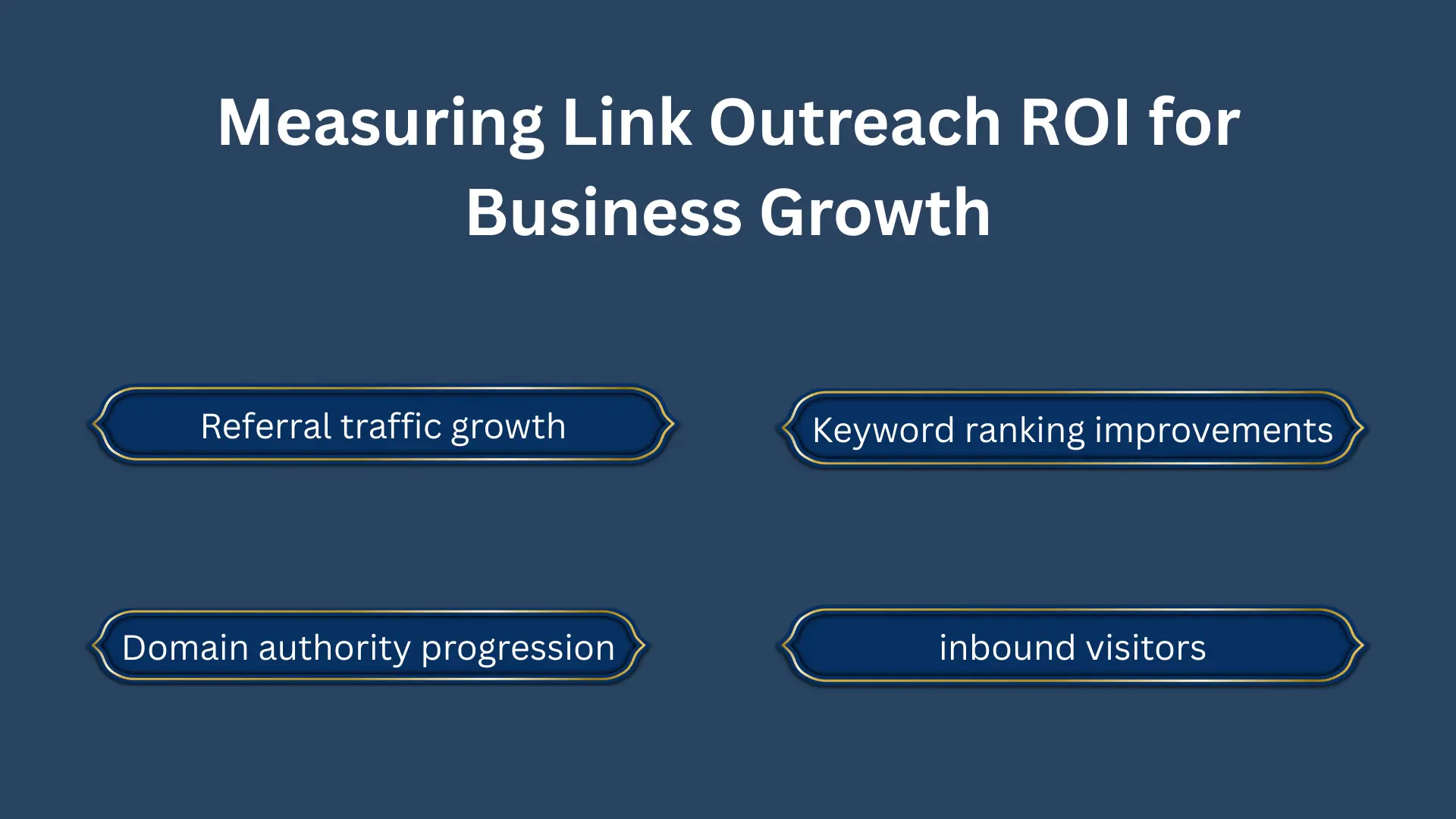
Measuring Link Outreach ROI for Business Growth
To evaluate outreach effectiveness, businesses should track measurable performance indicators such as:
- Referral traffic growth
- Keyword ranking improvements
- Domain authority progression
- Conversion lift from inbound visitors
Backlinks earned through strategic outreach often deliver long-term value because they continue passing authority signals for years after placement.
Consistent campaign monitoring allows marketing teams to refine targeting strategies, improve outreach messaging, and build predictable SEO ROI metrics. Outreach campaigns that generate both visibility and qualified leads provide the highest commercial impact for growth-focused businesses.
Choosing the Right Link Building Outreach Agency
Businesses aiming for long-term SEO success often collaborate with experienced outreach partners. A reliable agency offers:
- White-hat editorial placements
- Industry-specific blogger relationships
- Scalable outreach campaign frameworks
For marketing teams with limited resources, outsourced blogger outreach acts as a strategic growth intervention, ensuring consistent link acquisition and authority development.
Final Verdict – Scaling SEO Success with Strategic Outreach
Mastering content outreach link building is no longer optional for businesses competing in saturated search markets. From niche-focused blogger outreach to automation-supported campaign scaling, these ten hacks create a strong foundation for sustainable SEO performance.
Organizations that invest in relationship-driven outreach strategies build stronger backlink profiles, gain consistent referral traffic, and improve brand trust signals. By implementing these techniques and exploring managed outreach solutions when needed, companies can achieve long-term digital visibility.
FAQs
How long does content outreach link building take to show results?
Most outreach link building campaigns begin showing measurable SEO impact within 3 to 6 months, depending on competition, link quality, and campaign consistency. Businesses focusing on high-authority backlinks typically see faster authority growth.
Why are niche-relevant backlinks more powerful than generic ones?
Backlinks from industry-specific websites send stronger topical signals to search engines. Relevant editorial links help websites rank faster by aligning with search intent and audience context.
How effective is manual outreach for building backlinks?
Manual outreach campaigns are highly effective when personalization and niche relevance are prioritized. Experts highlight that relevance and follow-up communication often determine whether outreach converts into editorial placements.