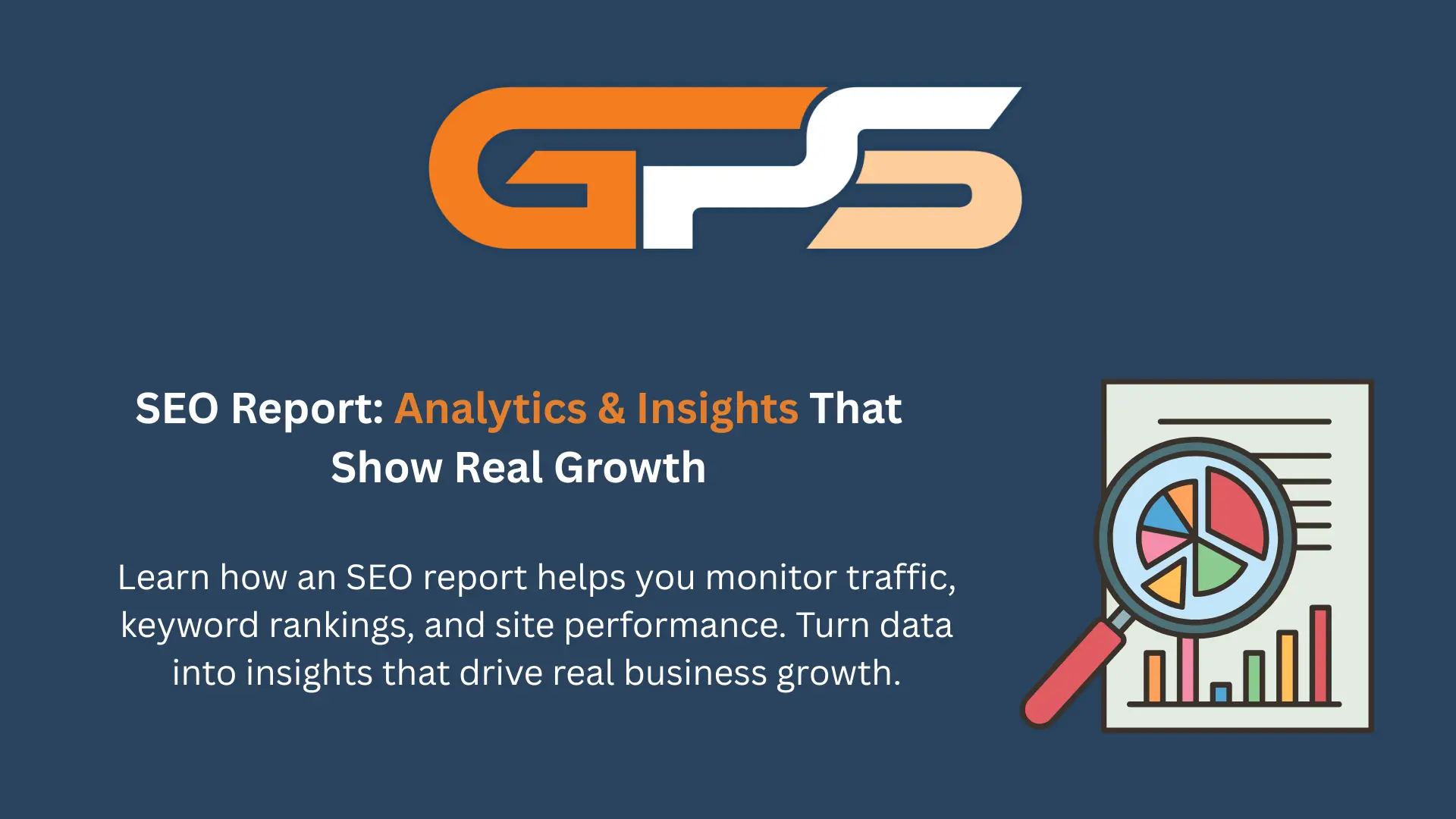
SEO Report: Analytics & Insights That Show Real Growth
If you have ever put time, energy, and money into SEO, then you know growth does not just happen. Indeed, you need more than hope. Consequently, you need a clear SEO report. In other words, you need a story, not merely a spreadsheet. Therefore, you need to know where you are, where you have been, and where you can go.
Today, SEO reporting is smarter than ever. Specifically, new tools, automation, and even AI help you track data from many sources. Moreover, you can see real-time analytics. Additionally, you can get predictive insights. In short, you can see not just the past, but also the future.
In this post, there is a complete explanation of what an SEO report really is and related information.
What Is an SEO Report
An SEO report does more than simply collect numbers. In fact, it turns raw metrics into meaning through structured SEO reporting analytics. Moreover, it links your SEO work to real business results.
- It tracks key performance indicators (KPIs). For example, organic traffic, keyword rankings, and conversions.
- It also highlights trends; therefore, it does not show only one moment.
- Additionally, it explains the causes. Hence, you learn why traffic dropped or why a keyword rose.
- Furthermore, it recommends actions. As a result, you see what to fix and where to double down.
Overall, a strong SEO report closes the gap between technical SEO and business strategy. Thus, it helps every stakeholder, from CEOs to marketers, understand the value of SEO in a clear, honest way.
Key Components of a Powerful SEO Analytics Dashboard
To truly drive decisions, your SEO analytics dashboard must have several core parts. Here is what matters most.
1. Centralized Data Source
Firstly, pull in data from Google Analytics (GA4), Google Search Console (GSC), backlink tools, and page-speed tools.
Next, use a unified dashboard so no one has to chase different numbers. Consequently, this creates a “single source of truth.”
2. Essential SEO KPIs
Focus on metrics that truly matter:
- Organic Traffic: Sessions, new users, returning users.
- Keyword Rankings: Track core keywords and their position changes.
- Impressions & CTR: Use GSC to see how many people see your site and click.
- Backlink Profile: New referring domains, link quality.
- Technical Health: Page speed, crawl errors, mobile usability.
These metrics form the foundation of reliable SEO analytics reports.
3. Visualization & Clarity
Additionally, use charts and graphs because they make data easier to understand. Moreover, highlight trends with visuals. Meanwhile, keep the layout simple. In contrast, do not flood every stakeholder with heavy data.
4. Customization & Role-Based Views
Similarly, build different views for different teams. Executives want high-level trends, while SEO teams want keyword-level detail. Also, use permissions so each person sees only relevant data.
5. Automated & Real-Time Reporting
Furthermore, automate data syncing. That way, you avoid manual errors. Moreover, use real-time (or near real-time) analytics to react faster. Additionally, predictive analytics or AI can forecast trends; therefore, you stay proactive.
Why You Need Real SEO Analytics
You might ask: “Why not just check rankings once a month?” The short answer: because you lose insight. In other words, you risk flying blind without consistent SEO analytics reporting.
Here is why real SEO analytics matters:
1. Connect SEO to Business Outcomes
Analytics link your SEO work to real results. As a result, you can tie organic traffic to leads or revenue.
2. Make Informed Decisions
Data helps you avoid guesses. Consequently, you can tell if a drop in traffic is seasonal, technical, or content-based.
3. Spot Trends Over Time
With analytics, you track growth or decline across weeks, months, and quarters. Then, you can predict what comes next.
4. Understand Audience Behavior
Analytics show how people use your site. This insight strengthens your SEO and analytics reporting strategy.
5. Justify Your SEO Investment
A clean, data-backed SEO performance report helps you prove your ROI. Indeed, it removes the mystery; SEO is not a black box. Put simply: real SEO analytics help you act strategically, not just react.

How SEO Monitoring & Analytics Help You Grow
Monitoring SEO is not a one-time task. Instead, it is a continuous process. Moreover, it gives you insight and helps you refine.
1. Continuous Tracking & Alerts
- First, monitor your metrics in real time or often.
- Additionally, detect sudden drops in traffic, ranking shifts, or crawl errors.
- Next, set up automated alerts. That way, you can fix small issues before they grow.
2. Technical SEO Health Checks
Include technical metrics in your dashboard, for instance, crawl errors, indexability, and mobile usability. Also, run audits regularly. Therefore, your site stays healthy and avoids SEO penalties.
3. Competitor Benchmarking
Track how your competitors rank. Similarly, see where they earn backlinks or which keywords they use. Moreover, find gaps: keywords or content topics they cover but you don’t.
4. Content Optimization & Strategy
Use analytics to identify which pages perform well, and which don’t. Then, refresh, restructure, or repurpose your content based on real data.
Furthermore, focus on high-impact content that aligns with your goals.
5. Refinement & Forecasting
Use advanced SEO report analytics or AI to forecast future traffic trends. Consequently, you can plan around seasonal spikes or emerging keyword opportunities.
Moreover, allocate resources smartly based on predictions.
Tips for Better SEO Copywriting That Converts Readers into Leads
SEO is technical. However, at its heart, SEO writing is human. Therefore, your words can win trust and convert.
Here are tips to combine SEO copywriting that converts readers into leads with performance insight:
1. Write with Intent
Use your SEO analytics to find high-intent keywords. Specifically, focus on phrases that show clear user goals: for example, “how to hire a guest posting agency” or “SEO reporting services.”
2. Be Clear and Valuable
Avoid keyword stuffing. Instead, use insights from SEO analytics and reporting to guide meaningful content.
3. Build Conversion Paths
Use persuasive CTAs: “Get your custom SEO report from [company name].” Moreover, address objections, cost, time, and complexity, and show empathy.
4. Use Data & Authority
Reference your SEO report insights: “Our ranking reports saved us 20% by optimizing structure.” Indeed, using real numbers builds trust.
5. Make It Engaging
Use short paragraphs and bullets; therefore, it is easy to scan.
Additionally, include small stories: “A client had flat traffic. We found a crawl issue. We fixed it. Then traffic grew 40% in six months.”
6. Test and Improve
Run A/B tests for headlines, CTAs, and copy.
Then, use your SEO analytics dashboard to track bounce, time on page, and conversions. Consequently, refine your copy.
Building a Custom SEO Performance Report
A report only matters if people read it and act on it. Therefore, a custom SEO performance report should serve your audience, not just show data.
Here is how to build one that works:
1. Define Your Objectives
Ask why you need a report: to show ROI, fix issues, or guide strategy. Then, align your KPIs with business goals: lead gen, revenue, or brand growth.
2. Pick the Right Metrics
Choose KPIs that matter: traffic trends, rankings, engagement, and technical data.
Avoid vanity metrics. Instead, focus on what drives action.
3. Create Visuals + Story
Use your SEO dashboard to pull in charts, graphs, and trend lines. Additionally, write a narrative: “We saw +15% organic traffic, but CTR dropped because impressions rose without clicks. Here’s why. Here’s how we fix it.”
4. Tailor for Your Audience
For execs, show high-level trends and ROI. For SEO/marketing teams, dive deep with keyword, backlink, and technical data.
Moreover, use role-based dashboards so each group sees what matters to them.
5. Set Reporting Cadence
Decide how often to report: weekly, monthly, or quarterly. Also, automate it. Therefore, it saves time and ensures consistency.
6. Include Clear Action Items
For each insight, give next steps: “Fix page speed on page A.” “Target long-tail keyword B. Additionally, prioritize actions: quick wins vs. long-term fixes.

Measuring SEO Success Over Time
Your SEO performance report only works if you measure what matters and track it over time.
Here’s how:
Set SMART Goals
- Specific, Measurable, Achievable, Relevant, Time-bound.
- Use past data plus forecasts to set realistic targets.
- For example: “Raise keyword X from #12 to top 5 in 6 months.” Or: “Grow organic lead conversions by 25% this quarter.”
Track Trends, Not Just Snapshots
- Use your dashboard to view data over time: monthly, quarterly, yearly.
- Then, look for patterns in traffic, rankings, behavior, and conversions.
Benchmark Against Competitors
- Use competitor analysis to compare ranking progress, backlinks, and content gaps.
- These insights help set context. Consequently, they expose opportunities.
Forecast & Adapt
- Use predictive analytics (or AI) to project future trends.
- Then, use those forecasts to plan ahead; don’t wait to react.
Review & Iterate
- Meet with your team or stakeholders to review reports regularly.
- Celebrate wins. Additionally, identify gaps and adjust strategy based on what works.
Challenges & Best Practices in SEO Reporting
Even a solid SEO report can fail if handled poorly. Here are common pitfalls, and how to avoid them.
- Too Much Data, Not Enough Insight: Reports full of metrics that don’t matter. Focus on KPIs tied to your goals. In contrast, skip vanity metrics.
- No Context or Story: Data without explanation. Always add narrative. That way, you explain what changed, why, and what to do next.
- Inconsistent Reporting: Metrics change from cycle to cycle. Consequently, trends break. Use the same report format and cadence. In addition, stick to core KPIs.
- Stakeholder Misalignment: Execs want ROI; SEO team wants technical depth. Build different views for different roles. Similarly, use role-based dashboards.
- Dirty Data: Spam traffic, tracking errors, and bad integrations. Validate sources. Additionally, filter anomalies and clean up data pipelines.
- Limited Resources: Team lacks time or tools. Automate reporting. Furthermore, use dashboards or partner with experts.
- Static Strategy: SEO plan evolves, but report stays the same. Revisit your dashboard every few months. Then, update metrics and adjust priorities.
Conclusion
An SEO report is not just a box to check. In fact, it is a compass for growth. When you build a smart SEO analytics dashboard, monitor consistently, and generate meaningful SEO performance reports, you gain clarity. Additionally, you get confidence. Moreover, you see direction.
You can turn data into action. Furthermore, you can align SEO with business goals. Indeed, you can prove the value of your work.
If you want expert help, Guest Posting Solution can step in. Specifically, we build custom dashboards, monitor your SEO, and prepare reports that drive strategy, not just vanity metrics. Moreover, we write SEO copy that converts readers into leads. Therefore, let’s work together. Let’s build your growth story.
FAQs
What is the difference between an SEO report and SEO analytics?
An SEO report is a document or dashboard that summarizes SEO performance. In contrast, SEO analytics is the analysis, data collection, and tools behind that report.
How often should I run SEO monitoring and send reports?
It depends; however, here is a good structure:
- Daily or near real-time for alerts
- Weekly for trend snapshots
- Monthly for deep reports
- Quarterly for strategic reviews
What tools help build a great SEO dashboard?
Use Google Analytics (GA4), Google Search Console, backlink tools (e.g., Ahrefs, Moz), and a dashboard tool (e.g., Data Studio). Additionally, you can use specialized SEO reporting tools for automation.
How do I make my SEO report actionable?
Always include insights, not just data. Moreover, add a narrative that explains causes, not just numbers. Also, give clear recommendations prioritized by impact.
How can Guest Posting Solution help with SEO reporting?
We build and maintain your SEO dashboards. Furthermore, we generate SEO ranking reports, analyze data, and give you action plans. In addition, we create SEO content that converts. In short, we help you turn reports into real growth.