Local SEO Citations Guide: Boost Your Google Maps Rankings
When Google ranks local businesses in the Map Pack, it checks trust signals. It wants proof that your business is real, active, and trusted. Citation consistency is one key signal.
Local SEO citations are online mentions of your business name, address, and phone number. You can find them on business directories, maps, review sites, and local websites.
Your business details should match across these sites. Consistent details help Google trust your business data. Conflicting details can confuse. They may also hurt your local rankings.
Google uses citation data to check business details. This data can affect your Google Business Profile and map results. It can also support AI-generated local answers.
Experts at Moz, Semrush, and BrightLocal also stress citation accuracy. They see it as a key part of local SEO.
This guide explains local SEO citations and why they still matter. It covers both citation building and citation cleanup. You will also learn when to hire professional local SEO services.
What Are Local SEO Citations?
A local SEO citation is an online mention of your business and its key contact details. These details are often called NAP, which means Name, Address, and Phone Number.
Citations can appear on business directories, map platforms, review sites, and other websites that list local businesses.
A complete citation can include more than NAP details. It may also show your website URL, business category, opening hours, photos, customer reviews, and a short business description.
Complete and accurate listings help search engines understand your business. They also make it easier for customers to find the right information.
In SEO, a citation is any mention of your business details on another website. It does not need to include a clickable backlink. The key factor is accuracy and consistency.
Your business name, address, and phone number should match across trusted platforms. Consistent details help search engines trust your business information. They also help confirm where your business is located.
Citations can help search engines verify that:
- Your business exists
- Your contact details are accurate
- Your business operates at a real location
- Your brand appears on trusted online platforms
Consistent citations can strengthen your business entity. They can also improve your chances of appearing in local search results and Google Maps.
Accurate business information may also help your brand appear in AI-generated answers. For businesses that target local customers, local SEO citations are an important part of a strong local SEO strategy.
Why Local SEO Citations Matter for Rankings
Local SEO citations are not the only ranking factor. They are still an important trust signal. Semrush and Moz note that citations can support local search visibility. They do this by keeping your NAP data consistent. NAP means your business name, address, and phone number.
Entity Validation
Local SEO citations help search engines identify your business. They connect your business details across different websites.
Your business name, address, and phone number should match across platforms. This helps Google link your website, Google Business Profile, and other listings to the same real business.
Consistent details reduce confusion. They also support trust in your business data.
Wrong or missing details can cause problems. Search engines may see the data as less reliable. This can hurt your visibility in local search results.
Improved Map Pack Visibility
Accurate citations can support your chances of appearing in Google’s local 3-pack. This is the map section that shows top local businesses for a search.
Citations help confirm your business location. They also support signals related to local relevance and prominence.
Consistent data across trusted directories gives search engines more confidence in your location. This can help your business appear in map results for local searches.
Stronger Customer Trust
Consistent business details also help customers trust your business.
People may see your business on several websites before contacting you. Seeing the same phone number, address, and business name creates a sense of trust.
Wrong details can cause doubt. They can also send customers to the wrong address or phone number.
This can lead to missed calls, lost leads, and fewer conversions. This can happen even when your local rankings are strong.
Better AI Search Accuracy
AI search systems use business data to answer user questions. They rely on data from many online sources.
Local citations can help confirm your business details across these sources. They give AI systems more reference points for your name, address, phone number, and other details.
Old or incorrect citations can create confusion. They may also cause AI tools to show wrong business information.
This can affect how your business appears in AI search results and voice searches. Keeping your citations accurate helps reduce this risk.
Structured vs Unstructured Citations
| Structured Citations | Unstructured Citations |
|---|---|
| Appear in fixed directory formats like business listings | Appear naturally within blogs, articles, or web content |
| Include structured fields such as NAP, hours, and categories | Mention business details in free-flow text |
| Found on platforms like directories and mapping systems | Found on news sites, blogs, social media, and PR mentions |
| Fully controlled and manually updated by business owners | Partially controlled or earned through external mentions |
| Strong for verifying core business data consistency | Strong for building authority, trust, and brand visibility |
| Easier for search engines to crawl and validate | Helps improve contextual relevance and brand awareness |
Key Elements of a High-Quality SEO Citation
A complete citation includes more than basic NAP data.
1. Business Name
The business name must match the official name on your website and Google Business Profile. Do not add extra keywords or use short forms. Small changes can create listing errors. Search engines use the business name to identify a company. One standard name helps build trust. It also helps prevent duplicate or conflicting listings.
2. Address
Use the same address format on every listing. Keep the street name, suite number, abbreviations, and postal code consistent. Search engines compare address details across many websites. Small differences can reduce trust in your business data. This can make it harder to rank in local map results.
3. Phone Number
Use one main phone number across all citations. This helps search engines confirm that each listing belongs to the same business. Different phone numbers can cause confusion. They may also create problems when search engines index your listings. Consistent phone details can support local visibility and build customer trust.
4. Website URL
Use the same website URL across your business listings. The URL should lead to your main domain or the right location page. This helps search engines connect your citations with your official website. A clear URL structure also helps search engines crawl your site. It can also support better entity mapping.
5. Business Categories
Choose accurate and relevant business categories. Categories tell search engines what your business does. They also help match your business with local search intent. Choose categories that closely describe your main services or products. The right categories can help your business appear in relevant local searches and industry results.
6. Hours of Operation
Keep your business hours accurate on every listing. Update them for holidays, seasonal changes, and special closures. Search engines use this data to show users when a business is open. Wrong hours can frustrate customers. They can also hurt engagement and may affect local search performance.
7. Business Description
Write a clear and useful business description for each citation. Explain what your business does and highlight its main services. Add relevant local SEO keywords in a natural way. Keep each description unique where possible. A useful description gives search engines more context. It can also help users understand your business before they visit the listing.
8. Photos and Logos
Visual elements such as logos and business photos enhance listing credibility and engagement. High-quality images improve user interaction, increase click-through rates, and strengthen brand recognition. Search engines also use visual consistency as part of entity validation, making images an important supporting factor in citation strength.
For more useful insights, explore our other blog post, “Proven Strategies to Grow Google Business Profile Audience”. Discover more to deepen your understanding.
What Is Local SEO Citation Building?
Local SEO citation building is the process of creating and optimizing listings on trusted business directories and industry-specific platforms.
The goal is to expand your online footprint while maintaining complete data consistency.
What Citation Building Accomplishes
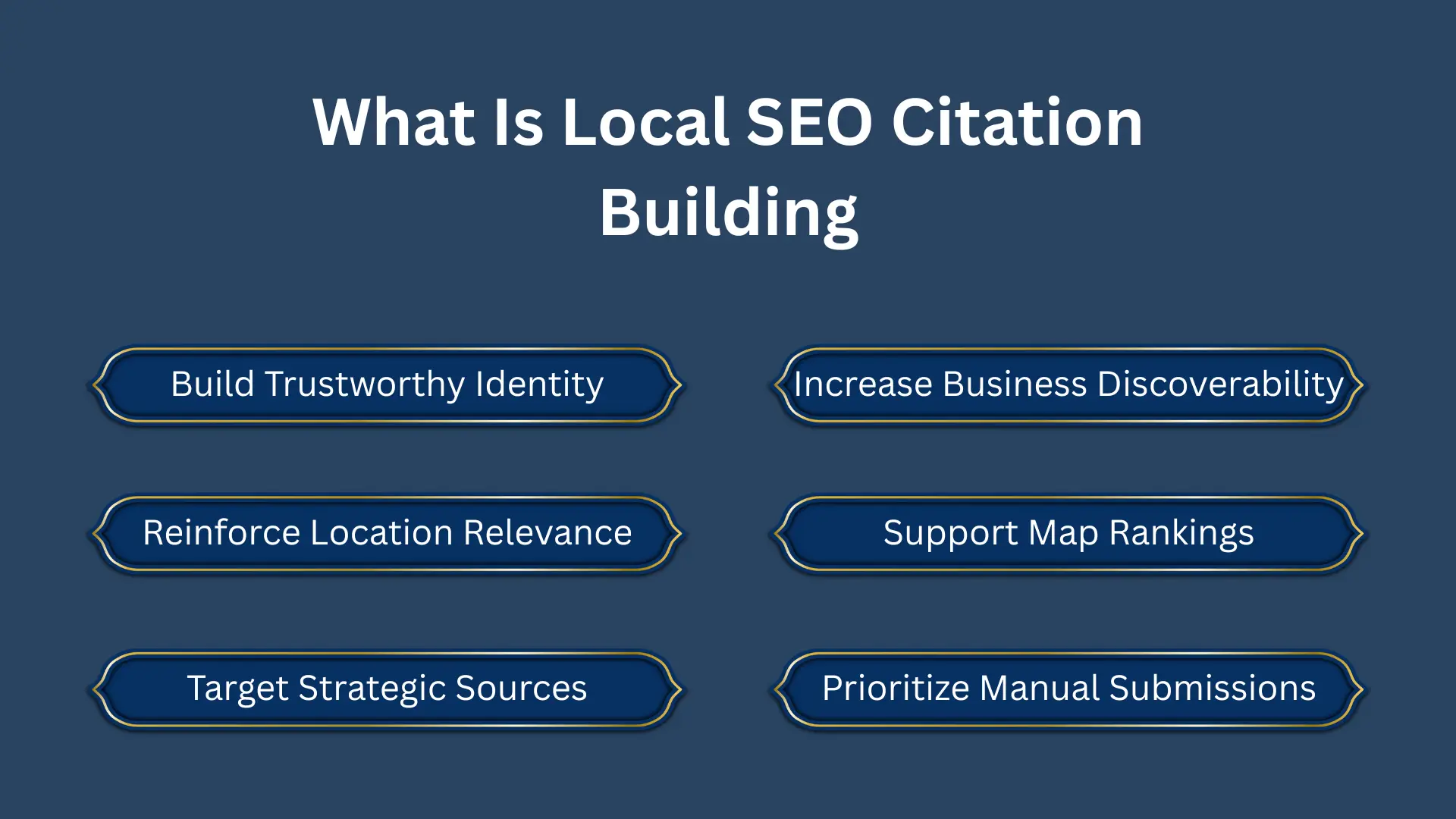
Citation building helps:
- Establish a trustworthy business identity
- Increase discoverability
- Reinforce location relevance
- Support map rankings
Citation Building vs Bulk Submission
Submitting your business to hundreds of low-quality directories often produces little value. Strategic citation building focuses on authoritative and relevant sources.
As many local SEO professionals note in Reddit discussions, manual submissions to quality directories tend to outperform mass automation.
Core Citation Sources Every Business Should Have
Every local business should maintain listings on high-authority platforms.
Search and Map Platforms
Google Business Profile, Apple Maps, and Bing Places support local search visibility. They help businesses appear in map results, voice search, and mobile searches. Keep each listing complete and accurate. This can improve local relevance and help your business appear when people search for nearby services.
Major Review Sites
Yelp and Facebook help build trust and brand reputation. Customers can view reviews, business details, and past engagement on these platforms. Good reviews can support local SEO and help customers make decisions. Consistent business information also helps build trust across the web.
Data Aggregators
Data Axle and Foursquare share business data across many directories, apps, and search platforms. They help keep your business information consistent across the web. Accurate NAP details, such as your name, address, and phone number, can reduce listing errors. This also helps search engines find and index your business details.
Industry-Specific Directories
Industry directories connect businesses with people searching for specific services. Avvo serves attorneys, Healthgrades focuses on medical practices, and Houzz helps people find contractors. These sites can improve industry relevance and attract qualified traffic. They also help search engines understand your business and the services you provide
Industry-Specific Citation Opportunities
Businesses gain more relevance when listed on niche directories used by their target audience.
- Law Firms: Listings on legal directories help reinforce practice area authority.
- Dentists and Doctors: Healthcare directories support trust and patient discovery.
- Home Service Businesses: Platforms focused on contractors and trades can drive leads and strengthen local relevance.
- Restaurants: Food and review platforms help both SEO and customer acquisition.
Citation Audit: Identifying Accuracy Problems
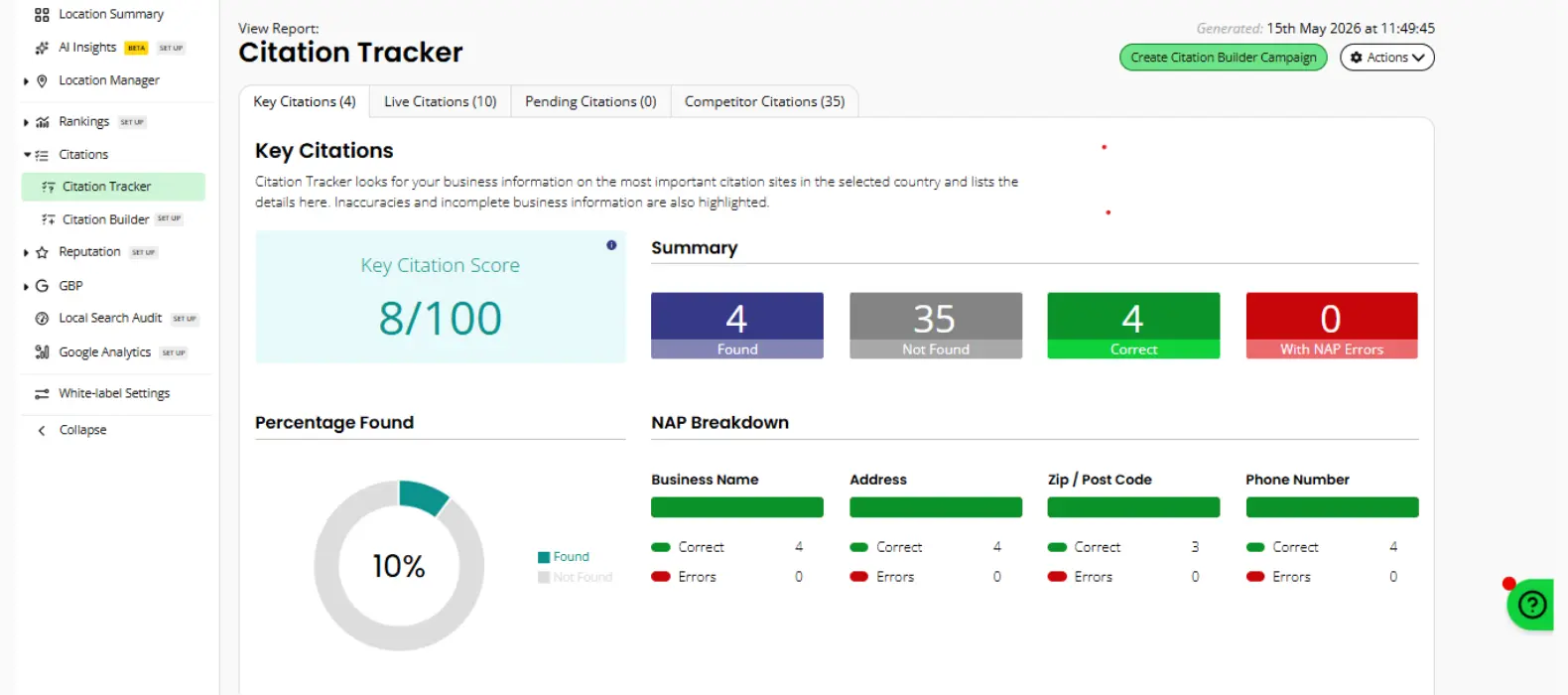
A citation audit is the process of reviewing your current listings to identify errors, missing listings, and duplicates.
Common Issues Found During a Citation Audit
- Old addresses
- Wrong phone numbers
- Duplicate listings
- Inconsistent business names
- Missing categories
- Broken website URLs
Tools Commonly Used for Citation Audits
Moz Local, Semrush, Whitespark, and BrightLocal provide tools to surface inconsistencies and missing citations.
Citation Cleanup: Fixing Errors That Hurt Rankings
Citation cleanup corrects inaccurate business information and removes duplicate listings.
This process is especially important after:
- Business relocation
- Rebranding
- Phone number changes
- Website migration
Why Citation Cleanup Matters
If your business appears with multiple addresses or phone numbers, Google may struggle to determine which information is correct.
That uncertainty weakens trust and can reduce local rankings.
Duplicate Listings and Their SEO Impact
Duplicate listings create conflicting business data and split reviews across multiple profiles. They can also lead to:
- Ranking instability
- Customer confusion
- Lost leads
- Map suspensions
Removing duplicates is a critical part of citation management.
NAP Consistency: The Core Principle Behind Citation SEO
NAP consistency means using the same business name, address, and phone number everywhere online. Minor differences can create confusion, such as:
- Suite vs Ste.
- Street vs St.
- Different call tracking numbers
- Name variations
A single source-of-truth document helps maintain consistency across all listings.
How Google Uses Citations to Validate Business Entities
Google combines data from your website, Google Business Profile, structured data, reviews, and citations to build an entity profile for your business.
When multiple trusted sources confirm the same details, Google gains confidence in:
- Your location
- Your service offerings
- Your legitimacy
This entity-based understanding is central to modern local SEO.
Local SEO Citations vs Backlinks
Citations and backlinks serve different purposes. Citations verify business data. Backlinks transfer authority and topical relevance. A business with accurate citations but no strong backlinks may rank reasonably well in low-competition markets. In competitive industries, both are important.
How Many Citations Does a Business Need?
There is no fixed number of citations a business needs. Local SEO depends more on relevance, accuracy, and consistency than citation volume.
Most businesses should build a strong base of citations. This can include:
- Core business directories
- Major data aggregators
- Industry-specific directories
- Trusted local organizations
Each citation should show the same NAP details. NAP means your business name, address, and phone number. Consistent details help search engines verify your business and build trust in local search.
Do not focus only on getting more citations. Choose high-quality and trusted sources that fit your industry and location. This approach can support stronger and more lasting local SEO results.
Citation Building for Multi-Location Businesses
Multi-location brands face more complexity because each location requires unique information.
Best practices include:
- Dedicated location pages
- Unique phone numbers
- Correct local categories
- Ongoing monitoring
Enterprise citation management often involves standardized workflows and governance.
Citation Building Process Used by Professional Local SEO Services
- Discovery and Data Collection: The agency gathers business details, categories, and location-specific information.
- Citation Audit: Existing listings are reviewed for inconsistencies.
- NAP Standardization: A master version of business data is created.
- Citation Cleanup: Duplicate and outdated listings are corrected.
- Manual Citation Building: New listings are submitted to relevant directories.
- Reporting and Monitoring: Clients receive detailed reports and periodic updates.
Common Citation Building Mistakes
Many businesses hurt their local SEO by making avoidable errors.
- Submitting to Low-Quality Directories: Poor-quality listings add little value and can waste resources.
- Inconsistent NAP Formatting: Even small differences can reduce trust.
- Ignoring Duplicate Listings: Duplicates dilute ranking signals.
- Forgetting to Claim Listings: Unclaimed listings may contain inaccurate data.
- Using Different Tracking Numbers: Unless implemented carefully, this can create inconsistency.
For more useful insights, explore our other blog post, “How to Attract More Visitors to Google Business Profile?”. Discover more to deepen your understanding.
How Long Does Citation Building Take?
Citation building is not instantaneous. Some directories publish listings within days, while others may take several weeks, especially if manual verification is required. Ranking improvements usually depend on:
- Existing citation health
- Market competition
- Google Business Profile strength
- Review profile
- Website authority
Measuring the Impact of Citation SEO
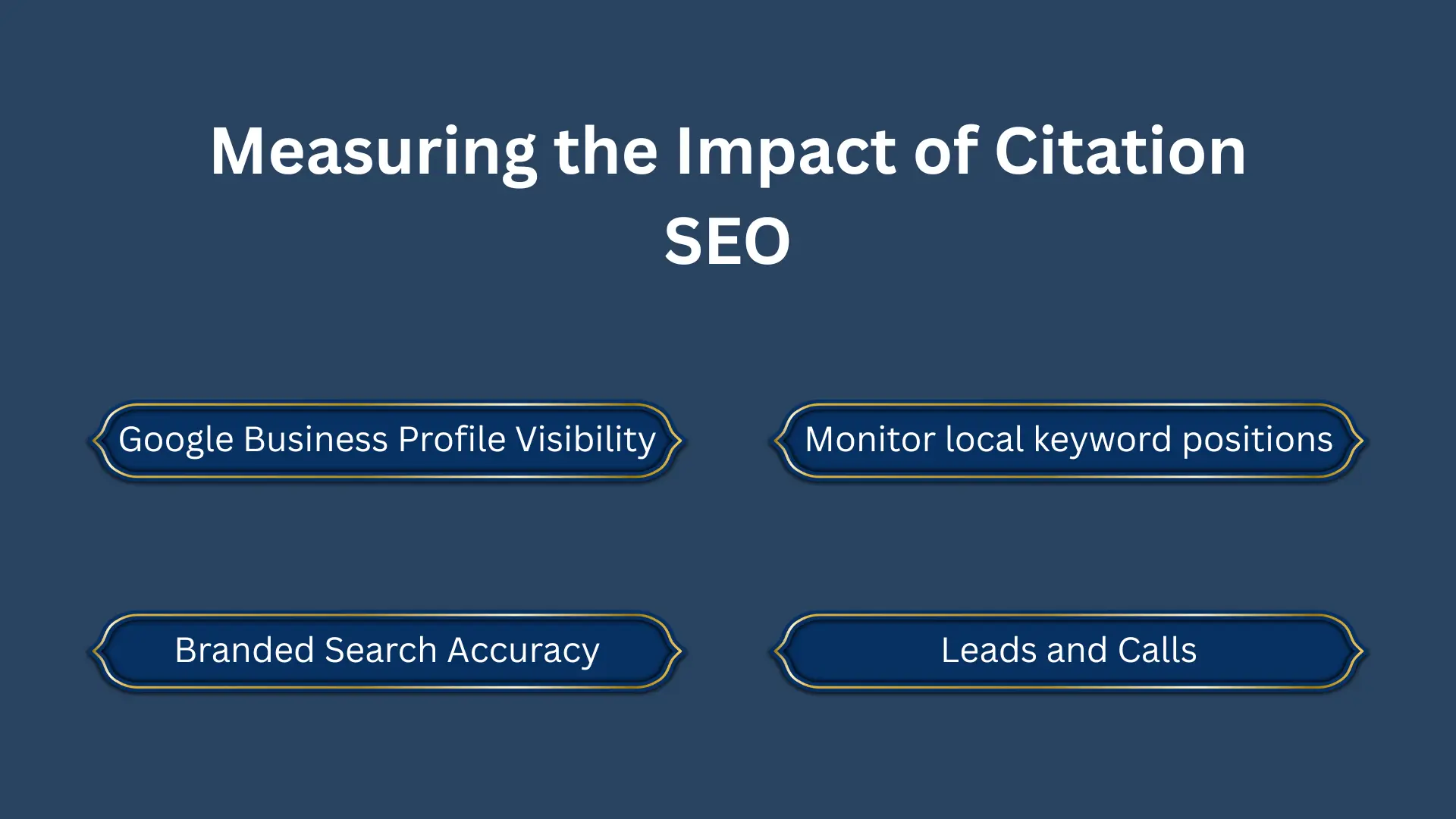
Citation improvements can influence several performance metrics.
- Google Business Profile Visibility: Track impressions and actions.
- Map Pack Rankings: Monitor local keyword positions.
- Branded Search Accuracy: Search your business name to review citation visibility.
- Leads and Calls: Measure phone calls, direction requests, and form submissions.
When Your Business Needs Citation Cleanup Immediately
You should prioritize citation cleanup if:
- You recently moved
- Your phone number changed
- You rebranded
- You merged locations
- Rankings dropped unexpectedly
- Customers report wrong information
These issues can directly affect both visibility and conversions.
Why Manual Citation Building Still Delivers Better Results
Automation can speed up submissions, but manual citation building offers better control. Experienced SEO professionals can:
- Select only relevant directories
- Customize business descriptions
- Verify listing accuracy
- Resolve duplicate issues
Community discussions among local SEO practitioners repeatedly emphasize that careful manual work tends to produce more reliable results. Why Businesses Choose Guest Posting Solution for Citation Building Services
Businesses often outsource citation work because it is detailed, repetitive, and time-consuming.
Guest Posting Solution provides local SEO citation services that include citation audits, citation cleanup, and manual citation building on authoritative and niche directories. This approach helps businesses create a stronger local SEO foundation while avoiding the inconsistencies that undermine Google Maps visibility.
Final Thoughts
Local SEO citations are one of the most practical ways to strengthen your business’s digital footprint.
They help Google verify who you are, where you are located, and how customers can contact you. When your listings are accurate and consistent across trusted directories, your business gains stronger entity recognition, improved Google Maps visibility, and a more reliable path to local leads.
Citation building, citation audits, and citation cleanup are not glamorous SEO tasks, but they are essential. For businesses serious about local growth, they create the foundation that every successful local SEO campaign depends on.
FAQs
What Is Citation Cleanup?
Citation cleanup is the process of correcting inaccurate business information across online listings and removing duplicate or outdated entries. It ensures your Name, Address, and Phone Number (NAP) remain consistent across directories, map platforms, and review sites. This consistency helps search engines trust your business data, improving local SEO visibility and reducing confusion for both users and algorithms.
Can Citations Improve Google Maps Rankings?
Yes, accurate citations can improve Google Maps rankings because they help search engines verify your business identity and location details. When your business information is consistent across multiple trusted platforms, it strengthens credibility signals and supports better visibility in local search results and map-based listings. This increased trust can improve your chances of appearing in the local pack for relevant searches.
How Often Should Citations Be Audited?
Citations should ideally be audited at least once or twice per year to maintain accuracy and consistency across all platforms. Additionally, audits should be performed immediately whenever business details such as address, phone number, or branding change. Regular audits help identify inconsistencies early, prevent duplicate listings, and ensure your local SEO signals remain strong and reliable.