SaaS Link Building Tips to Outsource Backlink Growth
SaaS link-building tips are essential for software companies that want to rank in competitive search results and increase organic signups, trials, and demos. Unlike traditional SEO, SaaS link building focuses on earning high-authority and niche-relevant backlinks. It also includes editorial mentions and digital PR placements that can strengthen trust signals and search visibility.
Modern SaaS brands can no longer rely on random backlinks. Search engines now place greater value on topical authority, brand mentions, contextual relevance, and links that match user intent. As a result, many SaaS companies use structured strategies. These include guest posting, competitor backlink analysis, and SaaS-focused outreach campaigns.
Businesses that lack a strategic approach to SaaS link building often face low domain authority, weak keyword rankings, and poor conversion traffic. This can happen even when they have a strong product.
What Makes SaaS Link Building Different from Traditional SEO?
SaaS SEO operates in a highly competitive B2B environment where purchase decisions are research-heavy and trust-driven. Unlike local SEO or eCommerce SEO, SaaS link building depends on:
- Product-led content authority
- Editorial backlinks from SaaS and tech publications
- Funnel-based link acquisition (TOFU → BOFU)
- High relevance over high volume
- Brand trust signals across multiple platforms
SaaS companies that prioritize relevant editorial backlinks and digital PR outperform those relying on generic guest posts in both rankings and conversions.
15 SaaS Link Building Tips (Pro-Level Strategy Guide)
Below are advanced, agency-level SaaS link building strategies used by experts to scale authority.
1. Focus on SaaS-Niche Relevance Over Domain Authority
Not all backlinks carry equal value in SaaS SEO. SaaS SEO operates in a highly competitive B2B environment where relevance matters more than raw authority. Unlike general SEO campaigns, SaaS link building depends on niche alignment with software categories, user intent, and product ecosystem fit. SaaS backlinks from
- SaaS review platforms
- B2B marketing blogs
- Startup and tech publications
- Industry-specific directories
Search engines reward contextual relevance more than generic high-DR links.
Search engines prioritize contextual relevance, making niche targeting essential for ranking improvement. Companies that focus on relevant SaaS backlinks consistently outperform those that chase generic authority links in both keyword rankings and qualified organic traffic.
2. Build Data-Driven Linkable Assets
Backlinks grow faster when your content is designed to earn them naturally. SaaS brands can achieve this by publishing original research, comparison pages, and free tools.
These assets can generate steady organic backlinks without aggressive outreach. Unlike standard blog posts, they provide useful information that other websites want to reference.
Focus on data-driven assets such as:
- Industry reports
- Benchmarks
- Surveys
- Research studies
These assets can attract editorial backlinks from journalists, bloggers, and SaaS reviewers.
High-value content can also improve trust signals. It may earn recurring citations across many domains over time.
SaaS companies that invest in original data often generate more organic backlinks. This approach can be more effective than relying only on outreach-based guest posting campaigns or promotional content.
3. Use Guest Posting for SaaS Authority Building
Guest posting still works, but it must be done with care.
SaaS guest posting is different from generic link building. The goal is to publish high-quality content on websites related to SaaS, technology, and marketing.
These placements can help you build:
- Topical relevance
- Contextual backlinks
- Brand visibility in search engines
Guest posts should also match the marketing funnel. Content aimed at decision-makers can improve brand awareness and drive traffic that is more likely to convert.
SaaS companies that use strategic guest posting can achieve better results than those that rely on low-quality directories. The benefits can include stronger rankings, more organic traffic, and better brand trust signals.
4. Leverage Digital PR for High-Authority SaaS Mentions
Digital PR connects SEO with brand visibility.
SaaS operates in a highly competitive B2B market. In this space, brand credibility can affect search rankings. Digital PR helps SaaS companies earn visibility instead of relying only on manual link placement.
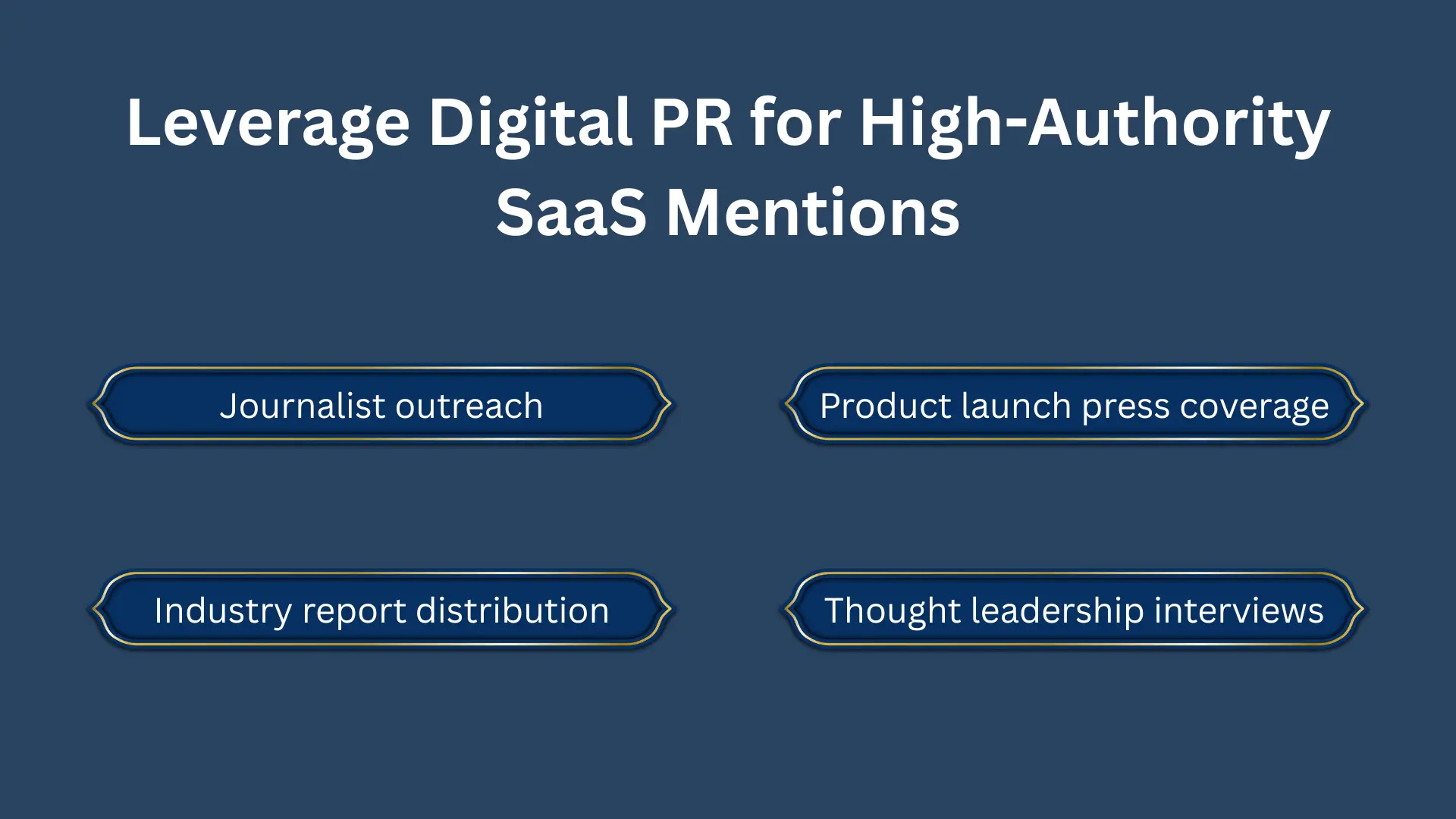
Key digital PR strategies include:
- Journalist outreach
- Product launch press coverage
- Industry report distribution
- Thought leadership interviews
Unlike traditional link building, digital PR can earn editorial backlinks from trusted media outlets. These links can also strengthen E-E-A-T signals.
Digital PR methods can generate backlinks from high-authority media outlets and industry publications. SaaS companies that use these campaigns often achieve stronger long-term ranking stability.
This approach can be more effective than relying only on guest posting or link exchanges.
5. Reverse Engineer Competitor SaaS Backlinks
Competitive analysis can give SaaS companies a major SEO advantage.
You do not need to rely only on your own outreach efforts. Analyzing competitor backlink profiles can reveal link opportunities that already work in your industry.
SEO tools can help you identify:
- Referring domains
- Guest posting placements
- Broken link gaps
- Other proven backlink opportunities
This research helps you find referring domains, guest posting opportunities, and broken link opportunities.
You can then study and replicate relevant competitor backlink patterns. This can help close ranking gaps faster.
SaaS brands that perform competitor backlink analysis on a regular basis can achieve faster domain authority growth. They may also improve their keyword positions in competitive SaaS search results.
6. Build SaaS-Specific Outreach Campaigns
Successful SaaS outreach depends heavily on relevance and personalization.
Generic email campaigns rarely produce strong results. A better approach is to tailor your outreach to the software category, user pain points, and industry context.
Personalized pitches can improve response and acceptance rates for:
- Guest posts
- Brand collaborations
- Editorial mentions
Your outreach should also highlight something valuable. This may include product benefits, original data insights, or integration opportunities.
SaaS companies that use targeted communication can secure higher-quality backlinks. Generic bulk email campaigns often struggle to achieve the same results.
7. Optimize Anchor Text Diversity Strategy
Anchor text distribution plays a critical role in maintaining ranking stability. A balanced mix of branded, partial-match, and contextual anchors ensures a natural backlink profile. Over-optimized anchor usage can trigger ranking suppression or penalties.
SaaS backlinks should reflect organic language patterns used by real publishers and editorial writers. Websites with diversified anchor profiles achieve more stable ranking growth and reduced algorithm risk compared to those using repetitive exact-match keyword anchors.
8. Implement Funnel-Based Link Building Strategy
Aligning backlinks with the customer journey improves both traffic quality and conversions. Instead of random placements, SaaS link building should follow funnel stages:
- Awareness (blogs, guides)
- Consideration (comparisons, guest posts)
- Conversion (reviews, tool lists)
Strategically placed links across these stages help move users toward decisions. SaaS brands using funnel-based strategies achieve higher demo signups and better ROI compared to unstructured campaigns.
9. Build Strategic SaaS Partnerships for Backlinks
Strategic partnerships can build long-term authority for SaaS brands. Work with integration platforms, SaaS marketplaces, and complementary tools to earn natural backlinks.
These partnerships can lead to links in product listings, API documentation, and co-marketing campaigns. They can also create useful links that support users and add real context.
Partnership-based SaaS backlinks are highly trusted because they have clear context and purpose. SaaS companies with active integration partners can achieve more steady organic growth than brands that rely only on outreach to earn links.
For more useful insights, explore our other blog post, “Manual Link Building Service to improve your rankings”. Discover more to deepen your understanding.
10. Create SaaS Comparison and Alternative Pages
SaaS SEO is highly competitive, especially in the B2B market. Buyer research plays a major role in search behavior. This makes comparison pages a strong link-building asset.
Create pages such as “alternative to” and “vs” pages. These pages can attract high-intent backlinks from reviewers, bloggers, and industry analysts.
Strong SaaS comparison content can improve rankings and conversion rates. Well-optimized comparison pages can also bring more organic traffic and backlinks than brands that focus only on product pages.
11. Focus on Editorial Backlinks from SaaS Publications
Editorial links from trusted SaaS and tech publications can add strong SEO value. Unlike paid placements, these links are earned through useful content and strong topic relevance.
Editorial backlinks can improve trust signals and support E-E-A-T signals used by Google’s ranking systems.
These links also fit naturally within relevant content. This makes them valuable for ranking competitive SaaS keywords. Over time, editorial SaaS backlinks can provide more stable rankings and organic growth than sponsored links or low-quality guest posts.
12. Use Broken Link Building in SaaS Niches
Content can become outdated or disappear over time. This creates useful link-building opportunities for SaaS brands.
Find broken or outdated links on SaaS-related websites and content. Then, suggest an updated SaaS resource as a replacement.
Replacing a dead link with a useful resource helps the publisher and earns your brand a high-quality backlink. The process is also scalable and cost-effective for SaaS companies.
Broken link building remains an efficient way to earn contextual SaaS backlinks from authoritative websites.
13. Leverage SaaS Communities and Forums
Active participation in SaaS communities improves visibility and trust. Slack groups, Reddit discussions, and product communities. These platforms generate referral traffic and contextual backlinks when used strategically.
SaaS brands that contribute insights rather than promotions build stronger trust signals. Community-driven SaaS backlinks improve brand awareness and organic discovery more effectively than traditional link directories.
14. Monitor SaaS Link Performance Continuously
Link building requires ongoing analysis to maintain effectiveness. Tracking backlink quality, referral traffic, keyword movement, and authority growth helps refine strategies.
Tracking tools like Ahrefs and SEMrush help identify high-performing links and underperforming placements. This enables optimization of future outreach strategies. SaaS companies that actively monitor backlinks achieve higher ROI from link building campaigns compared to those that do not track performance metrics.
15. Scale SaaS Link Building Through Professional Agencies
SaaS SEO operates in a highly competitive B2B environment where scalability requires expertise and systems. Unlike in-house limitations, SaaS link building depends on structured outreach networks, publisher relationships, and industry experience.
Professional SaaS link building agencies streamline guest posting, digital PR, and backlink acquisition at scale. This ensures consistent authority growth without compromising quality.
Many SaaS brands prefer buying backlinks from reputable agency partners because they provide vetted publisher networks, contextual placements, and transparent reporting systems. SaaS brands choose specialized partners like Guest Posting Solution to execute scalable saas link building experts that improve rankings, traffic, and conversions efficiently.
Common SaaS Link Building Mistakes to Avoid
Many SaaS companies fail due to poor execution, not strategy.
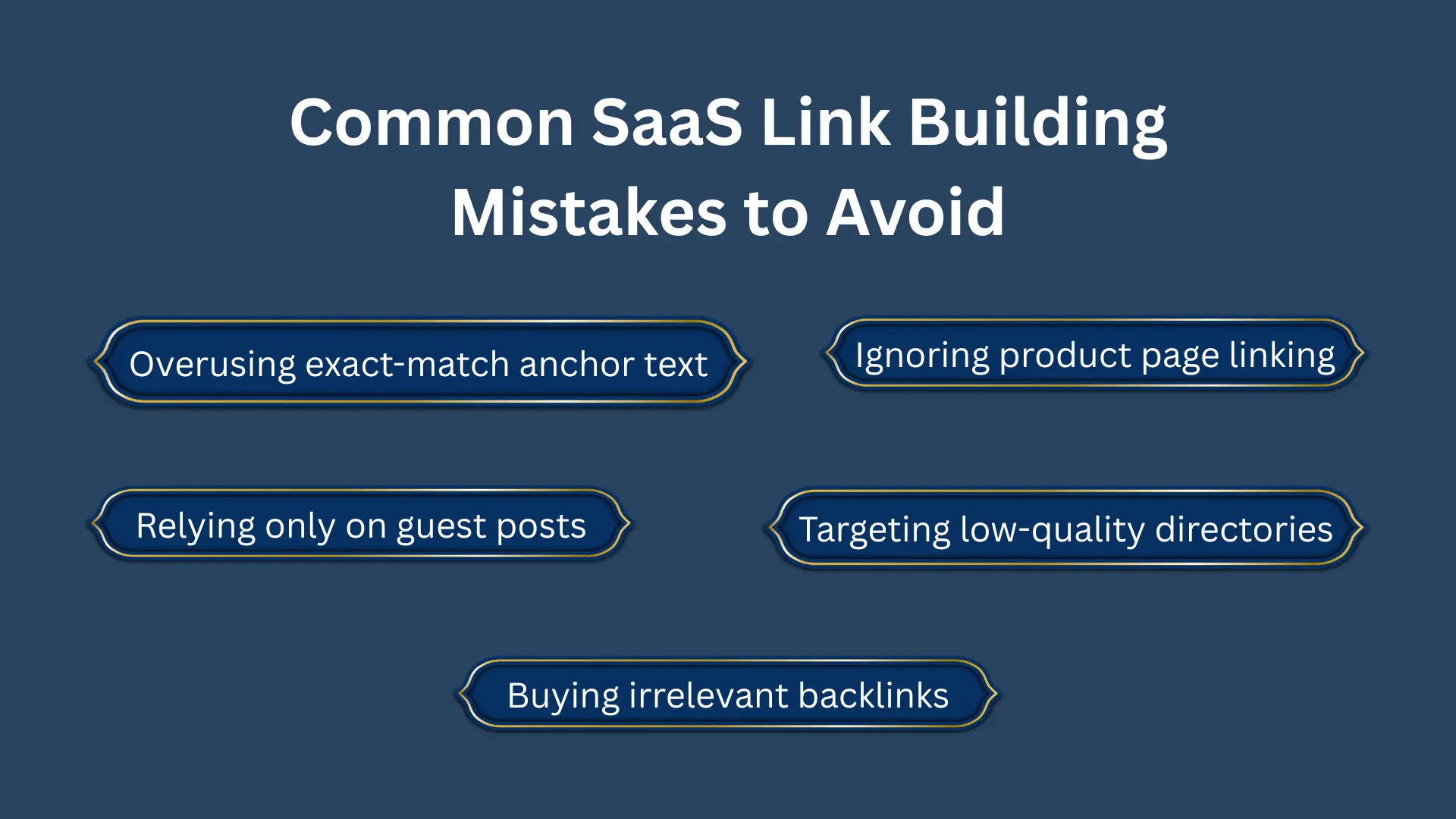
Avoid:
- Buying irrelevant backlinks
- Overusing exact-match anchor text
- Ignoring product page linking
- Relying only on guest posts
- Targeting low-quality directories
These mistakes reduce trust signals and can harm long-term SEO performance.
Why SaaS Companies Prefer Specialized Link Building Services
Modern SaaS companies prefer working with specialists because:
- SaaS SEO requires technical understanding
- Outreach needs industry relevance
- Backlink quality impacts MRR growth
- Scaling requires relationships with publishers
This is why best saas link building services are now a core part of growth marketing for B2B software companies.
One of the best saas link building agency, Guest Posting Solution, helps SaaS brands scale authority through structured guest posting, niche outreach, and high-quality editorial placements.
Final Takeaway
SaaS link building is no longer about getting as many links as possible. It is about relevance, authority, and impact across the sales funnel. SaaS companies that use strategies such as digital PR, guest posting, and competitor backlink analysis often gain better search rankings and more leads.
The goal is not just to build more links. You need the right SaaS backlinks. The right links can improve Google rankings and build buyer trust at the same time.
FAQs
How many backlinks does a SaaS website need?
There is no fixed number of backlinks a SaaS website needs. The right number depends on the level of competition, keyword difficulty, and domain authority goals. SaaS companies in competitive industries often need to keep building backlinks to maintain their search rankings.
How long does SaaS link building take to show results?
SaaS link building can take a few weeks to several months to show clear SEO results. The timeline depends on your domain authority, level of competition, and backlink quality.
Can SaaS companies do link building in-house?
Yes, SaaS companies can handle link building in-house. However, it takes a lot of time, outreach skills, and access to publishing networks. In-house teams can also find it hard to scale their efforts and gain backlinks on a steady basis.