How to Get Backlinks From Wikipedia (Without Getting Your Edit Reverted)
Getting a backlink from Wikipedia is possible, but it does not work like submitting a website to a backlink directory. Wikipedia editors expect external resources to be relevant, useful, verifiable, and appropriate for readers. Most Wikipedia external links also use the nofollow attribute, so they should not be treated as a conventional way to pass ranking signals.
The real opportunity is to create or identify a resource that genuinely improves a Wikipedia article. Dead-link replacement, citation opportunities, original research, and useful reference material can create legitimate opportunities for a Wikipedia backlink. The process requires more than adding your URL. You need a resource that fits the article, follows Wikipedia’s editorial standards, and provides information readers can actually use.
Do Wikipedia Backlinks Actually Help SEO?
Short answer: not in the way most people assume. Wikipedia external links generally use rel=”nofollow”, so you should not treat a Wikipedia citation like a conventional dofollow backlink or rely on it to transfer ranking credit. Google treats nofollow as a hint, while Wikimedia states that adding a link does not alter search-engine rankings.
The value shows up elsewhere. Wikipedia citations get pulled apart constantly by other researchers, journalists, and SEOs who use tools to reverse-engineer where authoritative sources come from, so a well-placed reference can seed further coverage well beyond the original page. A competitor backlink analysis of any established brand in your space will usually turn up a Wikipedia citation feeding that exact pattern.
There’s also the traffic itself. Wikipedia draws billions of visits a month, and a citation on a page that ranks for your core topic puts your brand in front of readers who are actively researching the subject, not just search engines crawling it.
Why Wikipedia Still Matters for AI Search and GEO
Generative engines lean on Wikipedia harder than almost any other source when they assemble an answer. ChatGPT, Perplexity, and Google’s AI Overviews treat it as close to ground truth, so a citation there increases the odds that your brand or data point gets echoed back when someone asks an AI tool about your industry. This is what most “buy backlinks” conversations miss: a Wikipedia reference is now as much a GEO and answer-engine play as it is a traditional SEO one, because it shapes what gets summarised, not just what gets ranked.
What Makes a Website Worth Linking to on Wikipedia?
Before looking for an opportunity, assess the resource you want to promote. A homepage or commercial service page is rarely a strong candidate. Wikipedia is designed as an encyclopedia, so external resources need to contribute meaningful information to the subject being discussed.
It Adds Information the Article Needs
A useful resource might contain original research, historical information, technical documentation, statistics, datasets, or detailed evidence that supports a statement in the article. If removing your resource would make little difference to the reader, the link probably does not have a strong editorial reason to exist.
It Supports a Specific Claim
A citation should connect naturally to the information it supports. For example, a page containing original research about an industry statistic may be relevant to a Wikipedia statement discussing that statistic. A generic company homepage would provide much less useful evidence.
It Is Reliable and Verifiable
The quality of the underlying information matters. Original research should explain its methodology. Statistical claims should identify their sources. Technical information should be sufficiently detailed for readers to verify.
It Avoids Promotional Intent
Wikipedia’s external-link policies discourage promotional links, and links added primarily to advertise a business. That means commercial anchor text, sales copy, exaggerated claims, and irrelevant service pages are poor candidates for Wikipedia.
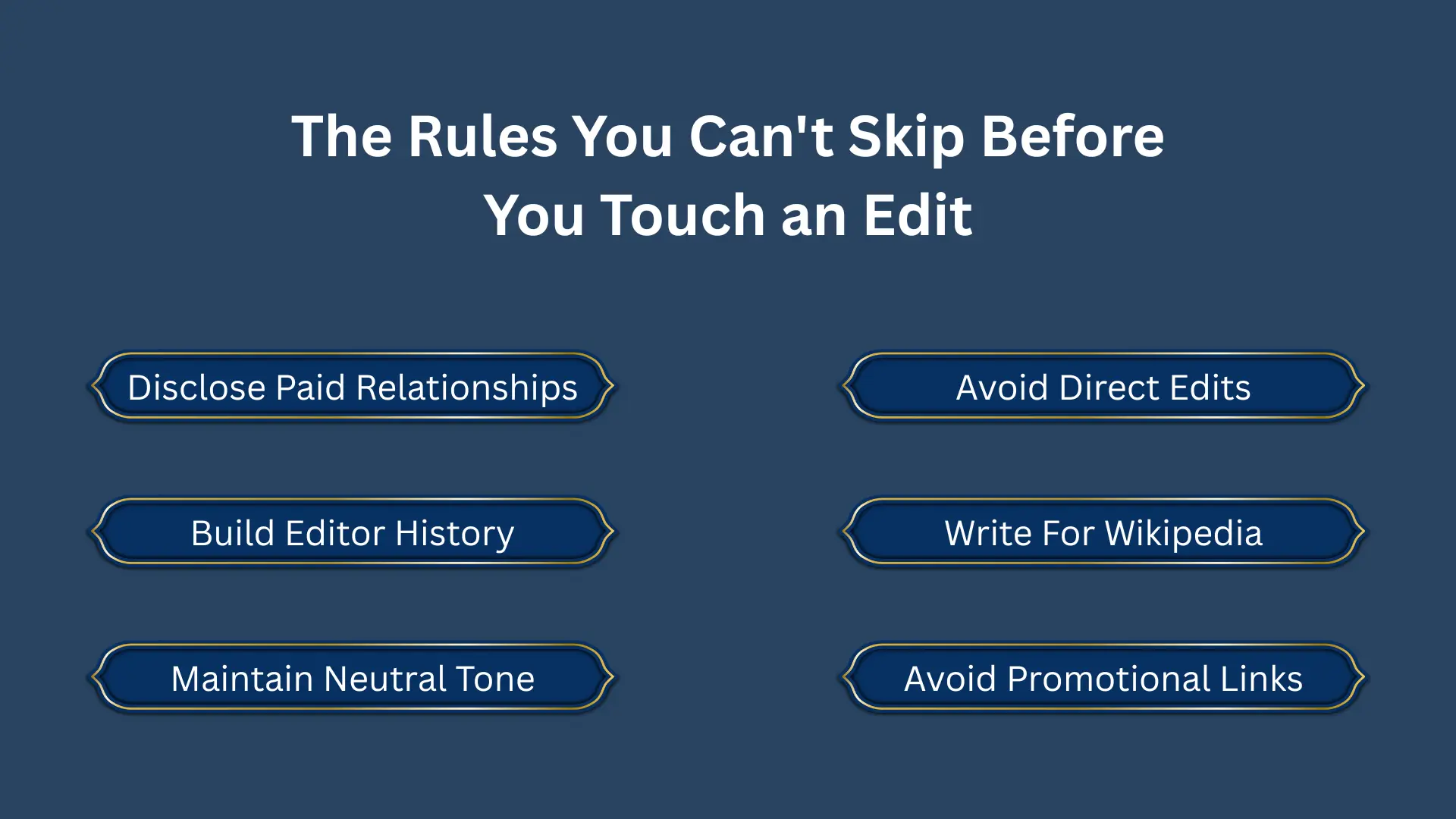
The Rules You Can’t Skip Before You Touch an Edit
Wikipedia is not hostile to businesses adding value, but it is hostile to anyone using it as free advertising. A few non-negotiables:
- Disclose any paid or employer relationship. The Wikimedia Foundation’s paid-contribution policy requires editors to state their employer, client, or affiliation on their user page or the article talk page before contributing.
- Skip direct edits if you have a financial conflict of interest. The safer, sanctioned route is proposing the change on the article’s talk page and letting an independent editor implement it.
- Build a track record first. Editors with a thin history of edits, especially ones that only ever add outbound links, get flagged fast. A dozen or so small, genuinely useful edits before you add anything commercial goes a long way.
- Write for the article, not for your brand. Neutral tone, verifiable facts, and no promotional language. If the sentence would fit in a press release, it doesn’t belong on Wikipedia.
None of this resembles link building on a private network of sites you or a partner controls. Wikipedia edits go through open, public review rather than a quiet arrangement with a site owner, which is exactly why the payoff is bigger when it works, and why treating it like a batch of PBN backlinks gets an account banned within hours.
For more useful insights, explore our other blog post, “Bad Backlinks: How to Find, Fix & Avoid Harmful Links”. Discover more to deepen your understanding.
How to Find Wikipedia Backlink Opportunities
Finding opportunities becomes easier when you approach Wikipedia like a researcher rather than a backlink directory.
Step 1: Find Wikipedia Pages That Actually Fit Your Niche
Start with a simple search operator: site:wikipedia.org “your target keyword.” This surfaces every article Google has indexed that mentions the phrase, which is a faster filter than browsing Wikipedia’s category pages by hand. Narrow the list to articles where your website’s expertise would genuinely improve the reader’s understanding, not just articles that happen to share a keyword.
It also pays to study where competitors and adjacent brands already hold citations. If three sites in your space are referenced on the same handful of Wikipedia pages, those pages have already proven they’ll accept outside sources in that subject area, which shortens the search considerably.
Step 2: Hunt Down Dead and Broken Citations
This is the highest-probability entry point on Wikipedia. Articles accumulate references over the years, and a meaningful share of them eventually break: the source site closes, moves the page, or lets the domain lapse. Wikipedia flags many of these automatically, and volunteer-built tools make them easy to find.
- Citation Hunt (citationhunt.toolforge.org) surfaces passages tagged as needing a source.
- WikiGrabber searches for “dead link” and “citation needed” flags by keyword.
- The Wayback Machine shows what a dead source used to say, so you can see exactly what your replacement content needs to cover.
Once you find a broken reference that matches something your site already covers well, or something you’re willing to build, you have a legitimate, rule-respecting way in.
Step 3: Build Something Actually Worth Citing
Wikipedia editors reject weak sources on sight. The page you’re hoping to cite needs original data, a documented study, a detailed explainer, or verifiable statistics, not a rewritten summary of what’s already on the internet. This is usually the step people skip, and it’s the one that determines whether an edit survives review or gets stripped out within the hour.
Original surveys, first-party case studies with real numbers, and comprehensive reference material tend to perform best. If your current content library doesn’t have anything that clears that bar for the article you’re targeting, that’s the piece to build before you touch the edit button.
Step 4: Add the Edit the Right Way
If you have no financial stake in the topic, you can add the citation directly: open the article, click Edit, replace the dead link or fill the citation gap with your source, format it using Wikipedia’s citation template, and preview before publishing. If you do have a financial interest, the sanctioned path is to post the proposed change and your disclosure on the article’s talk page and wait for an independent editor to review and add it. It’s slower, but it’s the version that doesn’t get your account flagged.
Step 5: Protect the Link After It Goes Live
A citation that survives the first edit isn’t guaranteed to survive forever. Wikipedia articles get revised constantly, and outbound links get pruned during cleanup passes. Add the page to your watchlist so you’re notified of changes, and check back periodically to confirm the reference is still intact rather than assuming it’s permanent.
Mistakes That Get Wikipedia Edits Reverted
Avoid these practices when pursuing Wikipedia links:
- Adding your homepage simply because your company is mentioned
- Using commercial anchor text
- Creating thin content solely for a backlink
- Repeatedly adding a link after removal
- Editing competitor pages for promotional purposes
- Publishing unsupported research
- Using misleading statistics
- Hiding a commercial relationship
- Paying for guaranteed Wikipedia placement
- Treating Wikipedia as a backlink directory
- Creating pages solely to manufacture citations
A legitimate resource should remain valuable even if the Wikipedia backlink never happens.
DIY vs. Bringing In a Link Building Team
Doing this properly takes real time: researching relevant articles, checking dozens of dead links by hand, writing citation-worthy content, and monitoring which placements stay live. Because Wikipedia will never pass link equity like a dofollow placement. It should complement rather than replace a working list of dofollow backlink sites as part of a broader outreach strategy.
If that’s more bandwidth than your team has to spare, it’s often more efficient to buy high-quality backlinks from a team that already tracks which Wikipedia pages have real opportunities, and pairs that work with dofollow placements that move rankings directly. That combination, one channel for trust and citation, one for measurable ranking lift, tends to outperform chasing Wikipedia links in isolation.
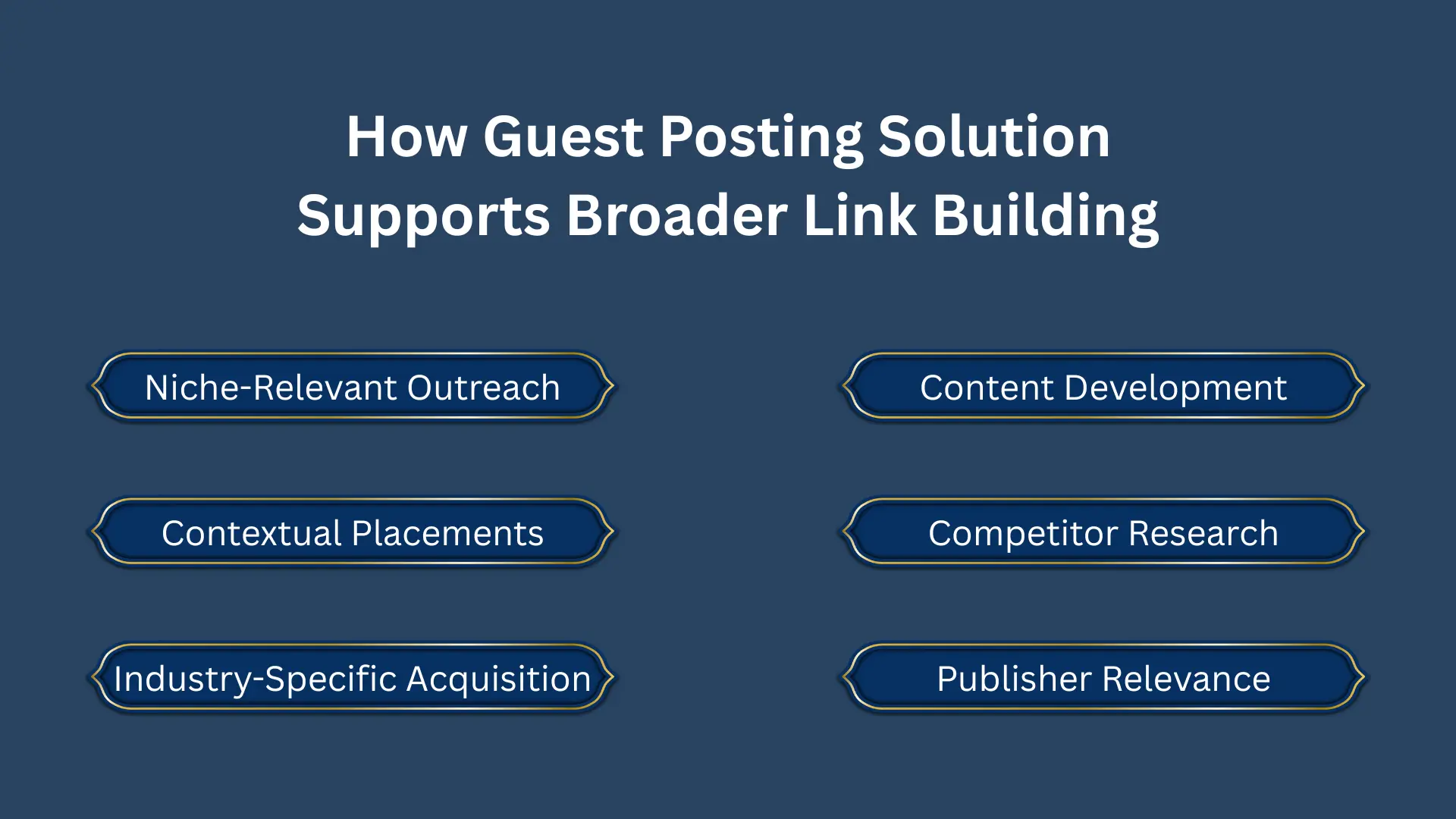
How Guest Posting Solution Supports Broader Link Building
Wikipedia should never be the only link acquisition strategy.
Guest Posting Solution helps businesses build broader publisher relationships through niche-relevant outreach, content development, and contextual placement opportunities. The focus is on finding relevant websites and building backlinks that fit the surrounding content rather than relying on a single source.
A broader campaign can include publisher outreach, editorial content, competitor opportunity research, and industry-specific link acquisition.
This gives businesses more control over their backlink strategy while keeping Wikipedia in its proper role. A highly editorial environment where useful information matters more than guaranteed placement.
If you are evaluating a backlink provider, look beyond promises of high metrics. Review publisher relevance, content quality, placement context, link attributes, and the overall strategy used to acquire links.
Conclusion
Getting backlinks from Wikipedia is less about placing a URL and more about creating resources that genuinely deserve to be referenced. Dead-link replacement, citation opportunities, original research, and useful data can create legitimate opportunities, but no placement is guaranteed. Since Wikipedia links are generally nofollow, focus on their broader value, including visibility, referral traffic, and credibility. For a stronger SEO foundation, combine Wikipedia opportunities with relevant editorial placements, publisher outreach, and quality content.
FAQs
Can I pay someone to add my link to Wikipedia?
Not in the way you might pay for a guest post. Wikipedia doesn’t sell placements, and undisclosed paid editing violates its terms. A legitimate service will research opportunities, build citation-worthy content, and either make a compliant disclosed edit or submit the change for independent review, not guarantee a placement for a fee.
Do Wikipedia backlinks help rankings even though they’re nofollow?
Not through direct link equity. The value comes from referral traffic, brand trust, and increased odds of being cited by AI search tools that treat Wikipedia as a primary source.
How long does it take to get a Wikipedia backlink?
There’s no fixed timeline. Finding the right dead link or citation gap can take anywhere from a few hours to several weeks, and edits from accounts with a thin history often take longer to pass review.
What happens if my edit gets reverted?
Nothing punitive on its own, but repeated reverts on similar grounds can get an account flagged for disruptive editing. Read the revert reason, fix the underlying issue, and consider proposing the change on the talk page instead of re-adding it directly.