Topic Cluster SEO: 10X Your Organic Traffic in 2026
Most businesses publish content without a clear structure. One blog targets a head keyword, another answers a question, and a third covers a trending topic. Each page may be well written, but if they are not connected strategically, Google sees them as isolated assets rather than a trusted resource.
Topic cluster SEO solves that problem.
Instead of creating standalone articles, this SEO model organizes content around a central pillar page and supporting cluster pages. Each page targets a specific search intent, uses semantic keywords, and links to related content. This structure helps search engines understand your expertise, strengthens topical relevance, and improves rankings across broad and long-tail keywords.
For businesses investing in SEO, topic clusters turn content into a scalable lead-generation system. They help service pages gain authority, support commercial keywords, and increase visibility in featured snippets, People Also Ask boxes, and AI-generated search answers.
What Is Topic Cluster SEO?
Topic cluster SEO is a content architecture strategy where one broad page, called a pillar page, links to several supporting pages that cover related subtopics in depth.
The pillar page targets a broad keyword such as “topic cluster SEO.” Supporting cluster pages target secondary keywords like:
- How to choose keywords for SEO
- What are entities in SEO
- keyword gap analysis
- How to find seed keywords
- What are long tail keywords
- pillar pages vs blog posts
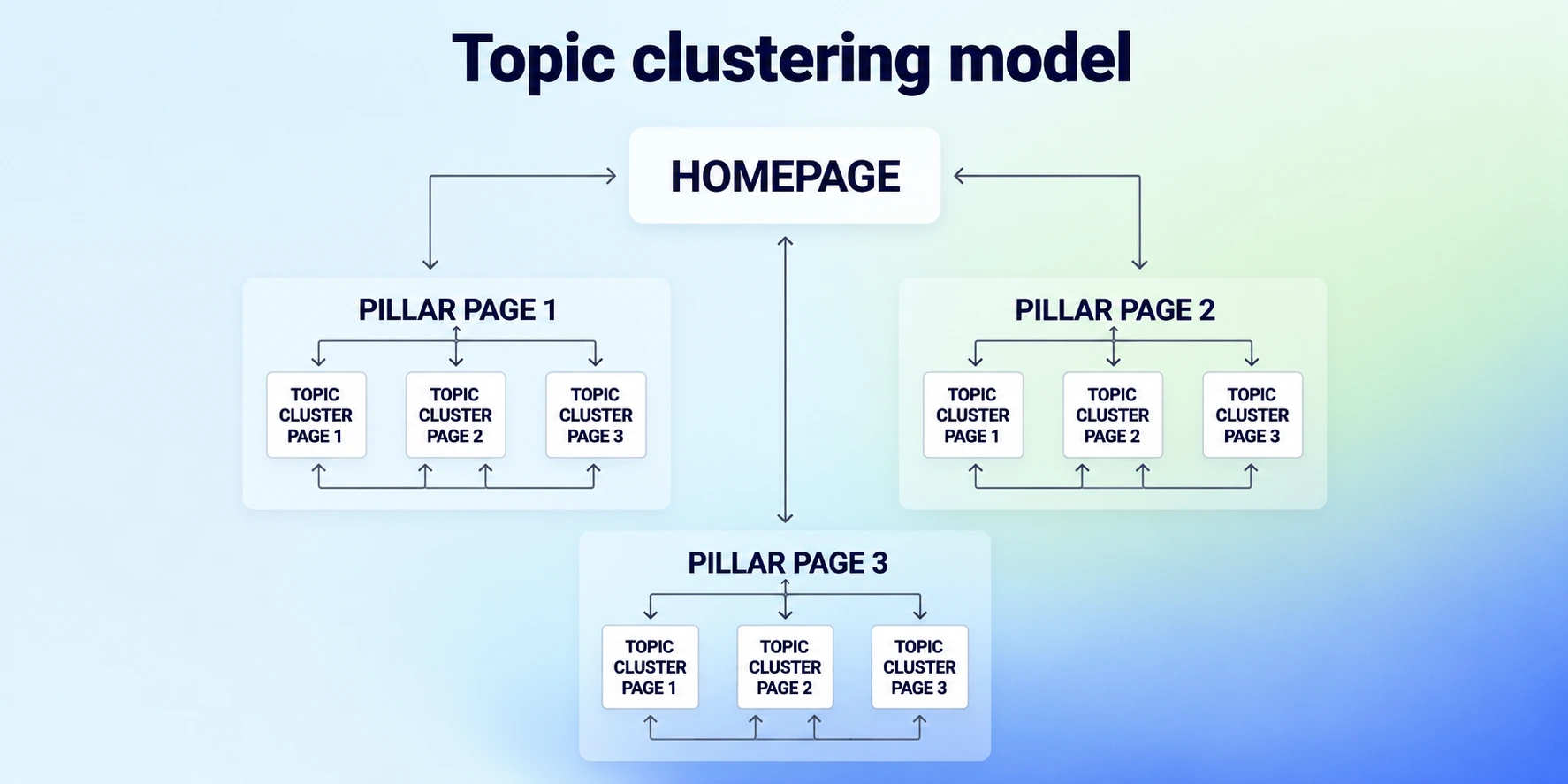
Each cluster page links back to the pillar page, and the pillar page links to every supporting page.
This creates a strong internal linking structure that helps Google understand how your content fits together.
Why Topic Cluster SEO Matters for Business Websites
Businesses that publish content without a clear structure often end up with scattered blog posts that compete with each other instead of working together. Topic cluster SEO organizes your content around one core service topic and connects related pages through strategic internal links. This approach helps search engines understand your expertise and makes it easier for potential customers to find the exact information they need.
Whether you run a SaaS company, law firm, healthcare practice, e-commerce store, marketing agency, or B2B service business, topic clusters turn your website into a stronger lead-generation asset. Search engines increasingly reward websites that demonstrate topical authority through comprehensive coverage and logical site architecture.
Improves Rankings Across Entire Keyword Groups
Instead of relying on a single page to rank for one keyword, topic clusters help your website appear for head keywords, secondary keywords, and long-tail searches related to the same service. As each supporting page gains visibility, it strengthens the authority of the entire cluster.
Builds Topical Relevance for Commercial Topics
When your content covers related entities, semantic keywords, and customer questions, Google sees your business as a credible source on the topic. This improves rankings for high-intent searches that attract buyers rather than casual visitors.
Strengthens Website Architecture
Pillar pages and cluster content create a clean internal linking structure that improves crawlability, distributes link equity, and reduces keyword cannibalization.
Supports AI Overviews and Answer Engines
AI-driven search tools favor content ecosystems that explain a topic thoroughly and connect related concepts clearly.
Generates Qualified Leads Instead of Random Traffic
Because each cluster is built around your services, the traffic you earn comes from people actively researching solutions your business provides.
How Topic Clusters Generate Search Engine Interest
Search engines no longer rank pages based only on keyword repetition. Modern algorithms evaluate how thoroughly a page covers a topic, how it connects to related pages, and whether it demonstrates genuine expertise. Topic clusters work because they mirror the way Google organizes information through entities, relationships, and search intent.
When a pillar page is supported by well-structured cluster content, Google can see that your website covers the subject from multiple angles. This strengthens topical relevance and improves your ability to rank for both broad and highly specific searches.
Resources from Google, Semrush, Moz, and Conductor all emphasize that semantic connections and internal linking are central to modern SEO. In advanced implementations, brands often rely on Best Semantic SEO Consultants to design entity-driven structures, improve keyword mapping, and align topic clusters with search intent for stronger visibility and authority in competitive search landscapes.
1. What Does Entity Mean in SEO?
An entity is a distinct concept that search engines can clearly identify, such as a company, service, person, or topic. Unlike keywords, entities represent meaning. Terms like topic cluster, pillar page, schema markup, and internal linking are all entities associated with SEO.
2. Meaning of Entities and Knowledge Graph Relationships
Google stores entities and their relationships in the Knowledge Graph. This system helps it understand how concepts connect. When your content includes related entities naturally, Google gains stronger confidence in your expertise and context.
3. Topical Relevance vs Keyword Density
Topical relevance is built by covering a subject comprehensively. Keyword density focuses on repetition, while topical relevance focuses on completeness, context, and alignment with search intent.
4. Semantic Keywords and Co-Occurrence Signals
Semantic keywords are phrases that frequently appear together in authoritative content. When pages discuss related concepts in a natural way, search engines recognize stronger thematic depth.
5. E-E-A-T and Comprehensive Topic Coverage
Experience, Expertise, Authoritativeness, and Trust are reinforced when your site explains a topic thoroughly, uses schema markup where appropriate, and connects supporting pages through strategic internal linking.
Components of a Topic Cluster SEO Strategy
A successful topic cluster SEO strategy is built on five core components that work together to improve rankings, strengthen topical relevance, and turn content into a scalable source of qualified leads. Each element has a specific role in helping search engines understand your expertise and the relationship between your pages.
1. Pillar Page
The pillar page is the central asset of the cluster. It targets a broad head keyword, such as “topic cluster SEO,” and provides a complete overview of the subject. Rather than answering one narrow question, it covers the topic in depth and links to supporting articles that explore specific subtopics. A well-structured pillar page acts as both an authority resource for search engines and a conversion-focused landing page for potential clients.
2. Cluster Content
Cluster content consists of supporting pages optimized for secondary keywords and long-tail keywords. These articles address focused questions such as how to choose keywords for SEO, what entities are, or how to find seed keywords. Each page expands the topical depth of the pillar and captures searchers at different stages of the buying journey.
3. Internal Link Architecture
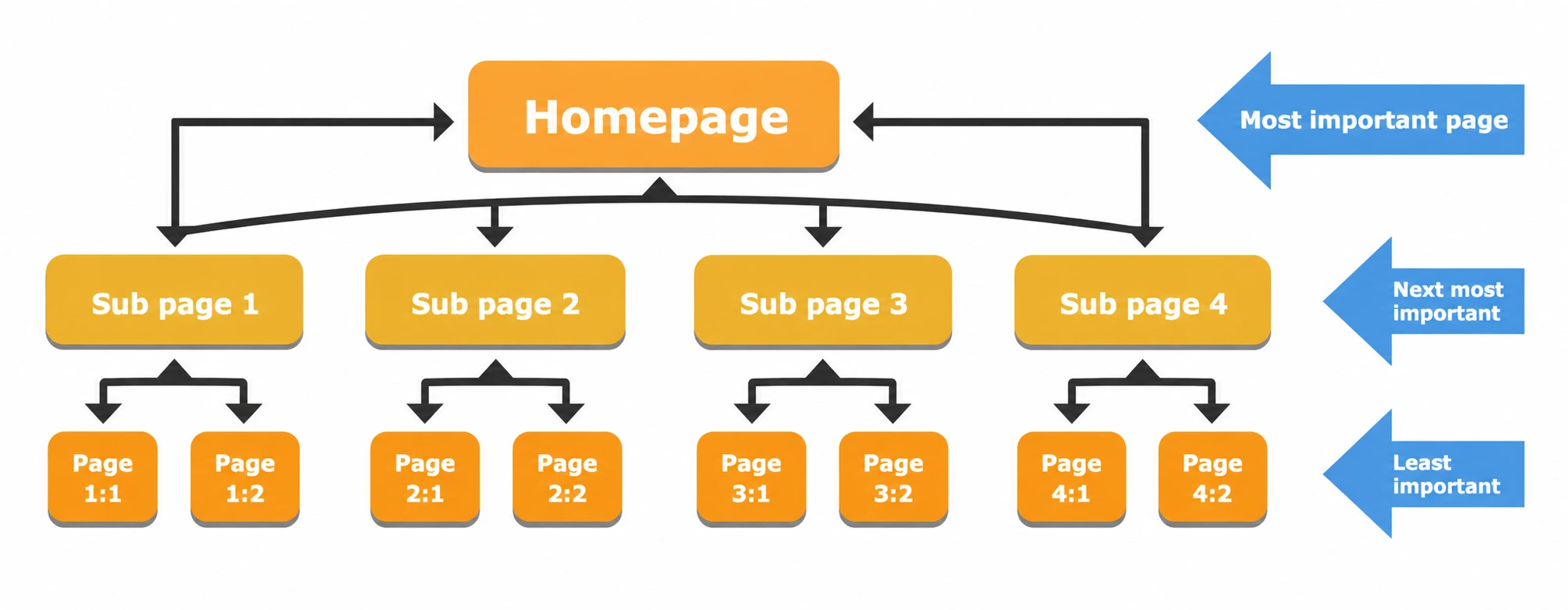
Internal linking connects the pillar page with every supporting article and reinforces semantic relationships between pages. This structure distributes authority, improves crawlability, and helps Google understand which page should rank for the main topic.
4. Schema Markup
Schema markup adds structured data that gives search engines additional context about your content, organization, and page relationships. It supports richer search results and strengthens entity recognition.
5. Content Refresh Process
Search intent changes over time. Regularly updating pillar pages and cluster content keeps information accurate, improves rankings, and ensures your topic cluster remains competitive as new opportunities emerge.
How to Create a Topic Cluster in 10 Minutes
Building a topic cluster does not have to be a lengthy process. Once you understand the structure, you can map out an SEO-ready content cluster in less than ten minutes. The goal is to identify one core topic, organize related keywords by search intent, and connect every page through strategic internal linking.
This process is used by leading SEO platforms such as Semrush, Moz, Conductor, and Ahrefs to build content strategies that strengthen topical authority and improve rankings across entire keyword groups.
Step 1: Choose a Core Topic That Matches Your Service
Start with a broad topic directly related to what your business sells. This becomes your pillar page topic.
For example:
- SEO agency → Topic Cluster SEO
- Law firm → Personal Injury Law
- SaaS company → Customer Onboarding Software
- Healthcare practice → Hormone Replacement Therapy
Your topic should be broad enough to support multiple subtopics but focused enough to align with one commercial service.
Step 2: Identify Your Seed Keyword and Head Keyword
Choose the primary phrase you want the pillar page to rank for. This is your seed keyword and often your head keyword.
For this example:
- Seed keyword: topic cluster SEO
- Head keyword: topic cluster SEO
Then list closely related semantic keywords such as pillar pages, topic cluster, keyword gap, semantic keywords, and topical relevance.
Step 3: Find Supporting Long-Tail Keywords
Look for question-based and secondary keywords that deserve their own pages.
Examples:
- how to choose keywords for SEO
- what are entities
- how to find seed keywords
- what are long-tail keywords
- keyword gap analysis
Each of these terms becomes a cluster page that supports the main pillar page.
Step 4: Map the Content Structure
Create one pillar page and connect it to 5–10 supporting articles.
Pillar Page:
- Topic Cluster SEO
Cluster Pages:
- What Does Entity Mean in SEO?
- How to Find Seed Keywords
- How to Choose SEO Keywords
- Keyword Gap Analysis
- Pillar Pages Explained
Step 5: Add Internal Links and Publish
Link the pillar page to every cluster page and link each supporting page back to the pillar page. Add contextual links between related articles where relevant.
This simple structure helps search engines understand your content hierarchy and gives your site stronger topical authority. Over time, the entire cluster becomes easier to rank and more effective at attracting qualified leads.
For more useful insights, explore our other blog post, “SEO Content Writing: Craft Content That Google Loves”. Discover more to deepen your understanding.
Effective Pillar Page Types and Examples
A strong pillar page is the backbone of any topic cluster SEO strategy. It is not just a long blog post; it is a structured content hub designed to capture broad search intent, support multiple cluster pages, and establish topical authority across an entire subject area.
What Is a Resource Pillar Page?
A resource pillar page provides a complete guide to a broad topic and links out to in-depth cluster articles. It is commonly used in educational and informational SEO strategies. For example, a “Topic Cluster SEO Guide” pillar page can connect to supporting content like keyword gap analysis, semantic keywords, and how to choose SEO keywords.
What Is a Service Pillar Page?
A service pillar page is built around a commercial offering and is designed to generate leads. It focuses on high-intent head keywords such as “keyword research services” or “SEO strategy services” while supporting pages explain related topics like entity SEO, internal linking, and search intent.
What Is a Hybrid Pillar Page?
A hybrid pillar page combines education and conversion. It explains the topic in detail while naturally guiding users toward a service. For example, a page on “Choosing Keywords for SEO” can educate users and introduce professional keyword research services from an agency like Guest Posting Solution.
Each pillar type strengthens topical relevance when connected with structured internal linking and semantic keyword coverage.
Two Examples of Topic Clusters For Better Understanding
1. Google’s “About Google” Content Ecosystem
Topic: Google
Title: Google
URL: https://en.wikipedia.org/wiki/Google
Number of pages in the cluster: 100+
Wikipedia’s page on Google functions much like a topic cluster hub. The main article covers the company’s history, products, acquisitions, advertising business, leadership, and parent company, while linking to dedicated pages about related entities such as Google Search, YouTube, Android, Gmail, Google Ads, and Alphabet Inc..
This structure helps users move from a broad overview to detailed subtopics without leaving the content ecosystem. Every linked page also points to additional related entities, creating a dense internal linking network.
The result is a highly authoritative cluster that ranks for countless queries tied to Google’s products, services, and corporate history. It is an excellent example of how entity-based content and semantic relationships strengthen topical relevance.
2. Shopify’s “How to Start an Online Store” Topic Cluster
Topic: Starting an Online Store
Title: How to Start an Online Store in 2026
URL: https://www.shopify.com/blog/start-online-store
Number of pages in the cluster: 20+
Shopify uses this guide as a pillar page targeting the broad commercial keyword “start online store.” The page walks readers through niche selection, product sourcing, branding, payments, shipping, and marketing.
Throughout the guide, Shopify links to supporting content on topics such as business name ideas, dropshipping, product photography, inventory management, and email marketing. Each article addresses a specific long-tail keyword and naturally links back to the central guide.
This cluster works especially well because it aligns informational content with a commercial outcome: helping readers launch a store using Shopify’s platform. The educational value builds trust, while the internal links guide users toward product adoption.
How to Choose Keywords for SEO Topic Clusters
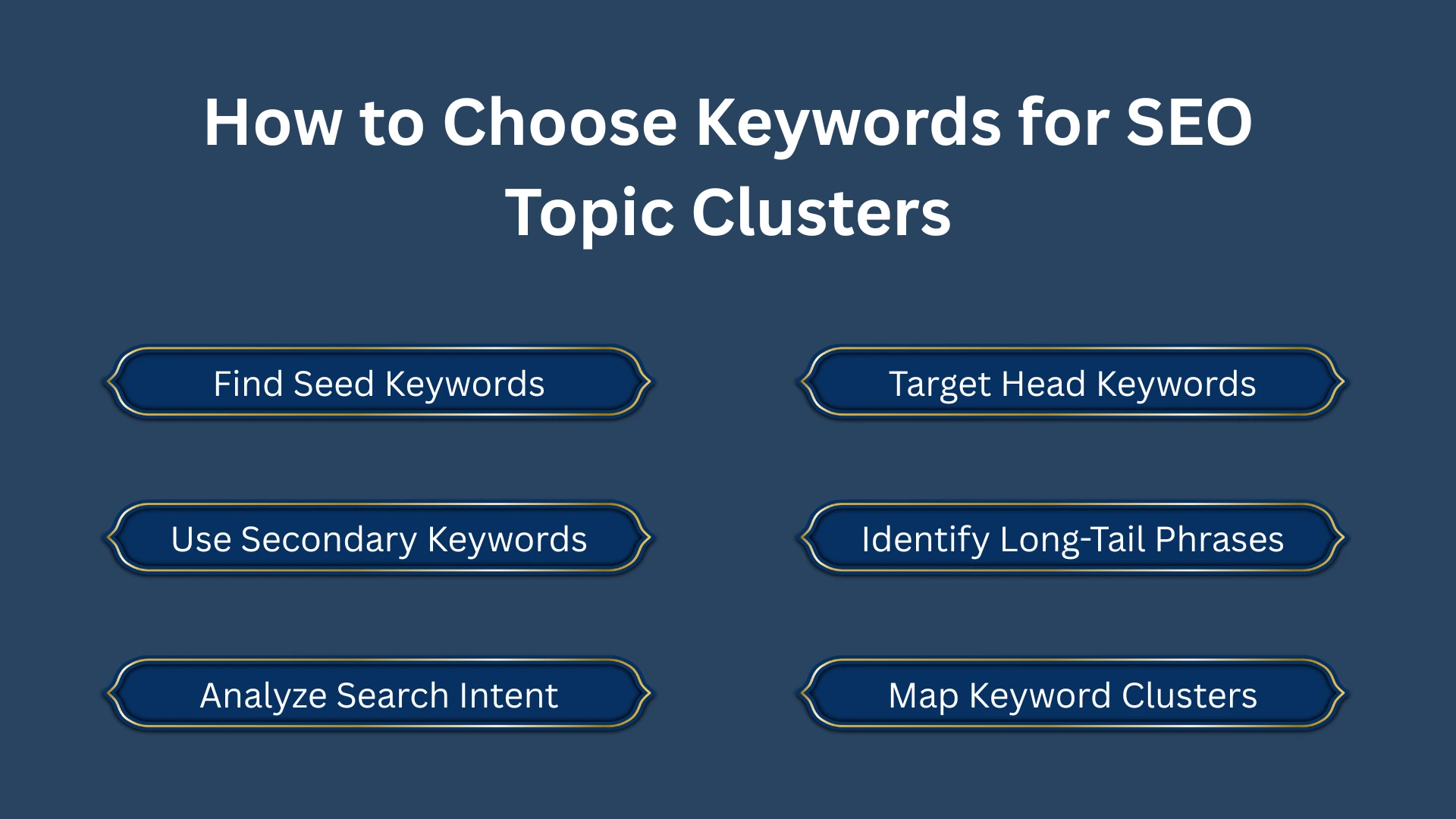
Keyword selection is the foundation of every successful topic cluster. If the wrong terms are targeted, even well-written content will struggle to attract qualified traffic. The goal is not to collect hundreds of unrelated keywords. The goal is to build a structured keyword map that reflects how your audience searches for solutions and how your services align with that intent.
A strong topic cluster begins with one seed keyword, expands into head keywords and secondary keywords, and then branches into long-tail and question-based searches. This approach allows a single content cluster to rank across multiple search intents while supporting your broader SEO strategy.
How to Find Seed Keywords
A seed keyword is the broad term that represents the main topic or service you want to rank for. For this article, “topic cluster SEO” is the seed keyword. To find seed keywords, start with the core services your business sells and the terms your ideal customers use when researching those services.
What Are Head Keywords?
Head keywords are broad, high-volume phrases with strong commercial value. They usually consist of one to three words, such as “SEO strategy” or “keyword research services.” These terms often become pillar pages because they cover a large topic with many supporting subtopics.
What Are Secondary Keywords?
Secondary keywords are closely related phrases that reinforce the primary topic. Examples include semantic keywords, keyword gap, pillar pages, and choosing keywords for SEO. They help search engines understand context and improve topical relevance.
What Are Long-Tail Keywords?
Long-tail keywords are specific search phrases such as “how to find seed keywords” or “how to choose SEO keywords.” They tend to have lower competition and clearer intent, which makes them ideal for cluster content.
How to Find Long Tail Keywords
Review Google autocomplete suggestions, People Also Ask results, customer questions, and tools like Semrush and Moz. These sources reveal the exact language searchers use.
How to Choose SEO Keywords Based on Intent
Group keywords by search intent. Informational terms educate, commercial investigation terms compare solutions, and transactional terms signal buying intent. A balanced topic cluster targets all three to attract and convert qualified visitors.
For more useful insights, explore our other blog post, “Website Copywriting Services Enhance Online Presence with SEO”. Discover more to deepen your understanding.
Hub and spoke vs. topic clusters vs. pillar pages: What’s the difference?
| Factor | Hub & Spoke | Topic Clusters | Pillar Pages |
|---|---|---|---|
| Structure | Central hub linking to spokes | Pillar page + interconnected cluster pages | Single comprehensive page |
| Focus | Broad navigation model | Semantic SEO + topical authority | Core topic coverage |
| SEO Intent | General content grouping | Keyword + entity-based ranking system | Broad head keyword targeting |
| Internal Linking | Hub links outward only | Two-way strategic linking (pillar ↔ clusters) | Links out to cluster content |
| Keyword Strategy | Loose keyword grouping | Seed, head, secondary, long-tail keywords | Head keyword dominance |
| Depth of Content | Medium depth per page | Deep coverage across multiple pages | High depth in one page |
| Search Engine Understanding | Moderate clarity | Strong entity + topical relevance | Strong but dependent on clusters |
| Best Use Case | Blogs, content navigation | SEO growth & authority building | Foundation page in cluster system |
| AI/Google Interpretation | Basic topic grouping | Strong semantic + entity mapping | Strong single-topic authority |
Conclusion
If your website contains disconnected content, overlapping articles, or pages that fail to rank, a professionally planned topic cluster strategy can transform your results.
Guest Posting Solution develops revenue-focused content architectures backed by keyword research, semantic analysis, pillar pages, cluster content, and strategic internal linking.
The outcome is a content system built to increase topical authority, capture qualified search traffic, and convert visitors into customers.
FAQs
How many pages should you have in a cluster?
A strong topic cluster usually includes 1 pillar page supported by 6 to 15 cluster pages. The exact number depends on keyword depth, secondary keywords, and available long-tail search opportunities.
Are “topic clusters,” “content hubs,” and “pillar pages” the same thing?
They are connected but not identical. A pillar page is a single core page, while a content hub or topic cluster is the full structure linking pillar and supporting cluster pages together.
What is the SEO & AEO benefits of topic clusters and pillar pages?
Topic clusters improve SEO by strengthening topical relevance, entity connections, and internal linking. They also enhance AEO by helping search engines and AI systems understand structured, authoritative content coverage.
How many cluster pages should support a pillar page?
A pillar page is usually supported by 6 to 15 cluster pages, depending on keyword depth, topic complexity, search demand, and available long-tail keyword opportunities within the niche.
How long does topic cluster SEO take to work?
Topic cluster SEO typically shows early improvements in 8 to 12 weeks, while stronger rankings, authority building, and consistent organic traffic growth usually take 3 to 6 months, depending on competition.