Competitor Backlink Analysis Guide to Outrank Competitors 2026
Competitor backlink analysis is the process of identifying where competitors earn links and using that data to improve your own SEO strategy. It reveals high-authority link sources, content gaps, and scalable link-building opportunities that directly impact rankings and traffic.
Struggling to outrank competitors despite publishing content? You are not alone. Many businesses invest heavily in content but fail to gain visibility due to weak website backlinks. Without strong inbound links, even well-optimized pages struggle to compete in search results.
This guide is built as a solution-focused resource, not just theory. You will learn how to analyze competitor backlinks, uncover proven link opportunities, and turn them into measurable growth.
The outcome is clear: stronger authority, consistent traffic growth, and backlinks that contribute directly to conversions.
What Is Competitor Backlink Analysis and Why Does It Matter?
Competitor backlink analysis is the process of studying the backlink profiles of websites that rank for your target keywords. It shows which websites link to your competitors, which pages earn the most links, and what link-building tactics they use.
The goal is not to copy every backlink. It is to find relevant link opportunities that may also work for your website.
A competitor backlink analysis can help you:
- Find websites that already link to businesses in your niche
- Discover pages that attract a high number of referring domains
- Find gaps in your own backlink profile
- Identify useful content ideas for link building
- Build a stronger outreach and link-building strategy
- Prioritize relevant websites over low-quality link sources
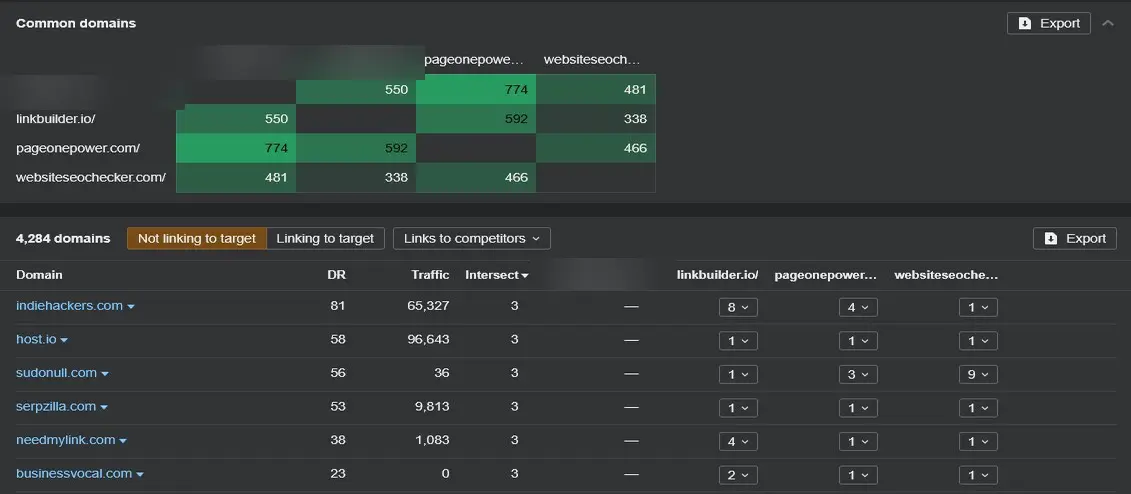
One useful method is backlink gap analysis. It compares your backlink profile with those of your main SEO competitors. You can then find domains that link to them but not to you.
For example, a competitor may have links from industry blogs, news sites, resource pages, and business publications. If those sites also publish content related to your business, they may be useful outreach targets.
The value comes from the data. You are not starting your link-building strategy from scratch. You are studying websites that already earn links in the same search space.
Who Needs Competitor Backlink Analysis Services?
Strong backlink competitor analysis helps different brands and businesses to secure high-quality links that directly influence visibility, trust, and organic growth.
1. SaaS & Tech Companies
SaaS brands operate in highly competitive environments where authority determines visibility. They require scalable backlink competitor analysis to secure links from high-authority tech publications, product review platforms, and niche blogs. Product-led content combined with strong backlinks accelerates growth.
2 Local Businesses & Agencies
Local SEO depends heavily on geo-relevant backlinks. Competitor website analysis helps identify directories, local publications, and regional blogs linking to competitors. These insights improve local SERP visibility and lead generation.
3. E-commerce Brands
E-commerce businesses benefit from backlinks pointing to product pages and category pages. Competitor backlink gap analysis helps identify opportunities for revenue-driving keywords. Strong backlinks improve both rankings and buyer intent traffic.
4. Enterprise SEO Teams
Large organizations require advanced workflows to monitor backlinks at scale. They integrate AI search and competitive analysis tools to track competitor strategies, analyze trends, and maintain consistent link acquisition across multiple markets.
For more useful insights, explore our other blog post, “Broken Link Checker: Advanced Backlink Audit Methods”. Discover more to deepen your understanding.
Metrics to Analyze in a Competitor’s Backlink Profile
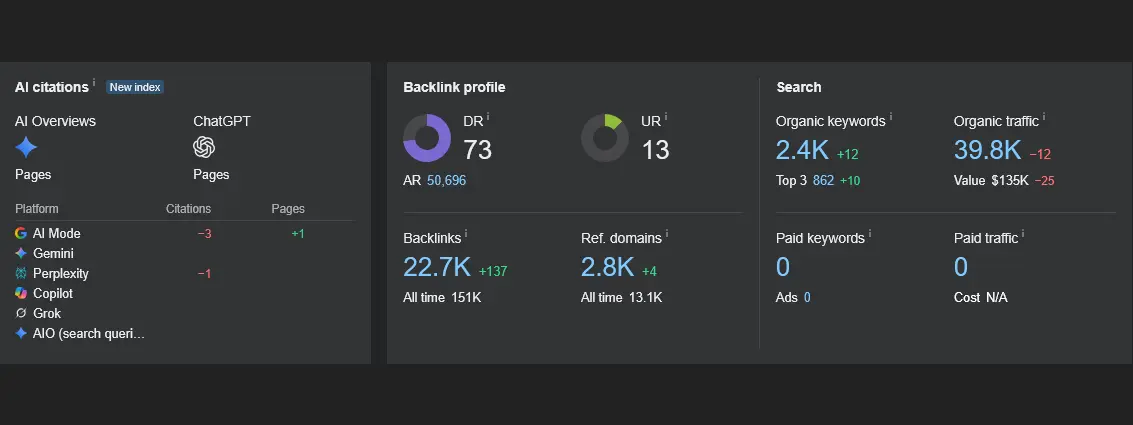
A successful competitor backlink analysis focuses on quality and patterns, not just volume.
- Authority Score Checker (DA / DR): Measures the strength of linking domains
- Referring Domains vs Total Backlinks: Indicates diversity and reliability
- Anchor Text Distribution: Shows natural vs over-optimized link patterns
- Link Velocity: Tracks how quickly competitors gain links
- Follow vs Nofollow Ratio: Evaluates link equity flow
- Toxic Links & Spam Signals: Identifies harmful backlinks
The most important metrics in backlink competitor analysis are authority score, referring domains, anchor text distribution, and link growth trends.
Focusing only on backlink quantity is a common mistake. A smaller number of high-quality links often delivers better results than thousands of low-value links.
How to Conduct a Competitor Backlink Analysis
A useful competitor backlink analysis starts with the right websites and the right data. Follow these steps to find backlink opportunities that fit your SEO goals.
1. Find Your Real SEO Competitors
Start by searching your main target keywords. Look at the websites that appear on the first page of Google.
These sites are your SEO competitors, even if they do not sell the same products or services.
Choose a few competitors with similar content, audience, and search intent. Avoid analyzing every site that ranks for one keyword.
2. Check Their Backlink Profiles
Use a competitor backlink checker such as Ahrefs, Semrush, Moz, or SE Ranking.
Review these areas:
- Referring domains
- Top linked pages
- Backlink types
- Anchor text
- Domain authority or authority score
- New and lost backlinks
- Follow and nofollow links
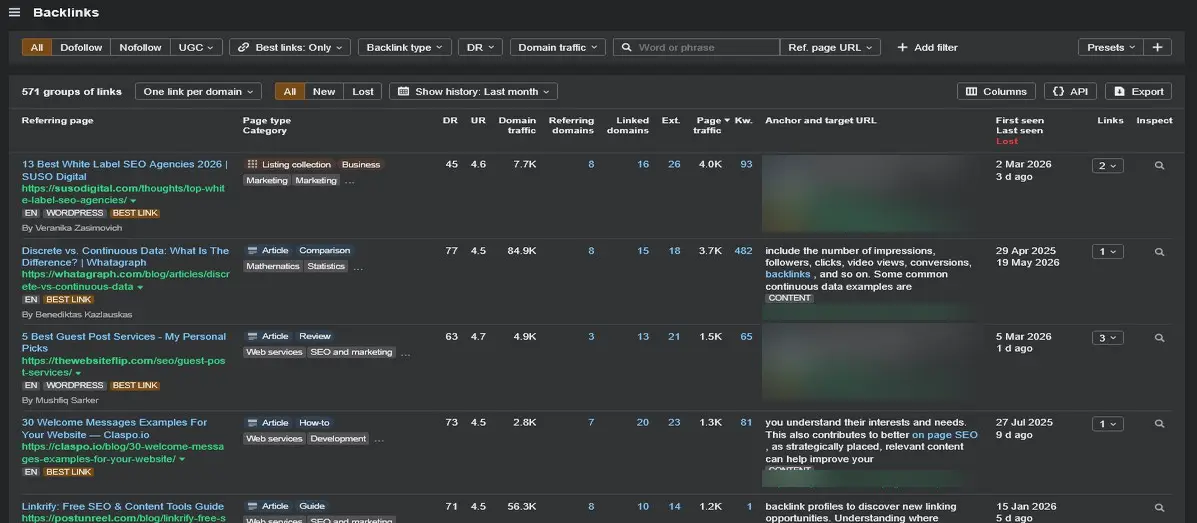
Pay close attention to the pages that attract links. A competitor may have one research report, guide, tool, or case study that earns more links than most of its website. That can reveal a strong linkable asset idea for your own site.
3. Run a Backlink Gap Analysis
Next, compare your backlink profile with your competitors. Look for websites that link to two or more competitors but do not link to your site. These domains are often strong prospects because they already show interest in your topic.
Group the results by:
- Industry relevance
- Website authority
- Content relevance
- Number of competitor links
- Potential traffic value
Do not chase every domain. A smaller list of relevant prospects can make outreach more effective.
4. Identify How Competitors Earn Links
Study the reason behind each important backlink. Competitors may earn links through:
- Guest posts
- Digital PR
- Original research
- Expert quotes
- Resource pages
- Industry studies
- Case studies
- Useful tools and calculators
- Broken link building
- Niche-relevant content
This helps you understand which link-building strategies work in your market.
You may also find that competitors earn many links to a specific type of content. For example, statistics pages may attract links from publishers, while detailed guides may earn links from industry blogs.
5. Find Link Opportunities You Can Improve
Do not copy a competitor’s page and ask the same websites for a link. Create a better reason to link to your content.
You could update old information, add original data, improve the design, include expert insights, or provide a useful tool.
Then contact relevant websites and explain why your resource may help their readers.
The best competitor backlink analysis turns data into action. It helps you build a targeted outreach list instead of sending the same email to hundreds of unrelated websites.
Competitor Link Gap vs Backlink Gap Analysis
Understanding this difference improves strategy precision.
| Aspect | Competitor Link Gap Analysis | Backlink Gap Analysis |
|---|---|---|
| Focus Level | Domain-level opportunities (which websites link to competitors) | Both domain + page-level insights (which links and pages perform) |
| Primary Goal | Discover new referring domains to target | Identify overall backlink weaknesses and opportunities |
| Core Insight | Shows where competitors are getting links | Shows which backlinks you lack compared to competitors |
| Use Case | Outreach targeting and link acquisition strategy | Strategic SEO planning and authority growth |
| SEO Impact | Quick wins with pre-validated link sources | Long-term ranking improvement and authority building |
| Key Benefit | Higher outreach success due to proven linking behavior | Complete visibility into backlink profile gaps and growth strategy |
| Example | A blog links to 3 competitors but not you → outreach opportunity | Competitors have 500 referring domains, you have 200 → authority gap |
Backlink Strategies That Can Drive Traffic and Revenue
Competitor backlink data is useful only when you turn it into a clear link-building plan. The right strategy can help you earn relevant links, reach new audiences, and support pages that have business value.
1. Use Content Formats That Earn Links
Some content types get more backlinks because they offer useful information. These include data guides, original research, industry statistics, tools, and case studies.
Useful content gives people a reason to link to your page. It can also support outreach, earn natural links, and build trust in your niche.
2. Use Digital PR and Original Research
Original data can attract links from publishers, bloggers, and industry websites.
Study the research content that earns backlinks for your competitors. Look for topics with strong search demand but limited recent data. You can then publish your own study, survey, report, or data analysis.
Promote it through relevant journalists, publishers, industry sites, and content creators. This approach can earn both backlinks and referral traffic.
3. Find Broken and Outdated Link Opportunities
Competitor backlink research can reveal pages that no longer exist or contain outdated information.
Search for broken links on relevant websites. If you have a useful replacement, contact the site owner and suggest your page.
You can also improve outdated resources and pitch the updated version to websites that still reference the old content. This works best when your replacement closely matches the original topic and adds clear value.
4. Target Websites That Link to Multiple Competitors
Use competitor link building to find domains that already link to several businesses in your niche. These sites have shown a clear interest in your topic.
Review the pages where competitors earned their links. Then decide what you can provide that adds value to the same audience.
Your pitch could focus on original research, a stronger guide, updated statistics, expert input, or a useful resource. This approach is more targeted than broad outreach. You already have evidence that the website links to content in your industry.
5. Study High-Converting Pages
Look at competitor pages that get strong backlinks and steady traffic. Check their referring domains, page structure, and main offer.
This shows what makes these pages work. You can use these insights to improve your own content, attract links, and guide users toward action.
6. Use AI for Competitive SEO Analysis
AI tools can help you study competitors and find new SEO opportunities. They can spot patterns in search results, content, and backlink profiles.
Useful AI-driven strategies include:
- Entity-based SEO
- Semantic link building
- Competitor traffic analysis
- Predictive SEO insights
- Backlink opportunity research
These tools can help you find link opportunities faster and build a stronger SEO strategy.
Backlink Mistakes that Kill Your Business’s SEO in 2026
Backlink analysis is not about replication alone. It requires understanding the context, relevance, and intent behind each link.
- Copying low-quality or spammy links
- Ignoring anchor text diversity
- Not monitoring backlinks regularly
- Prioritizing quantity over relevance
- Missing semantic SEO signals
Search engines now prioritize natural link patterns, and over-optimized or manipulative backlinks can trigger ranking drops or algorithmic penalties. Excessive use of exact-match anchors or low-quality links often signals spam and reduces trust in your backlink profile.
A sustainable strategy focuses on high-quality, relevant backlinks with diverse anchor text, as quality consistently outweighs volume in long-term SEO performance
Tools for Competitor Backlink Analysis (Commercial Intent Section)
SEO competitor analysis tools breakdown:
- Ahrefs – Advanced backlink analyzer with deep data
- SEMrush – Comprehensive competitor website analysis platform
- Moz – Reliable authority score checker and link metrics
- SE Ranking – Cost-effective all-in-one SEO solution
These tools help businesses check competitor website traffic, analyze backlink profiles, and monitor link-building progress effectively.
What to Look for in a Competitor Backlink Checker
- Fresh and frequently updated link index
- Toxic link detection features
- Competitor backlink gap analysis tools
- AI-driven insights and automation
Choosing the right tool improves accuracy and decision-making.
How Professional Services Outperform DIY Backlink Analysis
DIY backlink analysis often results in incomplete insights due to limited expertise, restricted data access, and a lack of strategic direction. While tools provide raw data, they rarely translate into actionable growth without proper interpretation.
Professional services provide:
- Manual outreach strategies instead of automation
- Data interpretation instead of raw reports
- Access to premium link networks
- Scalable guest posting campaigns
Experienced teams also identify high-impact opportunities faster, avoid toxic link risks, and align backlink strategies with business goals rather than vanity metrics.
If you want high-authority backlinks without wasting time on trial-and-error, a Guest Posting Solution agency can help you identify, secure, and scale competitor-level backlinks faster.
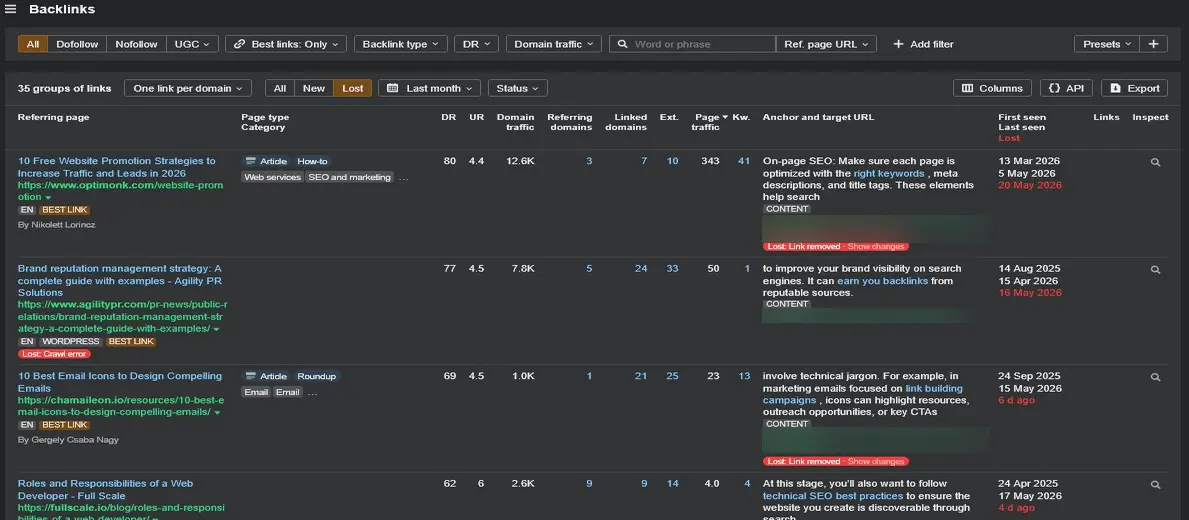
How to Monitor Backlinks & Track Competitor Progress
Backlink analysis is not a one-time task. Continuous monitoring ensures consistent growth and protects your SEO performance from unexpected drops.
- Set up alerts for new backlinks.
- Track lost backlinks and recover them
- Monitor competitor link velocity trends
- Conduct ongoing SEO website analysis
Backlink monitoring helps identify new opportunities, detect toxic links, and recover lost authority before it impacts rankings.
Search engines continuously evaluate backlink profiles, and even small changes, like lost links or spam signals, can influence rankings, making real-time tracking essential for maintaining authority.
Regular monitoring helps maintain a competitive advantage and adapt to changes in search algorithms.
Conclusion
Backlinks remain one of the strongest ranking signals in SEO. Competitor backlink analysis provides a clear shortcut to understanding what works in your industry.
Instead of guessing, businesses can rely on competitor data to build smarter strategies. The process is simple: analyze competitor backlinks, replicate high-value opportunities, and improve on them.
The result is faster rankings, stronger authority, and measurable business growth. Smarter link building is not just about visibility; it directly impacts revenue and long-term SEO success.
FAQs
How do I check backlinks to my site?
Use a backlink analyzer tool like Ahrefs or SEMrush to review referring domains, anchor text distribution, link quality, and identify toxic or lost backlinks.
What is the best competitor backlink analysis tool?
Ahrefs and SEMrush are considered top tools due to their large backlink databases, competitor insights, and advanced features for tracking link profiles and SEO performance.
How often should I monitor backlinks?
Monthly monitoring works for most sites, while competitive industries require weekly or even daily tracking to detect lost links, toxic signals, and ranking-impacting changes early.