User Intent: How to Match Content With Search Needs
Search engines are no longer just keyword-matching machines; they are intent-detection engines.
If your content doesn’t align with user intent, it doesn’t matter how perfectly optimized your keywords are. Today’s algorithms prioritize relevance, usefulness, and task completion. That’s why brands and businesses must move beyond keyword stuffing and focus on intent-based optimization.
User intent (also called search intent or Google search intent) refers to the underlying goal behind a user’s query. Are they looking for information? Comparing options? Ready to buy? Searching for a specific brand?
Understanding this connects directly to:
- Higher click-through rates (CTR)
- Improved dwell time
- Stronger conversion rates
- Better Featured Snippet optimization
- Sustainable blog ROI
Modern Google intent signals evaluate whether your page satisfies the user journey stage, not just whether it contains the right keywords.
In the age of AI-powered search and semantic understanding, matching search intent models is no longer optional. It’s the difference between ranking and disappearing.
What Is User Intent & Why Does It Matter in SEO
User intent (sometimes called search intent) is the reason or purpose behind a user’s online query. It answers the question: What is the searcher trying to achieve?
Instead of matching keywords literally, search engines interpret user goals and try to serve results that satisfy that underlying purpose. This can range from learning something to purchasing or comparing products.
Two Key Ideas: Query Purpose vs Keyword Intent
- Query purpose = Why the user initiated the search
- Keyword intent = the semantic meaning of words in a query, clues about the intent category
Earlier, SEO focused on keywords. Today, intent matching outranks literal keyword matching because Google uses semantic understanding and context to deliver a better user experience. Content that satisfies intent + context boosts rankings and engagement.
Search Engines & Intent Recognition
Google doesn’t just look at the literal words; you see it when the top results include:
- Featured answer snippets for “how to…” queries
- Product listings for “buy” queries
- Compare results for “best + vs” research terms
That happens because Google’s algorithm interprets user goals and serves intent-matched results
This shift aligns with semantic SEO, natural language processing, and the evolution toward answer engines.
Why Intent Is a Major Ranking Signal
Search engines no longer rank pages based only on keywords. Modern algorithms evaluate whether a page fulfills the user’s task. Intent alignment has become a primary ranking factor because search engines aim to deliver the most relevant results for each query.
Search engines tailor results based on:
- User goals: What the searcher is trying to achieve
- Device context: Mobile vs. desktop behavior differences
- Location: Local intent and geographic relevance
- Search history: Personalized patterns
- Engagement data: Clicks, dwell time, and interaction signals
If content fails to match the intended user task, it may rank briefly due to keyword relevance. However, poor engagement signals quickly weaken performance. Pages that mismatch intent often:
- Experience high bounce rates
- Show low time-on-page
- Lose rankings over time
Types of Search Intent (With SEO Signals & LSIs)
Search intent naturally falls into several categories that signal where a user is in the buyer or content consumption journey.
1. Informational Intent
What it means: Users want answers, facts, explanations, how-tos, or guidance without immediate commercial interest.
Search examples: What is SEO? How to do keyword research?
Typical content formats: Guides, tutorials, explainer pages, blogs, definition pages
Intent signals:
- Phrases like what, how, why, tutorial, best way to
- SERP display: featured snippets, People Also Ask boxes
Why do brands need informational pages?
They build trust, authority, and traffic early in the funnel, especially educational content that helps users learn before choosing a product.
2. Navigational Intent
What it means: Users want to reach a specific page, brand site, or resource, often because they already know what they’re looking for.
Examples: “Netflix login” or “Ahrefs dashboard.”
Content format: Landing pages, homepage links, internal site navigation
Users here already have brand awareness. Make sure your site architecture supports clear paths to these destinations and uses brand names and internal anchor text effectively.
3. Commercial Intent (Commercial Investigation)
What it means: Users are evaluating options before deciding to act; this is mid-funnel behavior.
Examples: best SEO tools, SEO service comparison, reviews
These signals show user readiness to research purchase options, but not yet commit. Content types include:
- Comparison posts
- Product/service reviews
- Case studies
People in this category often use keywords like compare, vs, review, top, best, and all, semantically tied to decision content.
4. Transactional Intent
What it means: Users are ready to convert, complete a purchase, or take a specific action.
Examples: buy SEO audit services, purchase a Shopify plan
This is high-intent traffic. Pages should be optimized with:
- Clear calls-to-action (CTAs)
- Product pages
- Service sign-up forms
- Pricing and conversion triggers
Transactional pages that meet intent close the gap between searcher expectations and conversion opportunities.
How to Analyze SERPs to Discover Intent
SERP intent analysis is one of the most powerful SEO strategies. Instead of guessing intent, analyze the results.
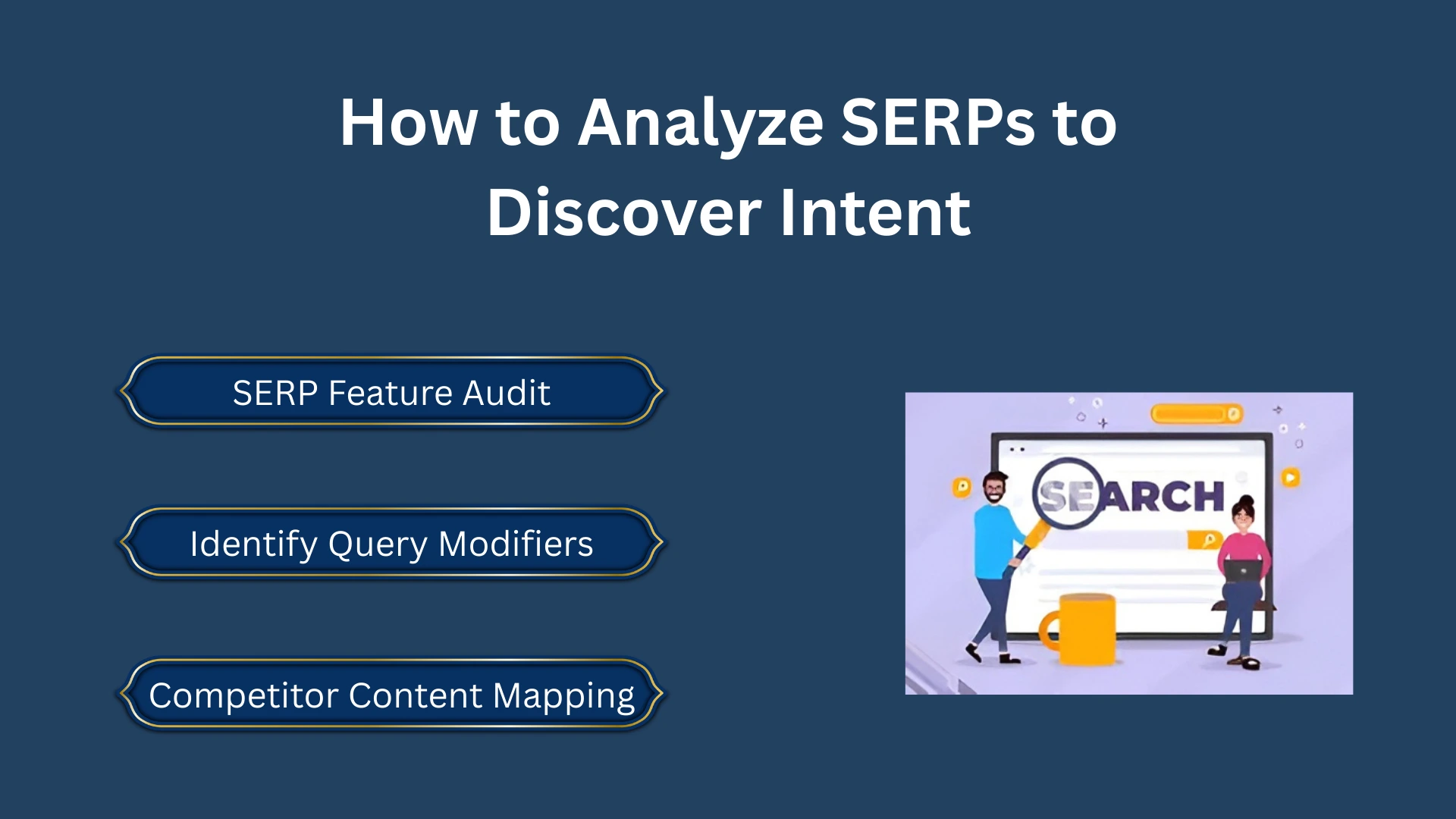
Step 1: Conduct a SERP Feature Audit
Begin by examining the search engine results page (SERP) for your target keyword. The visible format of results reveals search intent immediately.
If you see Featured Snippets, definitions, or “People Also Ask” boxes, the intent is informational. If results display comparison articles, “best of” lists, or review roundups, the query reflects commercial intent. When service pages, booking forms, or strong call-to-action layouts dominate, the intent is transactional. Branded homepage links or sitelinks indicate navigational intent.
Look closely:
- Are there step-by-step guides?
- Are product or service pages ranking?
- Are listicles common?
- Is there a local pack?
The dominant format signals what users expect.
Step 2: Identify Query Modifiers
Query modifiers act as direct intent signals embedded in language.
- “How to” → Informational
- “Best” → Commercial
- “Buy” → Transactional
- “Login” → Navigational
These modifiers reflect Google intent signals and help classify keyword purpose instantly.
Step 3: Competitor Content Mapping
Study top-ranking pages carefully. Analyze word count, heading hierarchy, content depth, CTA placement, and schema usage.
If leading results are long-form guides with structured sections, publishing a thin sales page will fail. Intent misalignment leads to weak engagement and ranking loss.
Matching Content Types to Intent Strategically
Once you know the intent behind a query, you must structure your content accordingly.
1. Content Formats that Satisfy Intent
Informational content
- H1: clear topic
- Subsections with step-by-step instructions
- Bullets + lists for readability
- FAQ sections
Use the How To schema to mark up steps and increase the chance of a rich result.
Commercial content
- Comparison tables
- Pros & cons
- Case studies
- Expert commentary
Schema to include:
- Product
- Review
- Aggregate Rating
Transactional content
- Strong CTA (Buy, Sign-Up)
- Clear pricing
- Trust signals (reviews, guarantees)
Markup suggestions:
- Offer
- Product
- CTA focus text
Navigational content
- Simple, clear landing pages
- On-site search optimization
- Prominent brand links
- Site schema
2. Semantic Clustering & Content Architecture
Group related topics to build topic authority. For example:
- “What is search intent?” → informational
- “Best tools for intent analysis” → commercial
- “Intent optimization services” → transactional
- On-page SEO service strategy
Use internal linking across these pages to reinforce context and help Google understand topic clusters.
3. Structured Data & Schema Markup
Implement:
- FAQ Page schema
- How To schema
- Article schema
- Breadcrumb schema
Structured markup improves:
- Crawling clarity
- Snippet eligibility
- Contextual understanding
Search engines interpret structured data to better match intent categories.
Intent-Driven Keyword Research & Mapping
1. Intent-First Keyword Research
Instead of chasing volume, Ask:
- What stage is this query?
- What task is the user trying to complete?
- What format do top results use?
2. Keyword Clustering by Intent Stage
Create keyword buckets:
Top of Funnel (Informational)
- What is search intent
- Search intent definition
- SERP intent analysis
Middle of Funnel (Commercial)
- Best search intent strategy
- SEO intent optimization guide
- Search intent tools comparison
Bottom of Funnel (Transactional)
- Hire an SEO agency
- Buy guest post service
- SEO audit pricing
3. Intent-Driven Funnel Mapping
Align content with journey progression: Awareness → Consideration → Decision
Map:
- Blog posts → Case studies → Service pages
This strengthens:
- Engagement
- Conversions
- Organic search growth
- SEO ROI
Measuring & Optimizing Content Against Intent
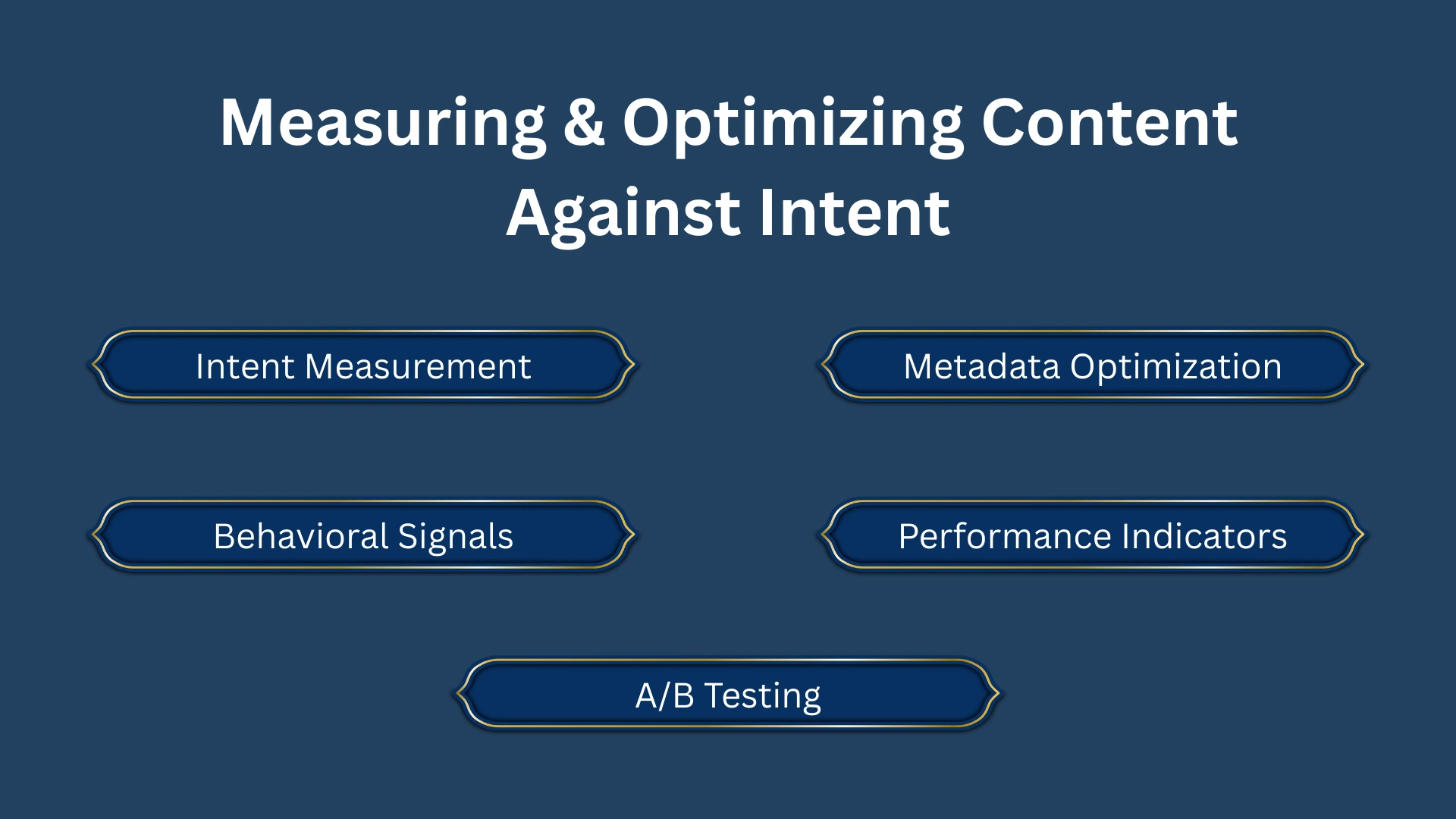
Intent alignment must be measured to confirm whether content truly satisfies search intent. Search engines analyze behavioral signals to evaluate relevance.
Behavioral metrics provide clear insight into intent satisfaction. A low bounce rate suggests users found what they expected. Longer dwell time indicates content depth matches their needs. Higher click-through rates (CTR) show titles and meta descriptions reflect the right intent. Conversions and CTA engagement confirm transactional alignment. When these signals improve, Google interprets the page as fulfilling user goals.
A/B testing for intent alignment strengthens performance. Testing variations of headlines, introductions, CTAs, and content structure reveals which version better matches search expectations. Small adjustments often produce measurable ranking and engagement improvements.
Optimizing metadata for intent ensures accurate SERP communication. Title tags should reflect the query purpose. Meta descriptions must answer the search need clearly. Structured headers improve snippet eligibility and reinforce semantic clarity.
Conclusion
Matching user intent is the modern foundation of SEO. Rather than focusing solely on keywords, targeting user goals and search behavior patterns produces content that ranks, engages, and converts. Aligning intent with content:
- Improves SERP visibility
- Increases CTR & dwell time
- Boosts conversions
- Helps you capture featured snippets
If you want help executing a content strategy that matches user intent and drives real SEO ROI, talk to Guest Posting Solutions, experts at aligning content with what users genuinely search for.
FAQs
How do SERP features reflect user intent?
Search Engine Results Pages (SERPs) show intent signals through the features displayed. Informational intent triggers Featured Snippets and People Also Ask boxes. Transactional queries show product listings, ads, or Buy buttons. Navigational searches highlight branded links and direct URLs.
How do Google Search Quality Rater Guidelines relate to search intent?
Google’s guidelines classify queries into Know, Do, Website, and Visit-in-person categories. These mirror informational, transactional, navigational, and local intents. Aligning content structure with these models improves user journey satisfaction and ranking stability.
What role do People Also Ask (PAA) and FAQ schema play in satisfying query intent?
People Also Ask boxes surface related user questions. Structuring content to answer these clearly and implementing FAQ structured data enhances snippet eligibility. This improves search visibility while precisely matching user intent and semantic relevance.