Clean URL Structure Tips for Better SEO Performance
A well‑structured URL structure is one of the most important parts of technical search engine optimization. A Uniform Resource Locator (or website URL) does more than tell a web browser where to go; it signals relevance to search engines, improves user experience, and strengthens internal links and external links alike.
When your URL hierarchy is clean, concise, and intentional, every web server and web browser interaction becomes smoother, faster, and more meaningful.
In this post, you’ll learn how to craft SEO friendly URLs that boost visibility in Google Search and other engines.
What Is URL Structure & Why It Matters
At its core, a URL structure is the complete address that identifies a specific resource on the World Wide Web. A URL points not only to the specific page you want to show users, it also tells search engine crawlers how your site is organized and what search terms the content is likely to satisfy. All different parts of a URL, from the Hypertext Transfer Protocol Secure prefix (HTTPS) to the top‑level domain, influence how search engines interpret your site.
A Uniform Resource Locator breaks down into predictable, different parts:
- Protocol: HTTP or Hypertext Transfer Protocol Secure (HTTPS) is the secure version that encrypts data and signals a secure connection to search engines and visitors.
- Hostname & Domain: For example, www.example.com includes your primary domain, second‑level domain, and top‑level domain, like .com or country code TLD (e.g., .uk).
- Path: The content category or filename, such as /blog/clean‑url‑structure
- Slug: The specific page identifier often used to include target keywords
- Query Parameters: Anything appended after a question mark (e.g., ?utm_source=twitter value pairs). These can be necessary for analytics, but should be used sparingly.
- Fragment Identifier: A hash (#) followed by a label pointing to a particular section of the page.
These elements together form the complete URL, your site’s unique address in the sea of URLs that exist on the Domain Name System, and each one matters for search engine optimization.
How URL Structure Influences SEO Performance
Good URL optimization improves both machine understanding and human trust. Search engines use the structure of a URL as a direct ranking signal and as a clue to a page’s context and relevance. Google, for instance, reads a clean URL to determine what the page is about, helping it match queries with the right content.
At the same time, a readable URL appears directly in the browser’s address bar and search results. A URL like:
https://www.example.com/clean-url-structure
…tells both people and engines exactly what to expect before the page loads. In contrast, a complex Dynamic URL like:
https://www.example.com/page?id=98765&ref=promo
..offers no semantic readability and can make it harder for crawlers and users to preview the content.
Here’s how a clean URL structure improves SEO performance:
- Crawlability: A logical URL lets bots navigate site structure and discover new URLs efficiently.
- Indexability: Descriptive URLs signal content relevance to engines.
- User Experience: Simpler URLs are easier to remember, type, or share on social media or emails.
- Click‑Through Rates: When people see a readable URL in search engine results, they’re more likely to click.
- Duplicate Content Issues: Clean URLs help prevent variations that confuse crawlers and dilute authority.
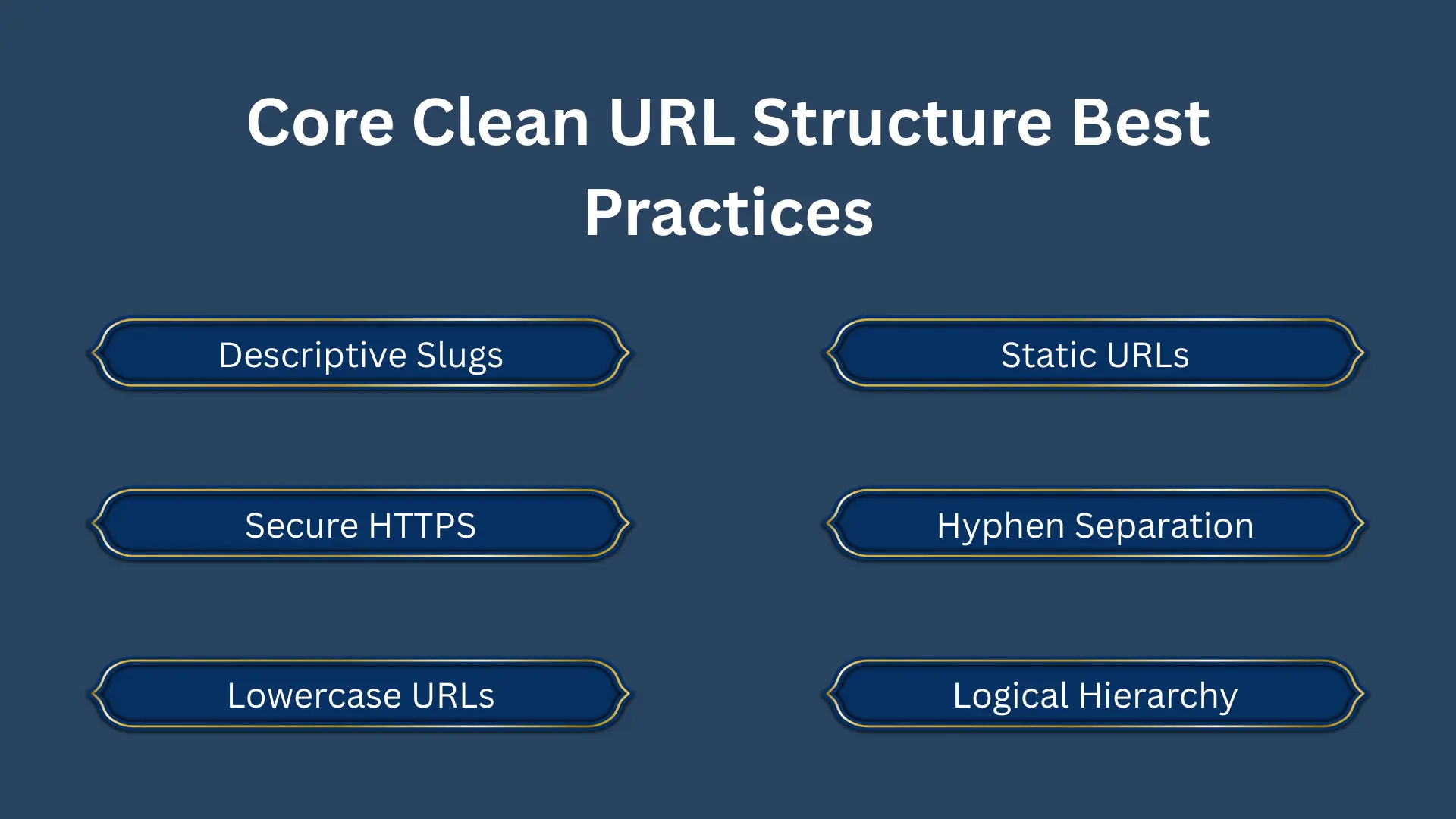
Core Clean URL Structure Best Practices
To fully unlock the SEO value from your URL structure, here are essential technical rules backed by modern best practices:
1. Use Descriptive Slugs with Relevant Keywords
Your slug should reflect the page content and contain target keywords. Doing so helps both users and search engines understand the theme of the page even before it loads, a clear benefit for SEO friendly URLs.
2. Prefer Static URLs Over Complex Dynamic URLs
Static URLs, simple strings without confusing URL parameters and value pairs, are easier to read and crawl. While dynamic ones with query strings can be unavoidable, converting them to static paths enhances clarity.
3. Use HTTPS for Every URL
Adding HTTPS tells search engines and users that your secure connection is trusted. Google gives slight ranking preference to HTTPS pages and warns users about unsecured (HTTP) addresses.
4. Use Hyphens to Separate Words
When you separate words with hyphens, search engines see each word clearly as distinct. Underscores, on the other hand, do not act as word separators.
Good Example:
https://www.example.com/url‑structure‑tips
Bad Example:
https://www.example.com/url_structure_tips
5. Stick to Lowercase Letters
URLs are case‑sensitive on most web servers. Using uppercase letters can cause unintentional duplication or lead visitors to 404 errors.
6. Keep URLs Short & Simple
Avoid overly long URLs with unnecessary words or stop words. Short, meaningful URLs are easier for engines to process and display in search results without truncation.
7. Maintain a Logical URL Hierarchy
Your URL paths should match the URL hierarchy of your site, for example:
/services/seo/url‑structure‑tips
This indicates internal links and site structure clearly, instead of crowding everything under random slugs.
8. Implement Canonical URLs to Avoid Duplication
When more than one URL leads to the same content, especially in e-commerce sites with filters, using a Canonical URL tells search engines which version to index.
Technical Techniques to Improve URL Structure
Now, let’s go further into technical SEO best practices that elevate URL effectiveness:
1. Canonicalization & Redirect Rules
When you reorganize URLs or remove session IDs, setting up 301 redirects keeps search engines pointed to the new unique address and preserves search engine value. This prevents lost link equity.
2. Handling URL Parameters Carefully
If you must use query parameters, keep them meaningful and limited. Tools like Google Search Console can help you tell crawlers which parameters matter and which do not, preventing indexing chaos.
3. Monitoring Crawl & Index Health
Using Google Search Console and crawler tools like Screaming Frog, site owners can quickly spot messy URLs, duplicate content risks, and missing canonical tags before these issues impact rankings.
Web Server & Browser Considerations
Different web hosting environments and website‑builder platforms (WordPress, Drupal, Shopify, etc.) give you tools to manage URL structure. You can often enforce URL rewrite rules to auto‑transform messy URLs into clean, readable ones.
Configuring forward slashes, avoiding percent encoding when possible, and testing URLs in multiple browsers ensures both bots and humans see the same unique URL.
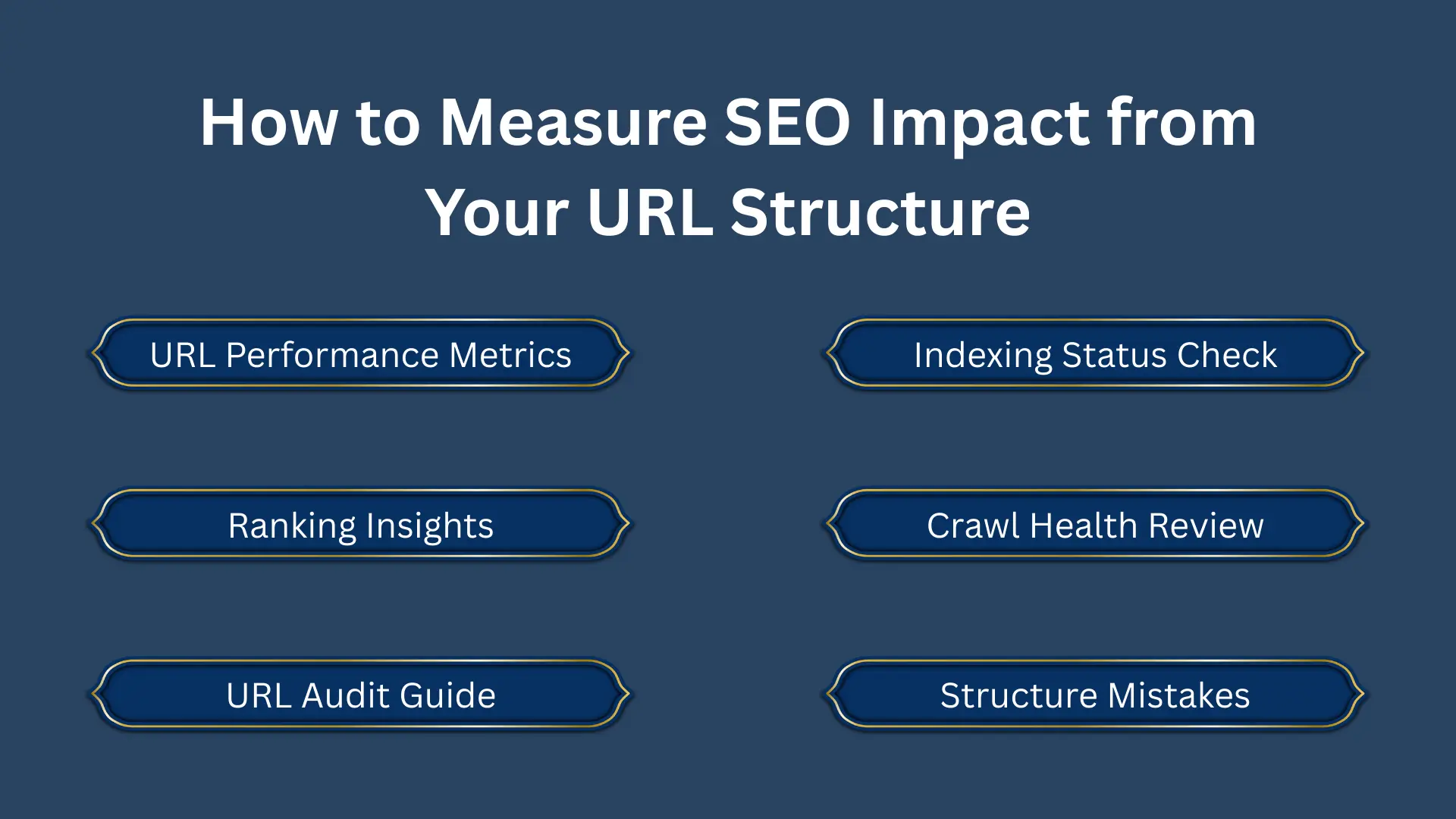
How to Measure SEO Impact from Your URL Structure
To know whether your URL optimization is working, track metrics including:
- Indexed URLs in Search Console
- Organic clicks and impressions
- Average ranking position
- Crawl errors and redirect chains
- Click‑through rates from snippets
These benchmarks tell you whether your URL structure resonates with both search bots and users alike.
URL Structure Audit Checklist
Use this checklist to make sure your URLs adhere to SEO standards:
- No uppercase letters
- No excessive query strings
- No session IDs
- Strategic keyword placement
- Clean hyphenated slugs
- Canonical tags on duplicates
- Logical URL hierarchy
- HTTPS everywhere
Common URL Mistakes to Avoid
Even experienced site owners can slip up. Watch out for:
- Long, complex URLs full of random numbers
- Multiple dynamic parameters
- Inconsistent casing
- Special characters and punctuation (question mark, &, %, etc.) that aren’t necessary
- URLs that don’t reflect the content theme
Avoiding these traps keeps your URL structure search-engine-friendly and easier to manage.
Conclusion – Power Up Your URLs with Expert Help
A well‑structured URL isn’t just a preference; it’s a ranking signal and an SEO foundation. By choosing descriptive slugs, using HTTPS, managing URL parameters, and sticking to clean formatting rules, you set up your site for better crawlability, indexing, and visibility in Google Search and beyond. It’s a small but critical piece of your broader SEO strategy, one that pays dividends over time as search bots and users alike navigate your site structure with confidence
If you want to optimize your website URL structure with professional precision, consider a URL audit and SEO optimization service.
Guest Posting Solutions provides technical SEO support to help clean up Uniform Resource Locator formats, improve crawlability, and boost organic performance across your site.
FAQs
Should I include target keywords in my URL?
Including a relevant target keyword in your URL slug can help search engines and users understand the page’s topic, improving relevance and click‑through rates. Avoid stuffing multiple keywords for readability and SEO quality.
Are dynamic URLs bad for SEO?
Dynamic URLs with many parameters (like ?id=123) are harder for search engines and users to interpret, can cause crawl and duplicate content issues, and are less SEO friendly than descriptive static URLs.
How long should a URL be for SEO best practices?
Short, descriptive URLs perform better. Aim for under about 50–60 characters and avoid unnecessary words or deep folder levels, balancing clarity with keyword relevance for better SEO.