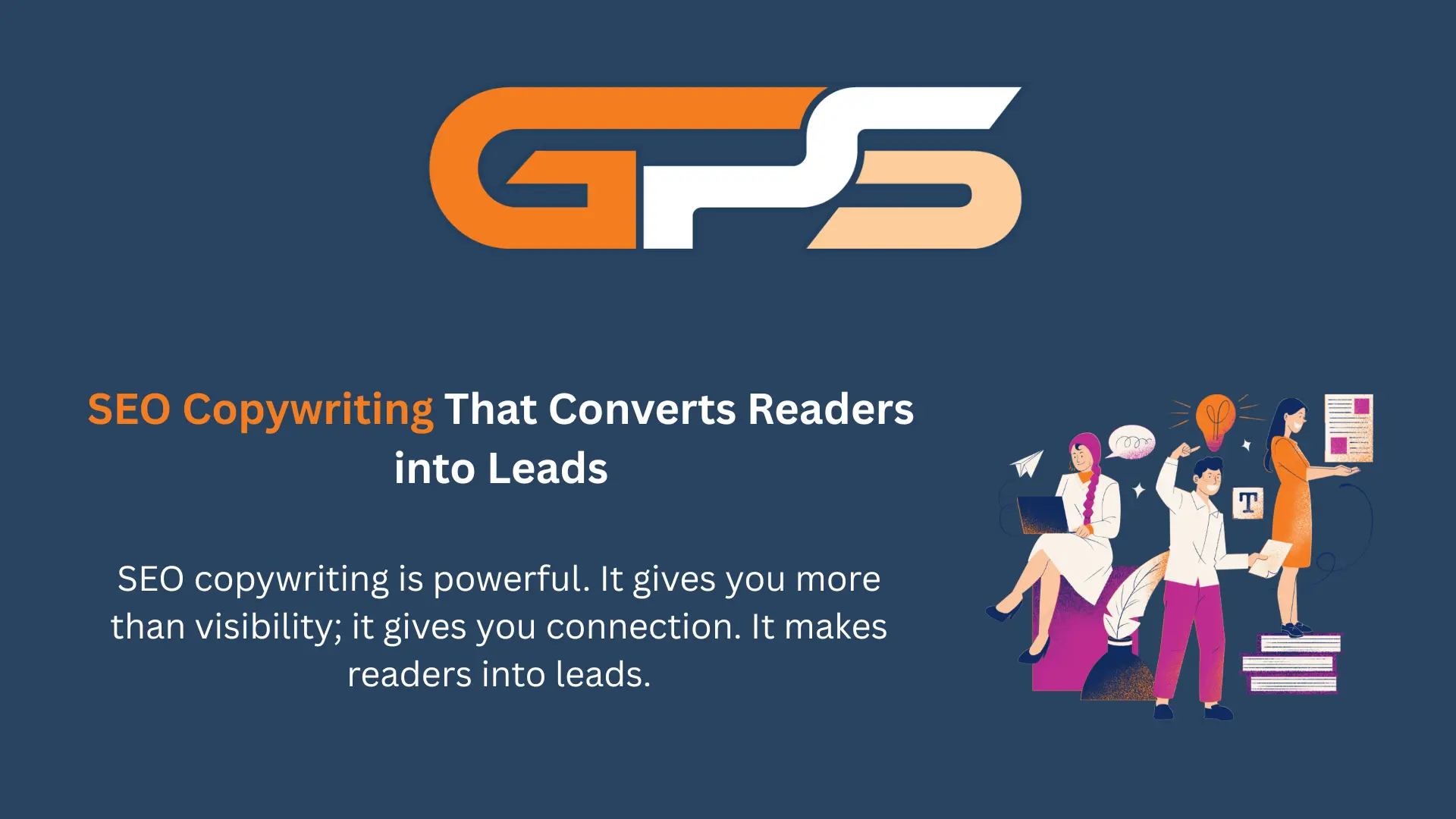
SEO Copywriting That Converts Readers into Leads
To begin with, many businesses misunderstand what SEO copywriting truly delivers. You want more than traffic. More importantly, you want real leads. Additionally, those leads must be consistent, targeted, and ready to take action. Therefore, seo copywriting matters. Rather, it is not just about being found. Ultimately, it is about making people act.
Consequently, this shift in approach affects your entire digital strategy. As a result, with smart SEO copywriting, you can turn visitors into subscribers, clients, or customers. Similarly, you can guide their decisions with structured messaging. In the same way, you can speak to them. You can connect. And yes, you can convert. Furthermore, these copywriting principles help you maintain consistency across all platforms.
To begin with, in this post, we will explore how to do that. We will talk about what SEO copywriting is. We will go deep into seo optimization strategies. Afterward, we discuss when to hire seo copywriting services. We will explore e-commerce SEO Strategies That Boost Online Sales. By the end, you will have clear, actionable ideas. You will know how to write content that ranks and converts.
What Is SEO Copywriting?
Generally speaking, most brands underestimate how powerful SEO copywriting can be. First and foremost, SEO copywriting is writing that pleases two masters: humans and search engines. At the same time, it must maintain clarity and readability. For example, on one hand, your copy must be persuasive. It must speak to feelings, needs, and problems. On the other hand, it must use SEO best practices so that Google can understand it.
In other words: seo content writing meets conversion copywriting.
Moreover, the modern algorithm favors intent and user experience. As a result, your content becomes easier for Google to interpret. SEO copywriting is not just about stuffing keywords. Rather, it is about choosing the right words, finding real intent, and guiding readers. Consequently, when done well, it boosts your organic traffic and your lead generation.
Therefore, strong SEO copywriting helps you stand out. In addition, strong copywriting builds long-term brand authority. This matters a lot in a noisy world. You want people to read. And you want them to act.
SEO Optimization Strategies for Conversion
To convert readers, your SEO must be sharp. Here are some proven strategies.
1. Do Intent-Driven Keyword Research
Furthermore, your keywords should support every stage of the buyer journey. First, pick keywords that match real needs. Instead, do not just go for volume. Focus on intent.
- For instance, use informational keywords (for early-stage readers).
- Use transactional keywords (for people ready to convert).
- Add LSI keywords (like “seo content writing”) to support your theme.
As a result, your content becomes more relevant to the searcher’s intent. Consequently, it offers more clarity to readers. This way, you align your copy with what people actually search for. And that helps you connect.
2. Align Content with Searcher Intent
Next, match your content to that intent.
Typically, if someone searches “benefits of seo copywriting services,” they want to learn. So you teach them, you explain. For example, provide explanations, frameworks, or insights that solve their problem. You show why those services pay off.
Conversely, if someone searches “hire seo copywriting agency,” they are ready to buy. In the same way, aligning tone improves conversions. So you pitch, but gently. You offer a solution. You show your value. Additionally, mapping intent helps your content remove confusion for readers.
In turn, this alignment boosts user trust and engagement. This matching helps you convert.
3. Use On‑Page SEO That Reads Well
Moreover, on‑page optimization of your pages should be naturally done. But don’t lose the human touch. Additionally, always prioritize clarity over keyword density.
- Use your focus keyword (“seo copywriting”) in key spots: title, first paragraph, headings, image alt text.
- Sprinkle LSI phrases like “seo optimization strategies” naturally.
- Similarly, use white space to maintain readability. In practice, break up long sentences. Use bullets and subheads.
- Likewise, link to other relevant pages on your site. This helps SEO and guides readers.
Above all, keep the formatting clean so readers stay engaged.
4. Write for People (and Sell)
Your copy should feel alive. It should connect.
- To clarify, use short, simple sentences.
- Use verbs that move. Likewise, choose nouns that create vivid, emotional pictures. Not “was done by,” but “you do this.”
- Therefore, evoke real emotion: talk about pain, hope, or change.
- Use a basic persuasive structure: Attention → Interest → Desire → Action (AIDA).
- Add social proof (testimonials, data) to build trust.
By doing this, you not only inform, you convince. You don’t just educate, you move. Similarly, storytelling can turn dull copy into memorable messages.
5. Use Strong, Clear Calls to Action (CTAs)
A CTA is where you ask people to act. Do it right.
- In many cases, put CTAs naturally: after sections, or mid-way, not just at the end.
- Likewise, ensure your CTA matches the user’s readiness level. Use action words: “Get my SEO content audit,” “Hire seo copywriting services,” etc.
- Thus, make them benefit-led: tell people what they get.
- Test different CTAs over time. In addition, evaluate how different colors or positions impact clicks. Try different wording, placement, or color.
6. Track and Refine
After that, measure everything. Then tweak.
- To illustrate, user-behavior tracking can reveal hidden friction points. Use Google Analytics or heatmaps to watch how people behave.
- Track bounce rate, time on page, and conversion actions (forms, downloads).
- Revisit your copy. If something underperforms, rewrite.
- Use the data to improve your seo optimization strategies continuously.
In this way, your SEO copy evolves. This becomes sharper, more persuasive, and increasingly aligned with what your audience actually wants.
Conducting an SEO Content Audit
Over time, even your best content can grow stale. An seo content audit helps you fix that.
Over time, content performance naturally declines; therefore, auditing becomes essential. Why Audit? For example,
- You know what works. And what does not.
- You can prune or refresh old content.
- You can align content with new goals or offers.
- Ultimately, you can turn weak pages into lead generators. In other words, every audit boosts long-term ROI.

How to Audit Step by Step
- List All Your Content. Use a spreadsheet. List your pages, blogs, and landing pages.
- Collect Key Metrics. Use tools like Google Analytics and Search Console. Track traffic, conversions, and engagement.
- Evaluate Each Piece. Ask: Is it still relevant? Is it optimized for SEO? Does it convert? Use a checklist: readability, keywords, internal links, CTA, etc.
- Decide What to Do. Update content that still has value. Rewrite content that underperforms. Merge thin or redundant content. Delete content that no longer fits.
- Optimize with SEO Copywriting. Use your SEO + conversion writing skills. Add keywords, improve structure. Insert CTAs. Make it fresh.
- After changes, watch the same metrics. See if things improve. Otherwise, refine again based on fresh data. If not, refine again.
By cycling through this audit process regularly, for example, quarterly or biannually, you keep your content healthy, relevant, and high-converting.
SEO Copywriting Services: When & Why You Need Them
In many cases, sometimes, you need help. Hiring seo copywriting services can make a big difference.
Similarly, outsourcing ensures your content stays consistent and optimized. When to Hire
- Don’t have writers who know SEO + conversion.
- Publish a lot and need consistent quality.
- You want to free up your time.
- You see weak performance and want expert help.
The Benefits
- Expert writers know seo optimization strategies deeply.
- They can scale your content without killing your time.
- Optimize meta titles, CTAs, structure, and readability.
- They often provide revisions and report on performance. Besides that, professional writers adapt their tone to your brand voice effortlessly.
As a result, by hiring the right seo copywriting services, you invest in growth. You get more than content, you get content that works.
Ecommerce SEO Strategies That Boost Online Sales
In fact, if you run an ecommerce store, SEO copywriting becomes even more powerful. Here are Ecommerce SEO Strategies That Boost Online Sales.
1. Write Keyword-Rich Product Descriptions
To begin with, use buyer-intent keywords in titles and descriptions. Focus on benefits. Explain how the product helps the user. Additionally, buyers respond well to emotion-driven product descriptions.
2. Use Persuasion in Product Copy
Moreover, tell stories. Speak to your customer’s pain. Show transformation. Use simple, emotional language. That is seo copywriting at work.
3. Optimize Category Pages
Furthermore, include brief intro copy that clarifies what users will find. Write SEO-friendly copy for your categories. Use LSI terms. Help users and search engines understand what each category offers.
4. Implement Schema Markup
For example, use product schema. Show price, reviews, and availability. This helps boost your visibility in search via rich snippets.
5. Support with Content
Write blog posts, guides, or FAQs. Help customers decide. Use long-tail SEO. Use your seo content writing skills to guide buyers.
6. Add Trust Signals
Use reviews, testimonials, guarantees, and badges. Add them to your copy. People buy from brands they trust.
7. Optimize for Speed & Mobile
As a consequence, users stay longer and browse more pages. Furthermore, make sure your site loads fast. Make sure your copy is easy to read on mobile. A slow page will kill conversions.
Guest Posting Solution for Lead Generation
Beyond your website, external platforms expand your reach significantly. Similarly, if you want to scale your reach and get more leads, use a guest posting solution. Guest posts on high-authority sites help you:
- Earn backlinks. That improves SEO.
- Reach new audiences. These readers may convert.
- Create high-value content that promotes your lead magnets or landing pages.
- Build trust in your market.
Moreover, recurring guest posts position you as an authority. Likewise, when you write guest posts, use seo copywriting. Use the same care: good keywords, a clear CTA, and a tone that persuades. Then link back to your own site, ideally to a landing page or resource that captures leads.

Integrating SEO Copywriting into Your SEO Digital Marketing Strategy
Therefore, to make your content work, you must integrate it into your seo digital marketing plan.
Here’s how:
1. Build a Content Calendar
Plan blog posts, product content, guest posts, and lead magnets. Align them with business goals.
2. Map to Sales Funnel
- Educational SEO content for top-of-funnel.
- Use comparison pieces and gated content for mid-funnel.
- Use optimized product pages and landing pages for the bottom of the funnel.
3. Promote Across Channel
Share your content via email, social media, and paid ads. Use guest posts to expand reach.
4. Test & Optimize
Meanwhile, try different copy, headlines, CTAs. Use A/B testing. Use data to refine. Ultimately, small adjustments can produce major improvements.
5. Measure ROI
Track not just traffic, but leads. Measure how many leads come from blog posts or landing pages.
6. Create Feedback Loops
As a final step, use continuous feedback to evolve your copy. Use analytics and customer feedback to improve. Update old content. Re-publish. Repeat.
Future Trends in SEO Copywriting
Naturally, as the web evolves, seo copywriting must evolve too. Here are some trends to watch:
- AI & Generative Search: However, AI tools will help write content. Still, human strategy remains irreplaceable. But you still need human insight.
- Conversational Search: People ask full questions. Copy must answer. Clearly.
- Similarly, Personalized Content: You may need to write for different segments. Tailored SEO copy will win.
- Voice & Visual Search: Optimize for voice queries and visual search. Use structured data.
- Ethical & Transparent Content: Trust matters. Brands will need to reflect values. Clear, honest copy wins.
Conclusion
SEO copywriting is powerful. It gives you more than visibility; it gives you connection. It makes readers into leads.
If you apply the strategies above, you can:
- Audit your content to find weak spots.
- Use SEO optimization strategies to write copy that ranks and persuades.
- Consider seo copywriting services when you need scale or expertise.
- Additionally, always test your copy to maintain conversion strength. Furthermore, use ecommerce SEO strategies to turn product pages into sales machines.
- Leverage guest posting for lead generation via a guest posting solution.
- Build a full seo digital marketing strategy that ties your copy to business goals.
- Finally, stay future-ready by watching trends.
FAQs
What is the main difference between SEO copywriting and SEO content writing?
SEO content writing is more about creating content to rank. SEO copywriting is about ranking and converting. It blends SEO with persuasive writing.
How often should I do an SEO content audit?
It depends, but at least once or twice a year is smart. If you publish fast, try quarterly.
Do small businesses need SEO copywriting services?
Yes. Good seo copywriting services help you grow without draining your time. They can improve quality and scale faster than you can do it alone.
Is guest posting still a valid lead-gen strategy?
Definitely. When you use a guest posting solution, you write value-first content on other sites. You link back with smart CTAs. That drives leads, not just backlinks.
How do I measure success in SEO copywriting?
Look at analytics. Track form fills, sales, time on page, and bounce rate. Then compare before and after your optimization.