SEO Audit Checklist: Key Steps to Improve Search Visibility
Search engines change often. At the same time, user behavior keeps shifting. Meanwhile, competition grows every single day. Because of these changes, guesswork no longer works. Instead, businesses need a clear and simple process. This process helps review performance, improve weak areas, and protect online visibility. That is exactly why an SEO audit checklist matters.
An SEO audit checklist helps you find issues early. Then, it allows you to fix gaps step by step. At the same time, it highlights what already performs well. More importantly, it brings structure to your SEO work. Rather than jumping between random tactics, you follow a proven system. As a result, your efforts stay focused and consistent.
At Guest Posting Solutions, we rely on structured audits to build long-term SEO strategies. Because of this approach, growth stays steady instead of rising and falling quickly.
This guide walks you through a complete SEO checklist. Keep on reading!
What Is an SEO Audit?
An SEO audit is a clear review of how well your website performs in search results. First, it checks how search engines crawl, index, and rank your pages. Then, it looks at user experience, content quality, and backlink strength.
In short, an SEO audit shows what helps your site grow. At the same time, it reveals what slows it down.
Without regular audits, even strong websites can lose visibility over time. This happens because search algorithms change. Meanwhile, competitors improve. In addition, technical problems appear. For this reason, an SEO audit checklist helps keep your site aligned with best practices and current SEO strategies.
Why You Need an SEO Checklist
SEO involves many moving parts. Technical setup, content structure, keyword usage, links, and local signals all matter. Because of this complexity, missing even one key area can affect results.
An SEO checklist solves this problem.
- First, it creates consistency.
- Second, it prevents critical issues from being ignored.
- Third, it makes SEO progress measurable.
This checklists deliver repeatable success across industries. Rather than reacting to problems, we follow a structured audit process that supports sustainable growth.
Technical SEO Checklist: Build a Strong Foundation
Technical SEO is the foundation of a strong website. Search engines must understand your site before rankings can improve. If they cannot crawl your pages, content and links bring little value. That is why a technical SEO audit should come first.
1. Crawlability and Indexing
Search engines need easy access to your pages. Start by checking the robots.txt file. It should allow important pages and block pages that add no value. Next, review the XML sitemap. It must list all key URLs and remain submitted in Google Search Console.
Index coverage also needs attention. Look for blocked pages, duplicate URLs, and soft 404 errors. Fix these issues without delay. Clean indexing helps search engines crawl better and improves overall visibility.
2. Site Speed and Core Web Vitals
Page speed impacts rankings and user actions. Slow pages push visitors away and lower conversions. For this reason, performance must stay on your technical SEO checklist.
Pay attention to load time, layout shifts, and screen response. Compress images to reduce file size. Remove scripts you do not need. Add caching and use fast hosting. Quick pages keep users happy and help rankings grow.
3. Mobile Friendliness
Most people search using mobile devices today. Because of this, mobile usability is a must. Your website should adjust well to all screen sizes. Text must stay clear and easy to read. Buttons should allow smooth tapping.
Google follows mobile-first indexing. This means Google ranks your site based on its mobile version. A weak mobile experience hurts SEO and limits visibility.
4. HTTPS and Security
Security helps build trust with both users and search engines. Your website should use HTTPS on every page. Fix mixed content issues as soon as they appear. Secure sites protect user data and often rank higher in search results.
5. Broken Links and Redirects
Broken pages hurt the user experience and waste SEO value. Check your site often for 404 errors. Repair broken internal links right away. Use 301 redirects when a page moves to keep its authority.
Clear and clean navigation makes it easier for users and search engines to explore your site.
On-Page SEO Checklist: Optimize Every Page
On-page SEO is about how each page shows its purpose. It helps search engines know what the page covers. It also makes content easier for people to read and understand.
1. Title Tags and Meta Descriptions
Title tags need your main keyword in a natural way. They must stay short, clear, and easy to read. Meta descriptions should explain what the page offers. They should also motivate users to click.
Meta descriptions do not affect rankings directly. However, they play a big role in improving click-through rates.
2. Header Structure and Content Flow
Each page needs one clear H1. Subheadings should follow a logical order using H2 and H3 tags. This structure improves readability and helps search engines scan your content easily.
Well-structured content also keeps users engaged longer.
3. URL Optimization
URLs should be short, clean, and descriptive. Avoid unnecessary numbers or symbols. A clear URL supports better indexing and improves trust.
4. Image Optimization
Images should load fast and support the content. Use descriptive file names and alt text. This improves accessibility and image search visibility.
5. Internal Linking
Internal links guide users and distribute authority across your site. Link related pages naturally within content. Avoid over-optimization. Focus on relevance and user value.
Strong internal linking improves crawl efficiency and strengthens topical authority.
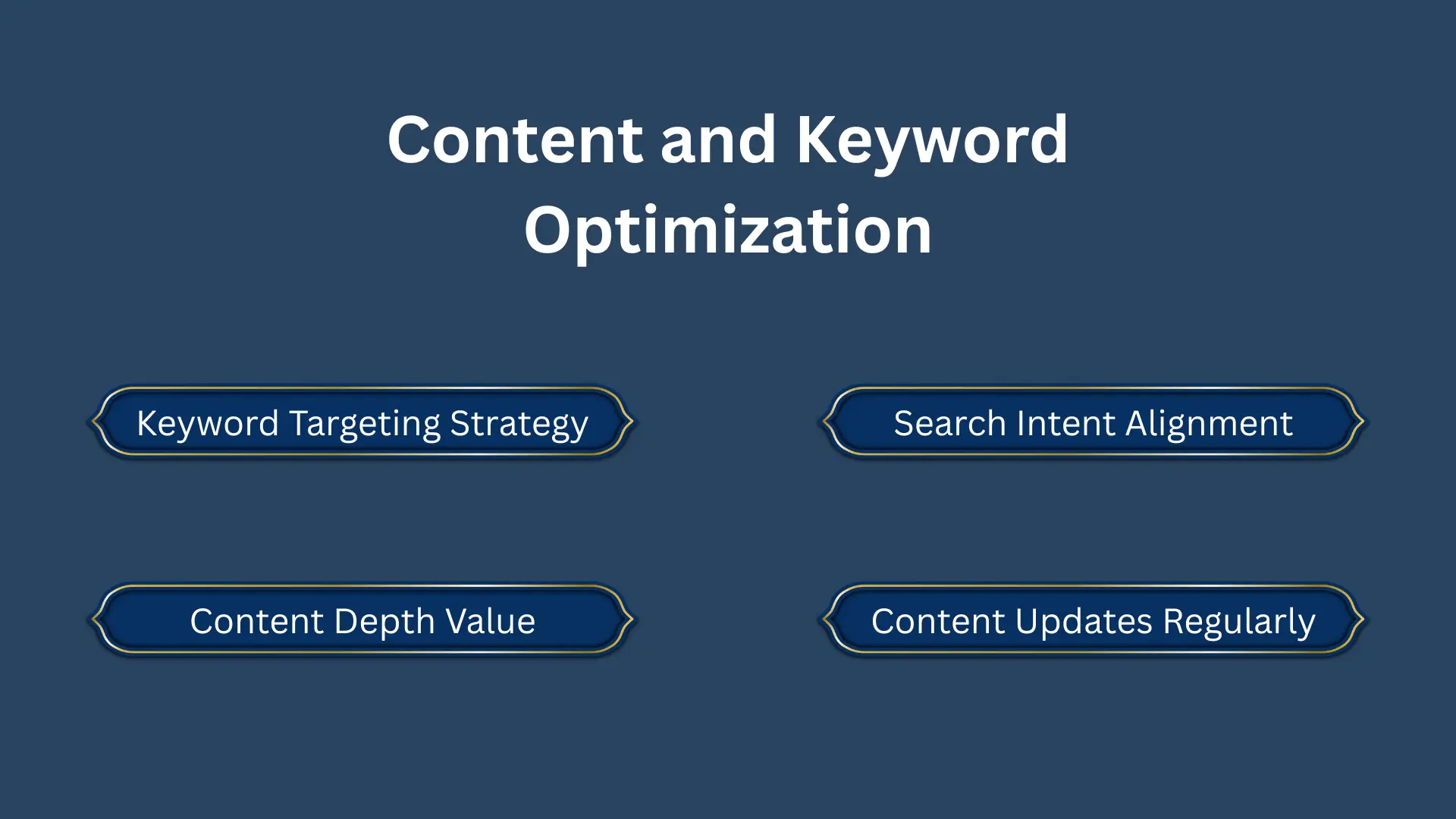
Content and Keyword Optimization
Content remains the heart of SEO. However, quality matters more than quantity. A strong SEO audit checklist always evaluates content relevance and depth.
1. Keyword Usage and Search Intent
Each page should target a clear primary keyword and several related terms. These include LSIs like SEO checklist, technical SEO checklist, on-page SEO checklist, and SEO strategies.
Keywords should appear naturally. Overuse harms readability and trust. Instead, focus on answering user questions clearly.
2. Content Depth and Value
Thin content struggles to rank. Pages should provide complete answers. Add examples, steps, and explanations where helpful.
Updating old content also matters. Refresh statistics. Improve structure. Expand sections that lack clarity.
Search engines reward content that stays useful over time.
Local SEO Checklist: Improve Nearby Visibility
For businesses targeting local customers, local SEO is critical. A local SEO checklist helps your brand appear in map results and location-based searches.
1. Google Business Profile Optimization
Your Google Business Profile should be complete and accurate. Business name, address, and phone number must match everywhere online. Choose the right categories. Add photos regularly.
2. Local Citations and Listings
Consistency matters. Check directories for outdated information. Fix incorrect listings. Strong citation signals improve trust and visibility.
3. Location-Focused Content
Mention your service areas naturally in your content. Add location-specific pages when needed. Use local terms in a clear way, without overloading the text.
4. Reviews and Reputation
Customer reviews affect both rankings and sales. Ask for honest feedback. Reply to all reviews politely and professionally. Engaging with your customers builds trust.
Off-Page SEO and Link Authority
Off-page SEO focuses on signals outside your website. Backlinks remain one of the strongest ranking factors. However, quality matters more than volume.
1. Backlink Profile Review
Analyze existing links. Remove or disavow toxic sources. Focus on relevance and authority.
2. Guest Posting and Outreach
Guest posting is a strong strategy when done right. At Guest Posting Solutions, we focus on editorial placements, niche relevance, and building long-term authority.
Good guest posts bring more visitors, boost search rankings, and improve brand trust.
3. SEO Tools and Reporting
Using the right tools makes SEO audits easier. Google Search Console, Google Analytics, and crawling tools help spot problems fast.
Regular reports show progress. They also guide SEO decisions using real data, not guesses.
How to Use This SEO Audit Checklist
Start with technical SEO. Then move to on-page optimization. After that, review content quality and backlinks. Finally, assess local SEO if applicable.
Run audits quarterly for most websites. For competitive industries, monthly reviews work better.
Consistency brings results.
Final Thoughts
An SEO audit checklist is not a one-time task. It is a system for growth. When used correctly, it protects rankings, improves visibility, and supports smarter SEO strategies.
At Guest Posting Solution, we use structured audits combined with strategic guest posting to deliver lasting results. Rather than chasing trends, we focus on strong foundations and ethical growth.
If you want better rankings, stronger authority, and consistent traffic, start with a proper SEO audit checklist. Then, build from there, step by step.
FAQs
What is included in an SEO Audit Checklist?
An SEO audit checklist looks at technical SEO, on-page SEO, content, backlinks, local SEO, site speed, and how easy the site is to use.
How often should I run an SEO audit?
Most websites should do a full SEO audit every three to six months. This keeps rankings steady, fixes problems, and makes the site work better.
Can a technical SEO checklist improve rankings fast?
Yes. Fixing technical issues like crawl errors, slow pages, and mobile problems can quickly improve rankings and bring more visitors to your site.