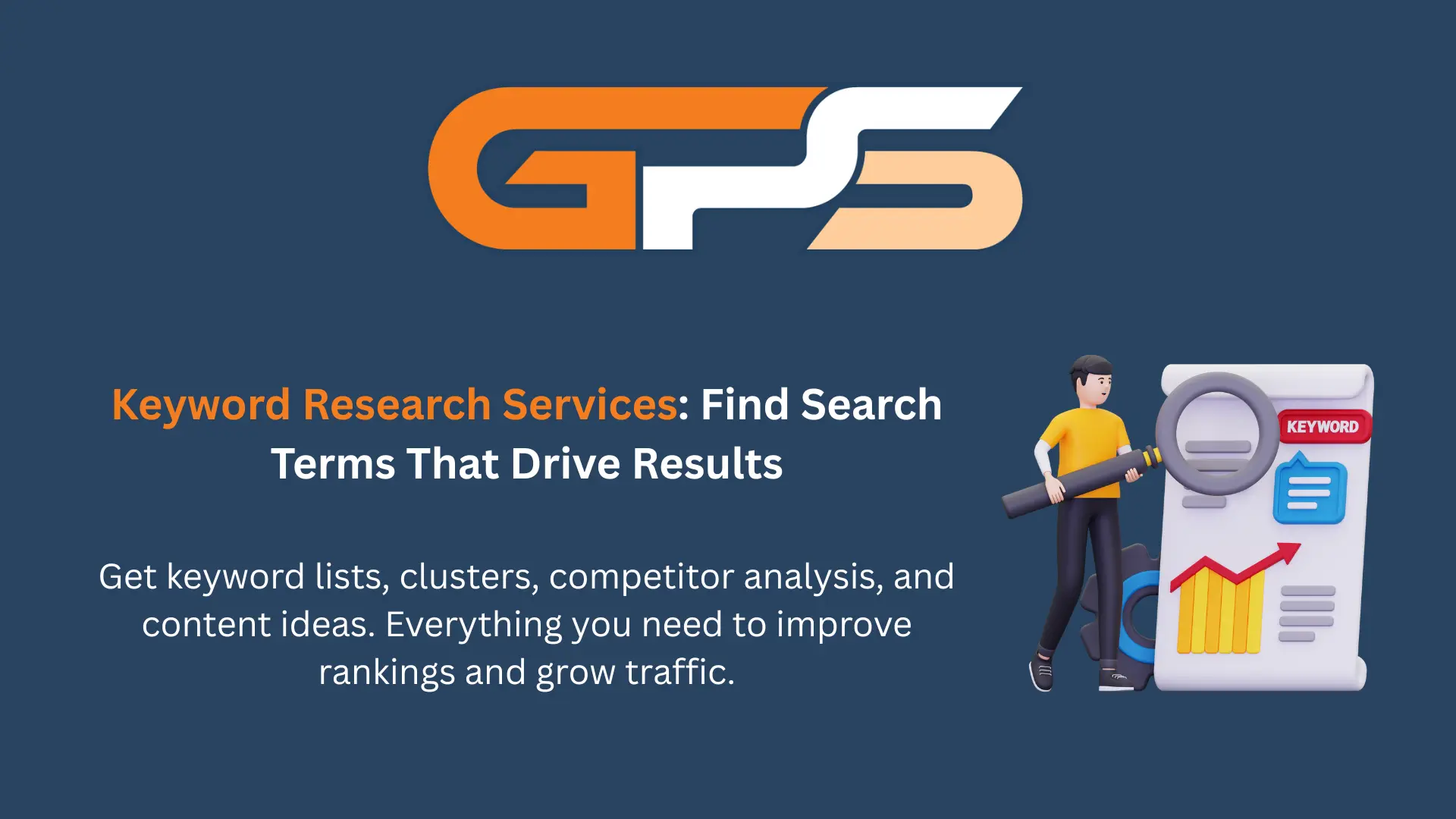
Keyword Research Services: Find Search Terms That Drive Results
If you feel like your website is not getting enough traffic, you are not alone. In fact, many businesses post content, create pages, and spend money on ads. However, they still struggle to appear on Google. And this usually happens because they are not using the right keywords.
That is why Keyword Research Services matter.
These services help you discover the exact search terms your audience types into Google. As a result, you can use those terms in your content. And when you do, you often gain more visibility, more traffic, and better results.
In this blog, we will walk through this process in a simple and clear way. Moreover, we will show how the right keywords can guide your entire SEO strategy.
What Is Keyword Research & Why It Matters for SEO
Keyword research means discovering the words and phrases people search for online. And when you understand what people are typing into Google, you can create content that answers their questions.
Here are a few reasons why it matters:
- This helps you appear in the search results.
- Helps you attract the right audience.
- It helps you understand what customers want.
- It helps you stay ahead of your competitors.
But without proper keyword research, you might write content that nobody is searching for. And that means lost traffic and lost opportunities. So keyword research is the heart of every strong SEO strategy.
Core Components of Effective Keyword Research Services
A good keyword research service does not just give you a list of words. Instead, it studies your market, your competitors, and your audience. Therefore, it builds a keyword plan that brings real traffic.
Here are the key components:
a. Search Volume & Competition Analysis
You want keywords that people search for. However, you also need to pick keywords that you can actually rank for. That is why Keyword Services study:
- Monthly search volume
- Difficulty level
- Competition strength
- Your site’s authority
This balance helps you choose keywords that give you the best chance to win.
b. Search Intent & Keyword Categorization
Not all keywords mean the same thing. So we must understand the “intent.”
For example:
- “How to fix a phone?” = informational
- “Phone repair near me” = local and transactional
- “Best phone repair shop” = comparison intent
Keyword Research Services organize keywords based on intent to help you match the right content with the right audience.
c. Long Tail Keyword Research
Long-tail keywords are longer phrases like:
- “best organic face wash for dry skin”
- “affordable dentist in California”
These keywords have lower competition, higher intent, and better conversion rates.
They also help small websites compete with big brands.
d. Local Keyword Research
If you serve a specific city, area, or state, then local keywords matter the most.
Examples:
- “Miami plumber service”
- “Nail salon in Los Angeles”
- “Pizza delivery near downtown Austin”
Local keyword research helps you appear in local searches, which often bring very ready-to-buy customers.
e. Keyword Research Competitor Analysis
This step looks at:
- What your competitors rank for
- Which keywords they are ignoring
- What content they have
- What content they are missing
By studying competitors, you discover powerful keyword gaps. And when you fill those gaps, your site can outrank them.
f. Keyword Clustering & Content Mapping
Keyword clusters are groups of related keywords. They help Google understand your content better.
For example, a cluster for “weight loss tips” may include:
- easy weight loss tips
- how to lose weight fast
- simple daily weight loss habits
Keyword Research Services create clusters that turn simple keywords into complete content strategies.
g. Continuous Monitoring & Refinement
Search trends change. New competitors enter your market. Google updates its algorithm.
This is why keyword research must continue over time. A good service keeps improving your keyword plan, so you stay ahead.
Competitor Analysis: How Keyword Research Services Outperform DIY Research
Many people try to do their own keyword research. They use tools, watch tutorials, and try different methods. But competitor analysis often requires more skills and a deeper understanding.
Keyword Research Services study your competitors in great detail. This includes:
- What keywords they rank for
- What keywords they ignore
- Which pages bring them the most traffic
- How strong their backlinks are
- What content gaps exist
- Which long-tail keywords they have not targeted
- What local searches they do not appear in
This process shows you every opportunity you can use to get ahead.
For example, if a competitor is ranking for “best digital marketing tips,” you can check:
- Can you write a better guide?
- Could you answer more questions?
- Can you add more long-tail variations?
- Can you create a cluster around this topic?
With this strategy, you do not guess, you take smart steps based on actual data.
This is why competitor keyword analysis is part of every powerful SEO plan. It helps you see clear openings that can increase your rankings much faster.
When you combine competitor data with long-tail and local keyword research, you get a strong edge. And this is something that DIY research usually cannot match.
Some services go beyond standard methods, using advanced keyword research techniques: SEO secrets unlocked. This includes competitor gap analysis, semantic search clustering, and trend-based optimization.
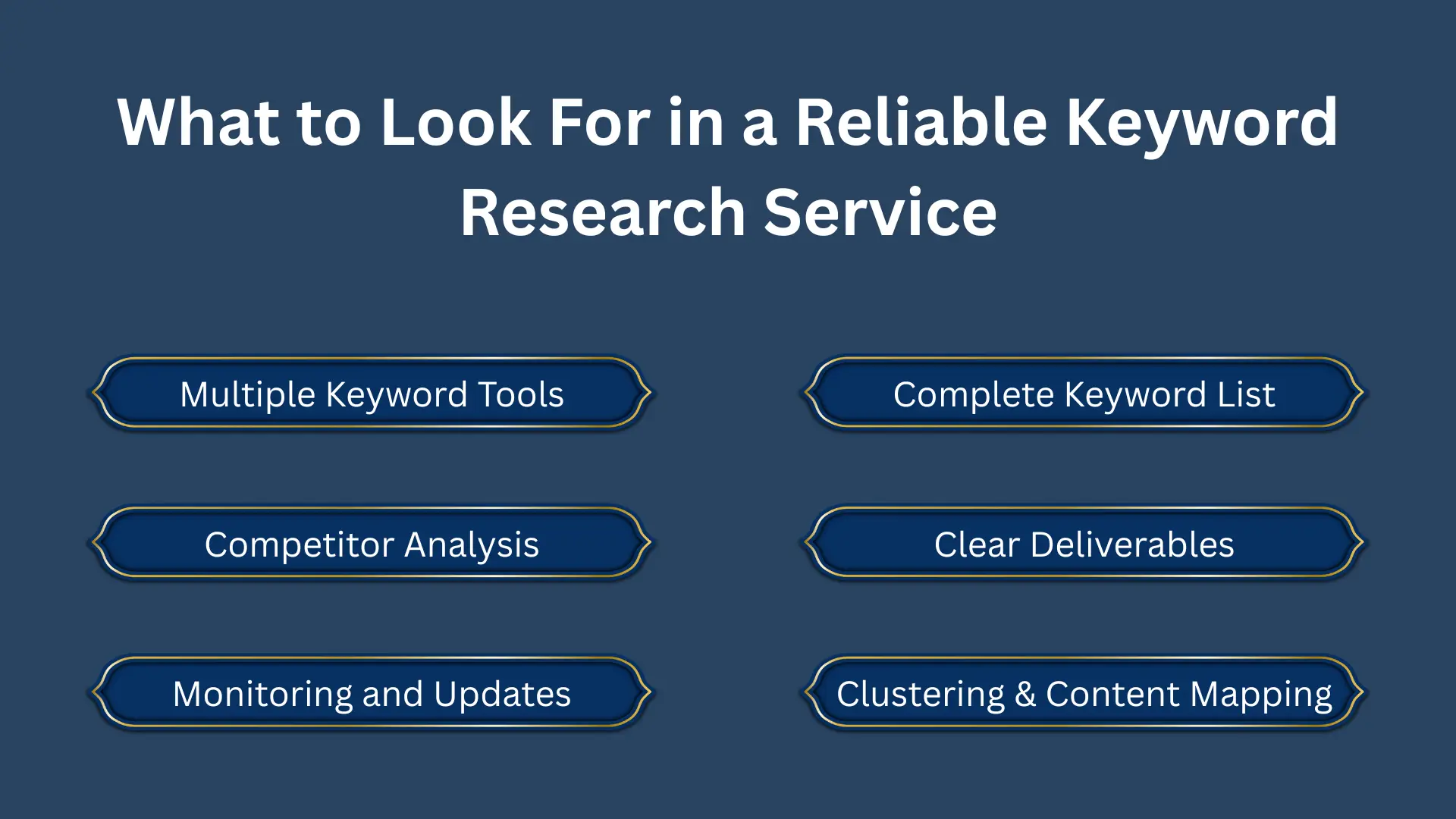
What to Look For in a Reliable Keyword Research Service
Choosing the right Keyword Research Service is very important because it directly affects your entire SEO journey. Moreover, a good service gives you a solid foundation and helps you get long-term results. Therefore, you need to make this choice carefully.
Here are the key things you should look for:
Multiple Keyword Tools, Not Just One
A reliable service uses many tools, such as:
- Google Keyword Planner
- Ahrefs
- SEMrush
- Moz
- Ubersuggest
- Long-tail keyword research tools
- Local SEO tools
Each tool has different data. So when you combine them, you get much more accurate results.
A Complete Keyword List
Your service should deliver keywords that include:
- Short-tail keywords
- Long-tail keywords
- Local keywords
- LSI keywords
- Organic keyword research terms
- Competitor keyword opportunities
- High-intent keywords
This list should help you build your complete content plan.
Keyword Research Competitor Analysis
Competitor analysis must be part of the service. This helps you find:
- Ranking gaps
- Hidden opportunities
- Under-served keywords
- Easy-to-rank terms
- Content ideas your competitors missed
A good service always explains why certain keywords were chosen.
Keyword Clustering & Content Mapping
This means grouping keywords based on themes.
For example:
Cluster: “home cleaning service”
- home cleaning service near me
- affordable home cleaning
- deep cleaning service
- weekly cleaning service
These groups help you build stronger content that ranks higher.
Clear Deliverables
A good service should give you:
- A complete keyword spreadsheet
- Search volume + difficulty
- Competition score
- Recommended content topics
- Suggested blog titles
- Landing page keyword ideas
- Notes about intent
- Local variations
- SERP insights
This makes it easy for you to start writing or planning content.
Ongoing Monitoring and Updates
SEO changes often. So a strong Keyword Research Service updates your keyword plan to match:
- Google algorithm changes
- New search trends
- New competitors
- Seasonal keywords
- Industry updates
This keeps your website safe and stable in rankings.
How Keyword Research Services Fit Into a Broader SEO Strategy
Keyword research is only the beginning. Once you have the right keywords, you can build every part of your SEO strategy around them.
Because of this, Keyword Research Services support many SEO steps, such as:
On-Page SEO
Keyword placement helps you optimize:
- Page titles
- Meta descriptions
- Headings
- Image alt text
- URL structure
- Internal links
When done correctly, Google understands your content better.
Content Strategy & Planning
Your keyword plan helps you decide:
- What blog posts to write
- What landing pages to build
- Which service pages need new content
- What FAQs to add
- What long-tail topics to cover
This saves time because you write exactly what people search for.
Technical SEO Improvement
Keywords also guide technical SEO, such as:
- Improving site structure
- Building a proper content hierarchy
- Creating keyword clusters
- Organizing pages based on intent
This helps your site become easier for Google to crawl.
Link Building & Outreach
When you know your keywords, you can build links around them. This includes:
- Guest posting
- Resource links
- Editorial mentions
- Niche edits
These links strengthen your domain authority.
Organic Keyword Research Growth
Strong keyword research leads to more organic traffic. And as your domain grows, you will naturally rank for even more keywords that you did not target directly.
This is how organic growth continues month after month.
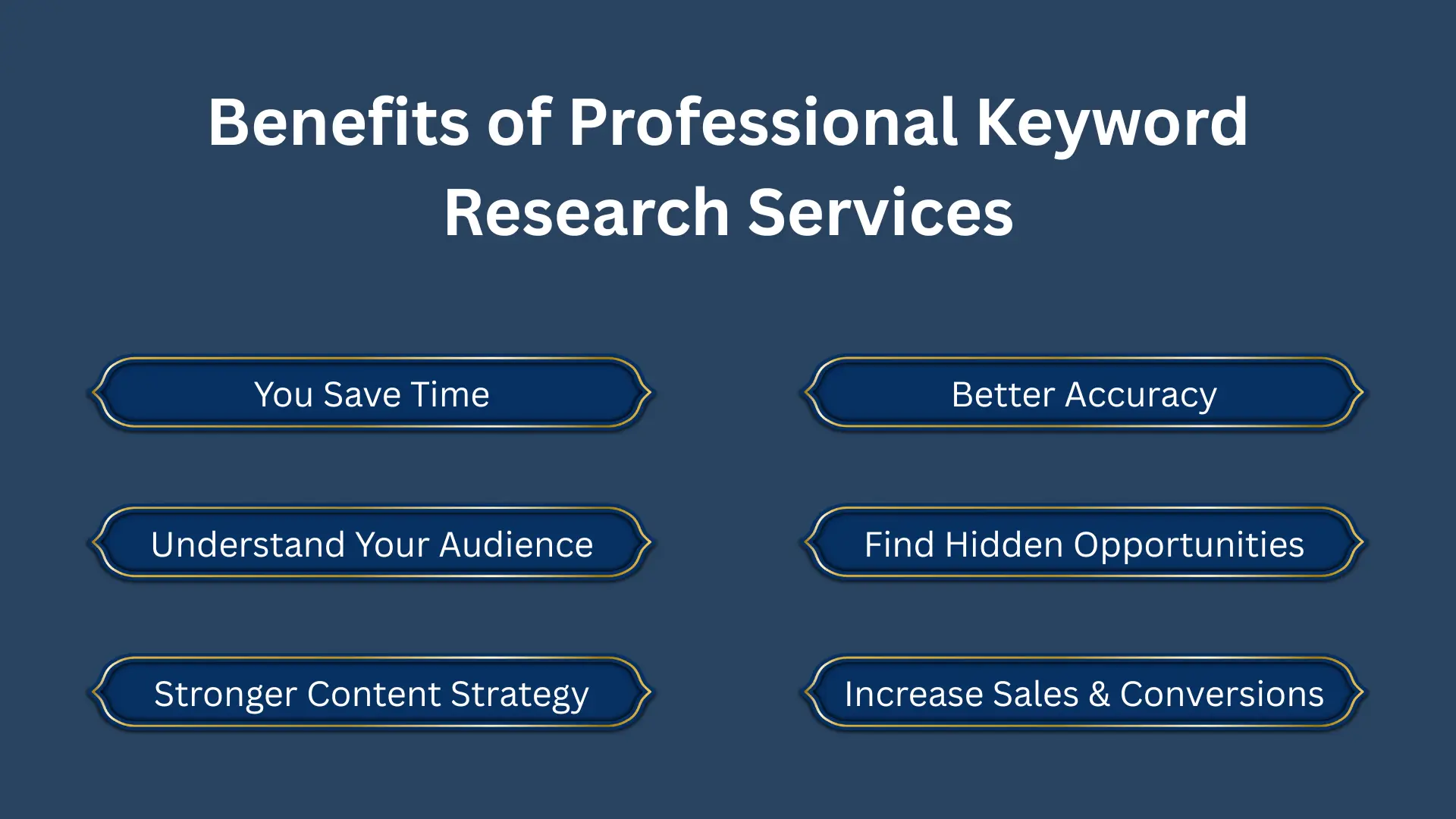
Benefits of Professional Keyword Research Services
Professional Keyword Research Services do far more than basic searches. They use deeper analysis, advanced tools, and strong strategies that help you grow faster.
Here are the biggest benefits:
You Save Time
Searching for keywords manually takes hours. A professional team does it faster and more accurately.
You Get Better Accuracy
Professionals use multiple tools and systems. Therefore, you get keyword lists that are more complete.
You Understand Your Audience Better
Keyword data shows what people really want. As a result, you can write better content and create better products.
You Rank Faster
When you target the right keywords, your ranking speed increases. Consequently, this brings more traffic without wasting time.
You Find Hidden Opportunities
Competitor research shows keywords that others missed. Therefore, these untapped keywords give fast results.
You Build a Stronger Content Strategy
When you know what topics people search for, creating content becomes simple and organized. Thus, you can plan your strategy with confidence.
You Improve Your Local Presence
Local keyword research helps you attract nearby customers who already want your service.
You Increase Sales & Conversions
Because you attract the right audience, your conversions naturally improve. It becomes easier for people to trust you and buy from you.
Overall, professional keyword research is an investment that pays off again and again. If you want professional help that guarantees results, reach out to Guest Posting Solution, a trusted partner in Keyword Research Services.
Conclusion
Finding the right keywords is one of the most important steps in SEO. First, it helps you understand what people search for. Then, it shows you how they search and what they expect from your business. Therefore, with the right Keyword Research Services, you can build a strong, clear, and successful strategy. In addition, using these keywords correctly can improve your website traffic and make your content more visible online. Throughout this blog, we covered:
- How keyword research works
- Why long-tail and local keywords matter
- How competitor analysis opens new ranking opportunities
- What to look for in a reliable keyword service
- How keyword research supports your full SEO plan
- Real examples that prove keyword research drives results
When you combine these methods, you get a powerful SEO foundation that helps your website grow for years.
And if you want professional help that brings real results, you can take the next step today.
FAQs
How often should I update my keyword list?
Keyword trends change over time. For example, new search terms appear, competitors update their strategies, and Google changes its algorithms. So, ideally, you should review your keyword list every 2–3 months. Additionally, if your business launches new products or services, updating the list immediately is crucial.
Are free keyword research tools reliable?
Free tools like Google Keyword Planner, Ubersuggest, and AnswerThePublic can give you a good starting point. However, they often lack detailed metrics, like competition analysis or long-tail suggestions.
How do I know which keywords will actually drive sales?
Keywords with high intent are more likely to drive conversions. Usually, these include words like “buy,” “best,” “near me,” or specific product/service names. Additionally, long-tail keywords often attract users who are closer to making a purchase decision.