Best SEO Tools for Smarter Rankings and Sustainable Growth in 2026
Search engine optimization in 2026 is no longer about guesswork or using random tactics. It now depends on accurate data, technical precision, and ongoing performance tracking. As search algorithms improve, SEO professionals need reliable tools to track ranking signals, user behavior, and competitors. These tools have become the backbone of every successful digital marketing strategy.
Manual SEO work can be slow and prone to costly mistakes. The best SEO tools automate repetitive tasks, reveal hidden opportunities, and provide insights for better decisions. Businesses using the right tools often outperform competitors in organic visibility, traffic quality, and conversions.
This guide shows how top SEO tools save time, improve rankings, and identify growth gaps. It also explains both free and paid tools for beginners and experts. From keyword research to audits, rank tracking, and reporting, this guide helps you pick the right tools for steady and consistent growth.
What Makes the Best SEO Tools Worth Using?
Therefore, choosing SEO tools should never be random. The best tools share key characteristics that directly affect your results.
Accuracy of Data and Insights
Accuracy is the foundation of trust. In fact, reliable SEO tools not only use data from dependable sources but also update frequently and reflect real search behavior. Therefore, without accurate data, even the best strategies can fail.
Ease of Use for Beginners and Professionals
Usability is equally important. For example, beginners need clear guidance, while advanced users require more in-depth features. Consequently, top SEO tools provide simple dashboards and advanced options, so teams of all skill levels can work efficiently.
Coverage Across the Full SEO Workflow
The best SEO tools cover all key areas. For instance, they help with keyword research, technical audits, rank tracking, and reporting. Moreover, many tools combine these features in one platform or connect easily with other systems.
Scalability for Growing Businesses
Scalable tools grow alongside your business. Therefore, whether you are a startup, an agency, or a large enterprise, these tools can handle extra workload. Additionally, as your keyword list or number of websites expands, they maintain speed and performance.
Best Free SEO Tools You Can Start Using Today
Free SEO tools remain very useful, especially for startups and small businesses. Although they may not provide as much detail as paid tools, they still offer valuable insights if used smartly.
1. Google Search Console
First, Google Search Console shows how Google indexes your website. It also tracks search performance and finds technical issues. Moreover, it helps you spot crawl errors fast and monitor performance drops before they turn into bigger problems.
2. Google Analytics
While not strictly an SEO tool, Google Analytics connects traffic behavior with organic search results. As a result, it helps you improve content and user experience based on real data. Furthermore, you can identify trends that may impact SEO strategy.
3. Ubersuggest
Ubersuggest offers keyword research, backlink checks, and site audits. Its free features are limited, but ideal for beginners exploring SEO without spending money. It also helps find content ideas and improve your website effectively.
4. Answer The Public
Answer The Public shows questions people ask online. Consequently, you can align your content with user intent. In addition, it is useful for improving content for voice search, which continues to grow in importance.
5. SEO quake
The free version of SEO quake up to 500 URLs. Therefore, it allows basic technical audits, which is ideal for small websites. In short, it is a simple yet effective tool for detecting SEO issues early.
Best SEO Keyword Research Tools
Keyword research is the foundation of every successful SEO strategy. Without it, content can feel unfocused and fail to reach the right audience.
1. Ahrefs
Ahrefs is best known for its strong backlink data. However, it also works well for keyword research. Additionally, it shows keyword difficulty, traffic potential, and SERP details. These insights help you make smarter content decisions.
2. SEMrush
SEMrush helps you find gaps in competitor keywords. Additionally, it supports topic clustering and groups keywords by user intent. This makes SEO planning more focused and easier to manage.
3. Moz Keyword Explorer
Moz helps teams pick the right keywords with confidence. It compares opportunity and difficulty side by side. As a result, it becomes easier to decide which keywords deserve priority.
4. KW Finder
KW Finder makes keyword research simple and clear. Therefore, its clean visuals and accurate difficulty scores help you find strong keywords fast, even in niche markets.
4. Google Keyword Planner
Google Keyword Planner is mainly for PPC. However, it can help with SEO research when combined with other tools. It shows search volume and trends.
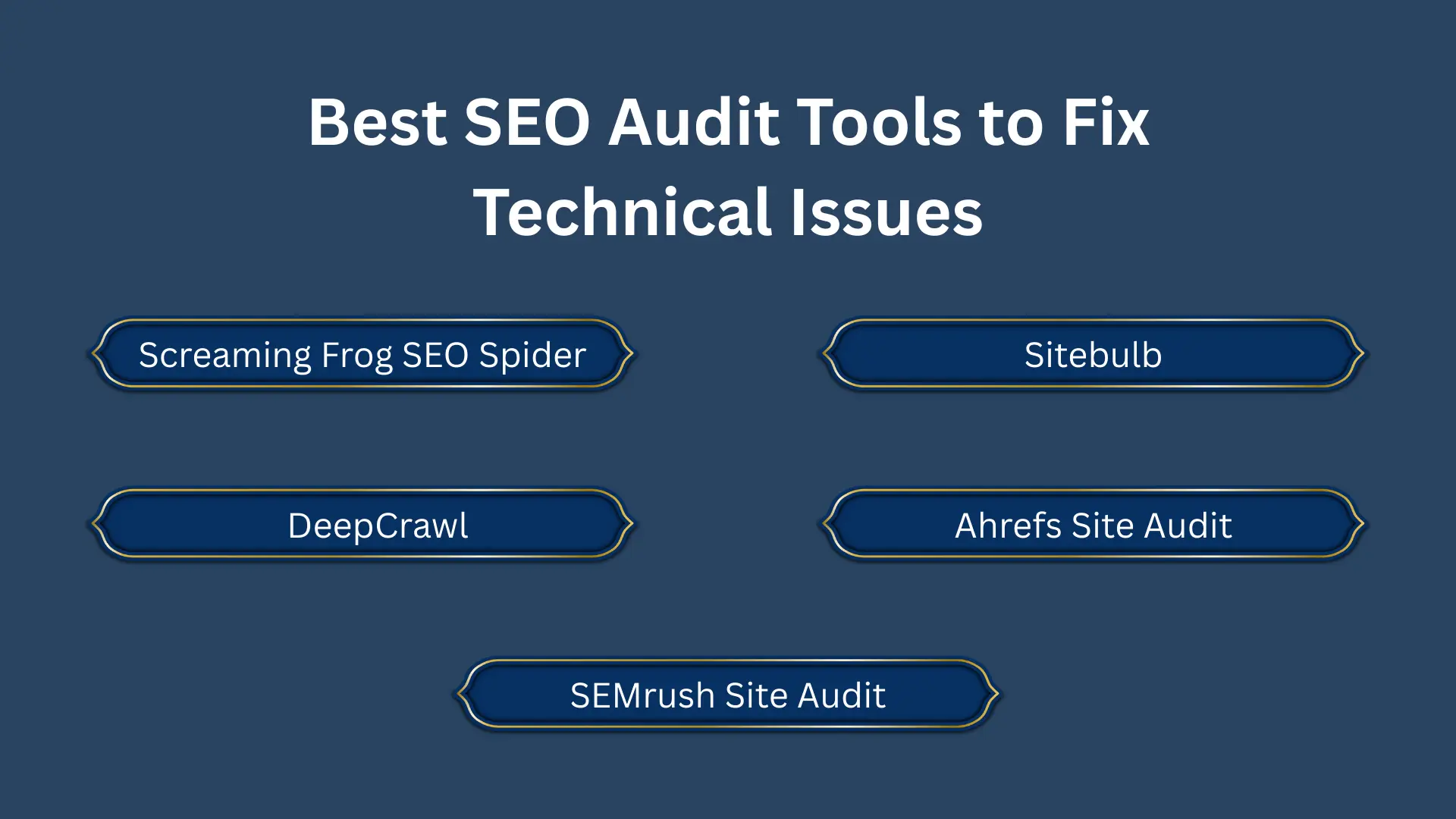
Best SEO Audit Tools to Fix Technical Issues
Technical SEO errors silently damage rankings. Regular audits are essential to prevent them.
1. Screaming Frog SEO Spider
This tool quickly finds broken links, duplicate content, and metadata errors. It helps you fix issues early, before they start hurting search rankings.
2. Site bulb
Site bulb provides visual reports that explain technical problems clearly. And, these reports are easy to understand, even for stakeholders with no technical background.
3. Deep Crawl
Built for large websites, Deep Crawl manages JavaScript rendering and deep crawling. It ensures hidden technical issues do not get missed.
4. On Crawl
This tool combines technical checks with backlink and keyword data. It gives a clear and complete view of your website’s overall health.
5. Jet Octopus
Jet Octopus groups issues based on severity levels. This helps you fix the most important problems first and improve site performance faster.
Best SEO Rank Tracking Tools to Monitor Performance
Rank tracking helps you monitor your SEO efforts and see how well your website performs in search results.
1. Night watch
Night watch provides daily updates. It helps you track performance by device and also allows local tracking for more accurate results.
2. Advanced Web Ranking
This tool highlights visibility trends and clearly shows which SERP features your website currently owns.
3. Accu Ranker
Accu Ranker is fast and reliable. It works especially well for agencies that manage large keyword lists.
4. SERP Watcher
Designed for small and medium businesses, SERP Watcher simplifies rank tracking. It uses clear performance indicators that are easy to understand.
5. Pro Rank Tracker
Pro Rank Tracker supports tracking across multiple locations and devices. This helps you gain a detailed and complete view of your rankings.
Best SEO Reporting Tools for Clear Insights and Clients
SEO reporting tools help you turn raw data into actionable insights quickly and clearly. For example,
- Google Looker Studio lets you build customizable dashboards that combine SEO and analytics data in one place. It helps you view performance clearly without switching between tools.
- What a graph My Reports additionally helps agencies and teams automate branded reports with ease. As a result, it saves time and reduces manual work.
- Raven Tools Reporting, moreover, makes tracking backlinks and keyword performance simple. It delivers clear reports that highlight trends without confusion.
- Agency Analytics is similarly designed for agencies that manage multiple clients. It offers client-ready dashboards in one central place, making reporting easier to handle.
- Dash This furthermore brings all SEO metrics together in one dashboard. It turns complex data into clean, visual summaries that are easy to read and share.
How to Choose the Best SEO Tools for Your Business
Based on Budget and Team Size
Smaller teams often benefit from free SEO tools or low-cost subscriptions. On the other hand, agencies and larger enterprises need platforms that can scale easily.
Based on SEO Goals
Teams focused on content usually prioritize keyword research, while technical teams depend on advanced audit tools. E-commerce sites, in particular, need tracking at the product level to stay competitive.
Free vs Paid Tools
Free tools offer learning opportunities, whereas paid tools deliver precision, automation, and scalability.
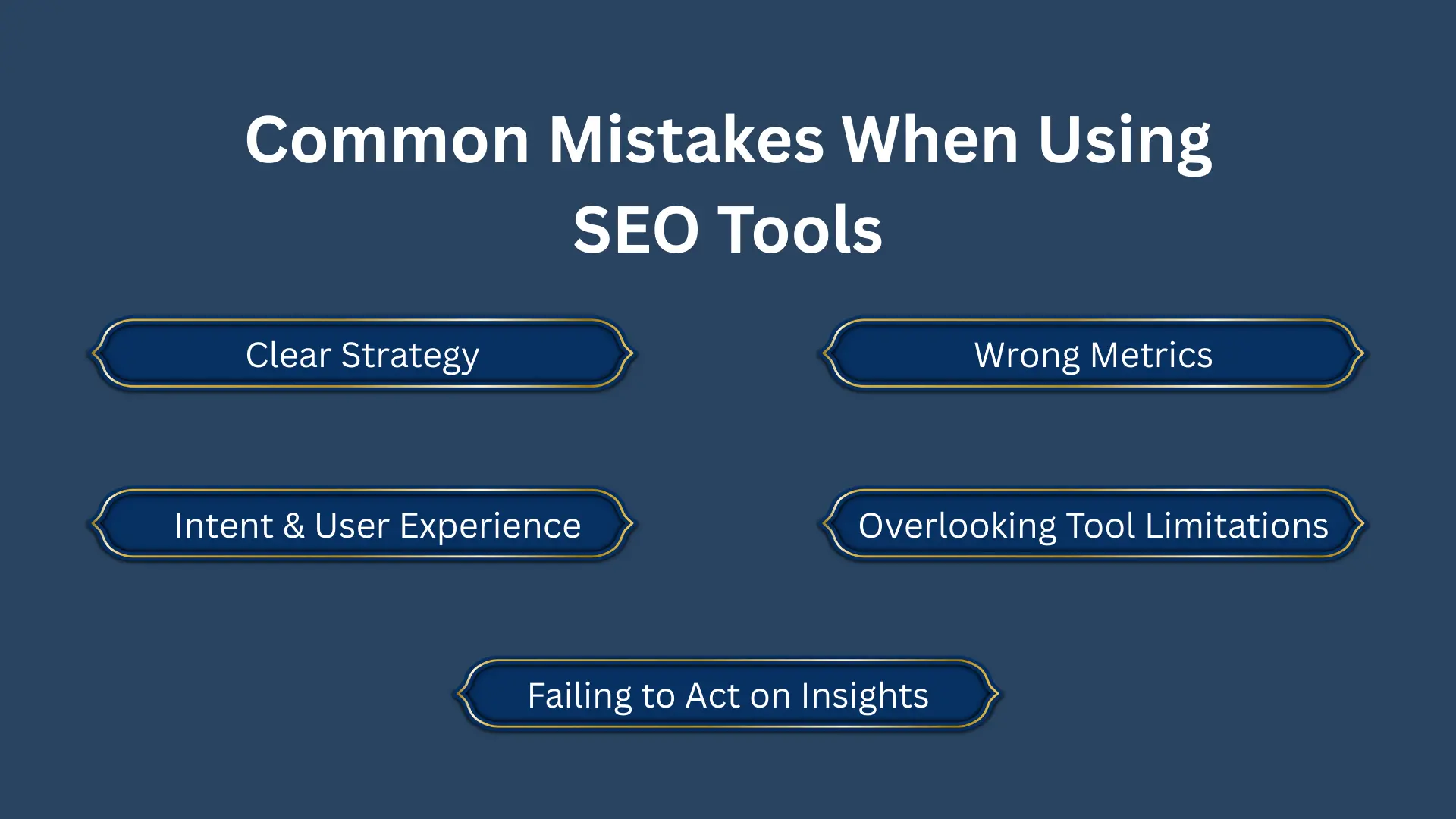
Common Mistakes When Using SEO Tools
Even top SEO tools can fail if you use them the wrong way. Knowing common mistakes helps you avoid problems. As a result, these mistakes waste time and limit growth. Fixing them leads to faster results. Below, we share the most common SEO tool mistakes and how to correct them.
1. Using Tools Without a Clear Strategy
Many people use SEO tools without a clear plan. These tools give data, but acting only on numbers can waste time. For example, chasing keyword suggestions without considering your audience or search intent may bring low-quality traffic.
How to Avoid It:
- Set clear goals before analyzing data.
- Match tool insights with business objectives and audience needs.
- Review and adjust your strategy regularly based on performance.
2. Tracking the Wrong Metrics
Many teams watch vanity metrics instead of useful KPIs. They may track total traffic but ignore conversions, bounce rates, or engagement. Only focusing on rankings without checking traffic quality can waste time and resources.
How to Avoid It:
- Track metrics that impact ROI and business outcomes.
- Use tools to monitor conversions, lead quality, and user engagement alongside rankings.
- Regularly check which metrics truly show success in your niche.
3. Ignoring Search Intent and User Experience
SEO tools help you see keyword volume and rankings, but they cannot replace human judgment. Ignoring what users want or how they use your site can slow growth. Focusing only on keywords while neglecting mobile SEO or page performance can lower rankings and drive visitors away.
How to Avoid It:
- Combine SEO data with UX audits and mobile performance checks.
- Use tools to spot technical issues, but fix what improves user experience first.
- Test your site on multiple devices to ensure smooth usability.
4. Overlooking Tool Limitations
SEO tools are not perfect. Some miss backlinks, crawl only a few pages, or show old data. Therefore, depending on one tool alone can cause mistakes.
How to Avoid It:
- Cross-check data with multiple tools.
- Learn each tool’s strengths and limits.
- Update workflows when new features or better tools appear.
5. Failing to Act on Insights
Collecting data is useless if you do not use it. Therefore, waiting too long can make you miss opportunities while competitors move ahead.
How to Avoid It:
- First, create clear action plans for every audit or analysis.
- Then, focus on tasks that have the highest impact.
- Next, track the results carefully and, finally, adjust continuously for better outcomes.
Final Thoughts:
Ultimately, the best SEO tools depend on your experience, goals, and resources. Beginners should start with free tools. These tools give basic insights and help you learn SEO quickly. Their dashboards are simple and easy to use.
Experts and agencies should use big, reliable platforms along with specialized tools. This mix provides deeper data, better scalability, and stronger insights. Agencies offering Guest Posting Services use these tools to monitor backlinks and track performance. As a result, they make results easy to understand for clients.
Therefore, choosing the right tools helps you make smarter decisions, improve rankings, and grow SEO over time.
FAQs
Q1: Are free SEO tools enough for long-term growth?
Free SEO tools are useful for learning and basic optimization. As your business grows, paid tools become important. They make scaling easier, offer advanced features, and help you make decisions based on data.
Q2: How often should SEO audits be performed?
You should do an SEO audit every three months. Do one after big updates, site redesigns, or migrations too. Therefore, this helps find and fix technical problems fast.
Q3: Can one tool handle all SEO tasks?
All-in-one SEO tools can do many jobs. But relying only on them may limit what you learn. Therefore, specialized tools give more detailed and accurate data for audits and tracking rankings.