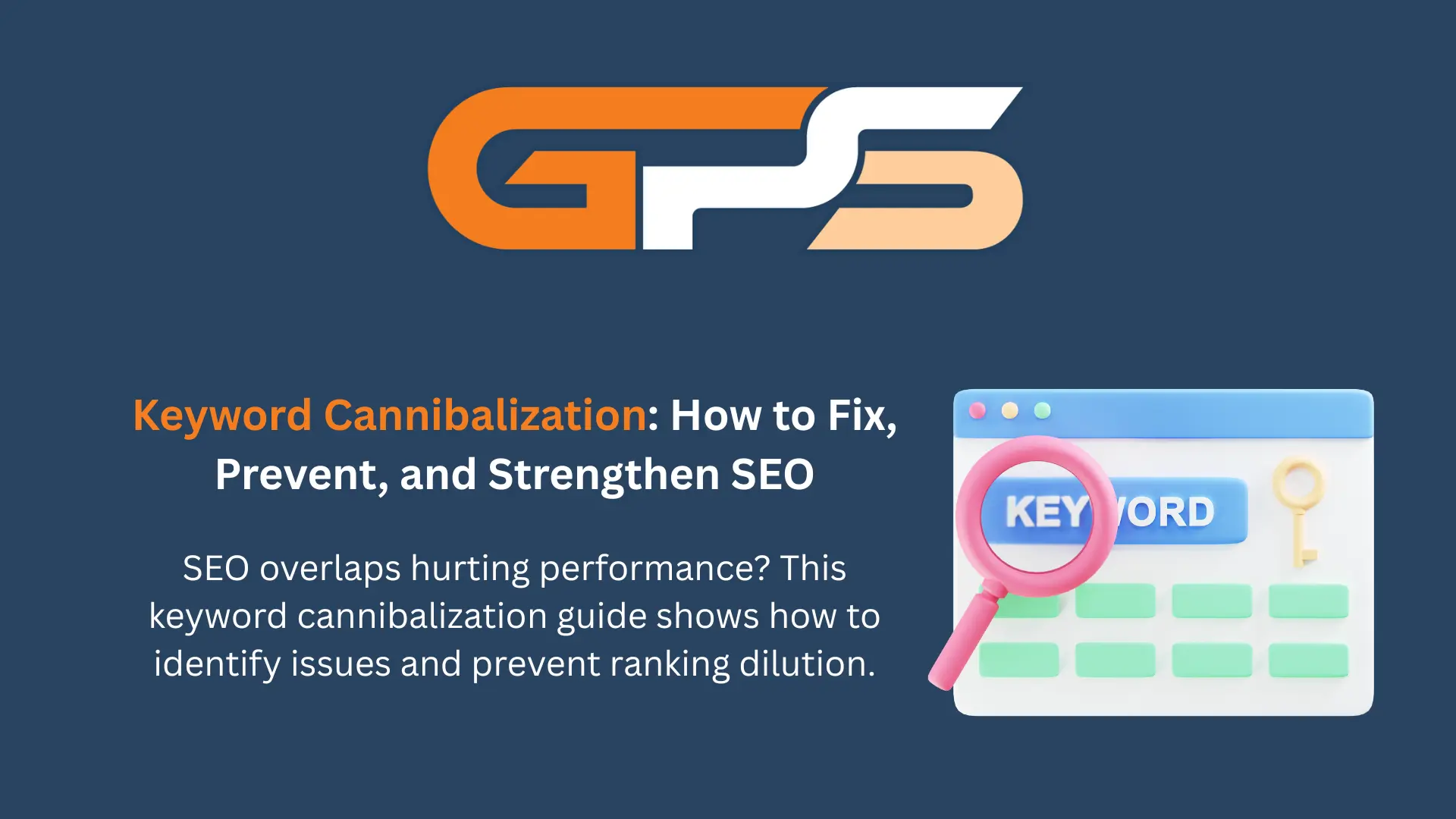
Keyword Cannibalization: How to Fix, Prevent, and Strengthen SEO
In today’s competitive digital landscape, understanding keyword cannibalization has become essential for any US business that wants to dominate search engine rankings, attract organic traffic, and convert visitors into customers. While at first glance it may seem like a minor SEO issue, keyword cannibalization can silently undermine your organic visibility, dilute rankings, and damage your domain authority if left unchecked.
In fact, when multiple pages compete for the same phrase, search engines struggle to determine which one deserves priority, leading to weaker performance overall.
Fortunately, this is not a problem that you must face alone. With effective strategies, especially targeted link-building services in the US, you can not only fix keyword cannibalization but also prevent it moving forward while maximizing your site’s SEO potential.
What Is Keyword Cannibalization?
At its core, keyword cannibalization happens when multiple pages on your website are targeting the same or very similar keywords, causing them to compete with each other rather than working together to improve rankings.
When your content overlaps in keyword targeting, search engines like Google can’t easily decide which page is most relevant for a user’s query. As a result, your pages may split the available ranking power, leading to fragmented visibility, reduced organic traffic, and inconsistent SERP performance.
This issue often occurs in content‑rich sites such as blogs, e-commerce stores, or service pages, where similar terms may be used repeatedly without clear keyword mapping.
Why Keyword Cannibalization Hurts Your SEO
Keyword cannibalizations is more than just an abstract SEO concept; it has real consequences for your business:
1. Confusion for Search Engines
Search engines try to rank the page that best matches user intent, but when multiple pages appear equally relevant, they may flip‑flop rankings or priorities the wrong page entirely.
2. Diluted Organic Traffic
Instead of one page capturing all the clicks for a given term, traffic gets split across several competing pages. This weakens your overall search presence and decreases organic
3. Reduced Link Authority
Backlinks are one of the most powerful ranking signals. But when links are spread across multiple pages targeting the same phrase, link equity becomes diluted, making it harder for any single page to score high in the SERPs.
4. Lower Conversion Rates
Fragmented content can lead users to landing pages that don’t deliver the most relevant experience, making it less likely they’ll convert.
Identifying Keyword Cannibalization (Step‑by‑Step)
Before you can fix keyword cannibalization, you must find where it’s happening:
Step 1: Run a Keyword Audit
Use tools like Google Search Console, Ahrefs, or SEMrush. Find pages that rank for the same keywords. If more than one page ranks for a main keyword, you might have cannibalizations.
Step 2: Check Your Internal Links
Look at how your pages link to each other. If many links use the same anchor text but go to different pages, it can show search engines that your pages compete with each other.
Step 3: Check Page Content and Intent
Even if keywords aren’t identical, if multiple pages serve the same user intent, they could be canonicalizing each other. Examine whether two pages are attempting to satisfy the same search query.
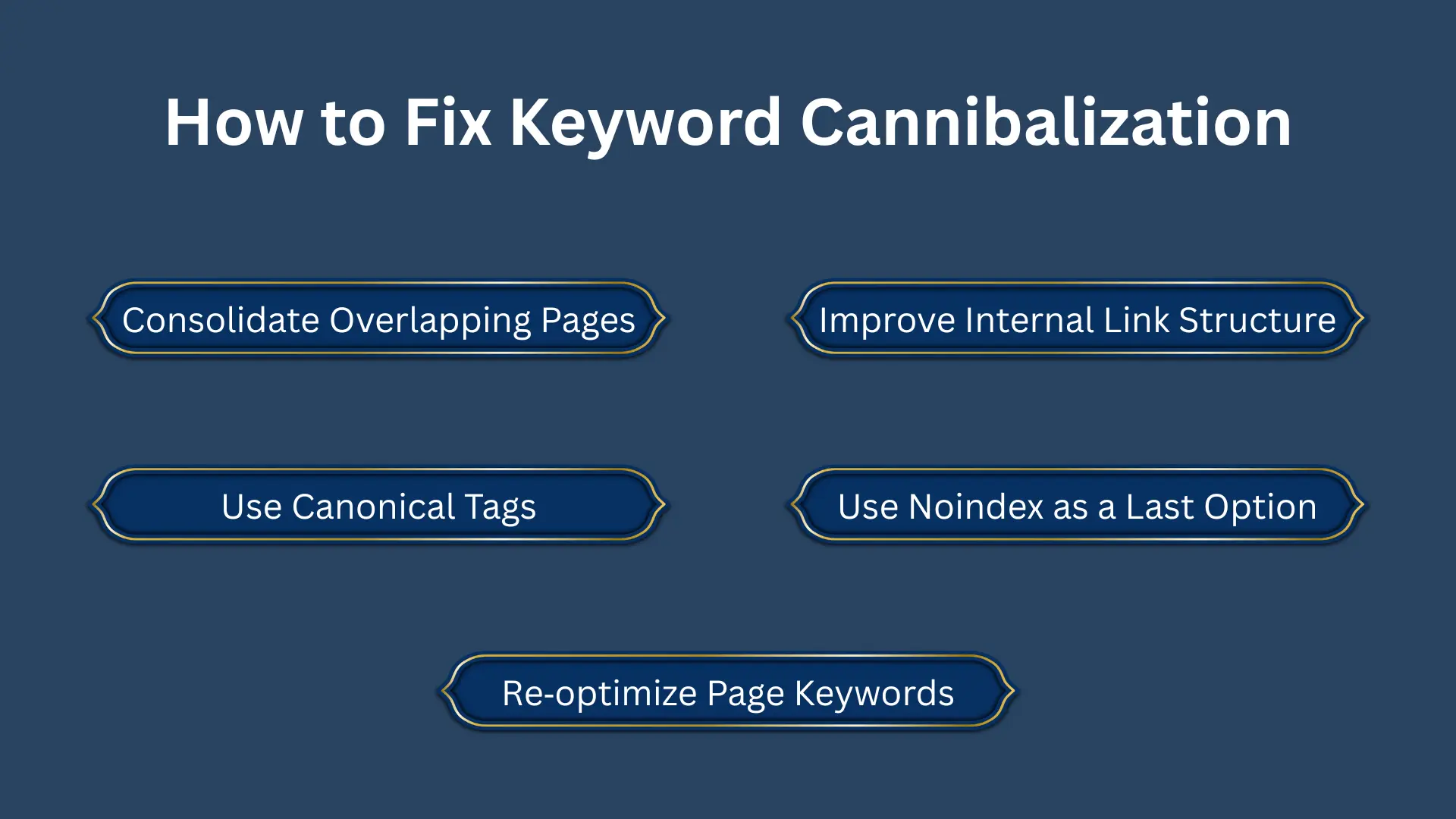
How to Fix Keyword Cannibalization
Once identified, there are several effective ways to fix keyword cannibalizations and consolidate your SEO strength.
1. Consolidate Overlapping Pages
If two or more pages rank for the same keyword, combine them into one complete page. Then, use 301 redirects from the old pages to the new one. This keeps any links pointing to the old pages.
Doing this focuses all ranking signals in one place. It also makes the page more relevant and stronger.
2. Improve Internal Link Structure
After choosing a main page for a keyword, update your internal links to point to it. Use anchor text with the keyword. This shows search engines which page is most important.
3. Use Canonical Tags
If you need to keep similar pages live, add a canonical tag. Point it to the main page. This stops keyword cannibalization without deleting content.
4. Use Noindex as a Last Option
For pages that get little traffic or don’t need ranking, add a noindex tag. Search engines will not show these pages in results. This stops them from competing with your main page.
5. Re‑optimize Page Keywords
Sometimes the best solution is simply to revise keyword strategies so each page targets unique, specific phrases rather than general terms that overlap. This strengthens each page’s individual purpose.
Best Link Building Services: A Key Part of Fixing Cannibalization
Now, it’s critical to recognize that fixing keyword cannibalization isn’t just about consolidation and internal links. For many businesses, a proactive link building strategy plays a major role in signaling page authority to search engines.
Without strong inbound links, it’s harder for your main page to rise above competing pages and earn prime positions in search engine results pages (SERPs). This is why best link building services are so important.
Here’s how targeted link building helps:
1. Reinforces Page Relevance
High‑quality backlinks pointing directly to your chosen keyword page strengthen its relevance and authority, making it more competitive than any canonicalized counterpart.
2. Signals to Search Engines
Search engines consider backlinks as “votes of confidence.” When your main page accumulates links relative to competing pages, it clarifies which page should rank for the target keyword, reducing cannibalizations impact.
3. Boosts Organic Rankings
Backlinks from authoritative, relevant global sites boost your page’s credibility, a major factor in ranking algorithms. This is especially valuable for competitive keywords where top positions require strong link profiles.
For businesses ready to accelerate their SEO with expert link building, consider tailored support like Guest Posting Solutions to secure high‑authority placements and solidify your keyword strategy.
Advanced Link Building Tactics to Prevent Keyword Cannibalization
Link building isn’t just about getting links; it’s about strategically reinforcing the right pages for the right keywords.
1. Guest Posting
Guest posts allow you to earn contextual, industry‑relevant backlinks pointing to your core pages. When you consistently direct links to your main keyword targets, you reduce the likelihood that multiple pages will ever compete on equal footing.
To scale this effectively, consider partnering with Guest Posting Solutions for high‑quality and global placements that support your SEO goals.
2. Local Citations and Authority Signals
Links from reputable sites, like news outlets, local business directories, and industry associations provide strong signals that your site is authoritative.. These links help your main page outrank any competing internal content.
3. Content Outreach and Blogger Campaigns
Outreach to bloggers and niche publications can help bring high‑quality backlinks that support your keyword focus, reinforcing your preferred ranking pages instead of fragmented alternatives.
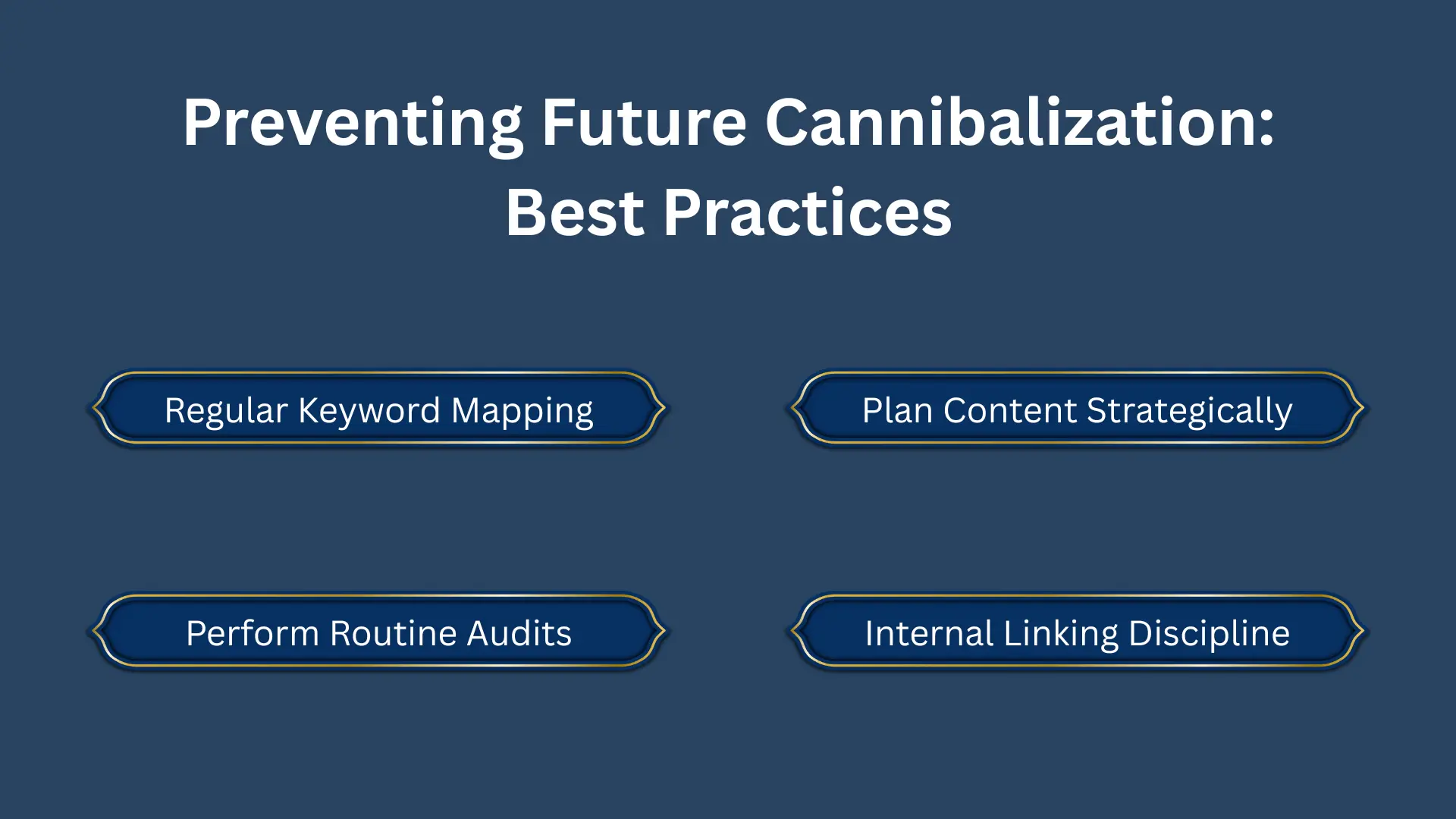
Preventing Future Cannibalization: Best Practices
Preventing seo cannibalization before it starts is often easier than fixing it later.
Here’s how to set up a future‑proof content and SEO strategy:
Conduct Regular Keyword Mapping
Before publishing new content, maintain a keyword map that assigns unique target phrases to each page. This avoids overlaps and ensures every page serves a clear purpose.
Plan Content Strategically
Use content calendars and strategic planning techniques to ensure each topic has its own keyword focus. Group related keywords under a pillar page while supporting content targets related long‑tail variations.
Perform Routine Audits
SEO isn’t static. Sites evolve, and sometimes old pages become relevant to new keywords. Schedule quarterly audits to catch any emerging cannibalizations before it affects rankings.
Maintain Internal Linking Discipline
Always link from low‑priority pages back to your main keyword pages. This reinforces authority and prevents mixed signals that could lead to internal competition.
Conclusion
Keyword cannibalization is a subtle but powerful SEO challenge that can reduce your site’s organic performance if ignored. However, with a structured approach, from identifying overlapping pages, consolidating content, and fixing internal links, to applying smart link building strategies, you can fix keyword cannibalization and create a stronger, more coherent content hierarchy.
Moreover, the best link building services in the US are essential to reinforcing your chosen ranking pages with high‑quality backlinks, clarifying their authority, and preventing future conflicts.
If you’re ready to accelerate results, consider tailored support like Guest Posting Solutions, designed to deliver strategic, high‑quality backlinks that support both your keyword focus and long‑term SEO goals.
FAQs
1. Can keyword cannibalization affect paid search campaigns?
Yes. When multiple pages target the same keyword, paid campaigns like Google Ads may direct traffic to less relevant pages, reducing Quality Score and increasing cost-per-click. Fixing cannibalization improves both organic and paid performance.
2. How often should I audit my site for keyword cannibalization?
It’s recommended to perform a keyword audit every 3–6 months. Regular checks help identify new conflicts caused by fresh content, updates, or changes in search intent.
3. Does having similar product pages cause keyword cannibalization?
Yes. Multiple product or service pages with overlapping keywords can trigger content cannibalizations, confusing search engines and splitting ranking authority. Differentiating titles, descriptions, and meta tags prevents this issue.