SEO Content Strategy: Guide to Ranking, Traffic, and Growth
Search engines change often. User behavior also shifts fast. Because of this, random content no longer works. Businesses that want steady growth need a clear and focused SEO content strategy. Without it, even good content struggles to rank, convert, or stay relevant.
This guide explains how to build a strong SEO content strategy step by step. It also shows how content connects with search engine marketing, SEO strategy, and modern content marketing strategies. Most importantly, everything here is practical, readable, and easy to apply.
What Is an SEO Content Strategy?
An SEO content strategy is a structured plan for creating, optimizing, and managing content to rank in search engines. It focuses on visibility, relevance, and long-term results.
Unlike a general content strategy, this approach starts with search intent. It answers real questions people search for. At the same time, it follows SEO best practices.
In simple words, SEO content strategy helps your content get found, read, and trusted.
Why SEO Content Strategy Matters More Than Ever
Today, competition in search results is intense. Thousands of pages target the same keywords. Because of that, publishing content without a strategy wastes time and budget.
A strong strategy for SEO content helps because it:
- Improves organic rankings
- Drives consistent traffic
- Builds topical authority
- Supports search engine marketing efforts
- Improves conversions over time
Most importantly, it aligns content with what users actually want. As a result, search engines reward it.
Core Elements of an Effective Content Strategy with Best SEO Practices
A winning content strategy is never random. Instead, it follows clear steps. Let’s break them down.
1. Keyword Research and Topic Planning
Everything starts with keywords. However, modern SEO goes beyond single keywords.
First, identify your main keyword. Then, group related terms and questions around it. This creates topic clusters.
For example:
- Primary keyword: SEO content writing
- Related terms: content writing, SEO writing, search engine marketing
This approach helps search engines understand context. As a result, your content ranks for multiple queries.
2. Search Intent Comes First
Search intent answers one simple question: Why is the user searching?
There are four main intent types:
- Informational
- Navigational
- Commercial
- Transactional
Your content SEO strategy should always match intent. Otherwise, rankings drop quickly.
For example, guides should educate. Service pages should convert. Mixing them causes confusion.
3. On-Page Optimization That Supports Content
Content quality matters. Still, structure matters too.
This is where On-Page SEO Services play a key role.
Strong on-page optimization includes:
- Clear H1, H2, and H3 headings
- Short paragraphs
- Internal linking
- Optimized meta titles and descriptions
- Proper keyword placement
When done correctly, on-page SEO improves readability and rankings at the same time.
4. High-Quality, Helpful Content
Search engines reward content that helps users. Therefore, value always comes first.
Good SEO content:
- Answers questions clearly
- Avoids fluff
- Uses simple language
- Stays updated
Also, content should show experience and accuracy. This builds trust. Over time, trust improves rankings.
How SEO Content Strategy Supports Search Engine Marketing
SEO and search engine marketing work best together over time. Therefore, combining both creates stronger visibility, better reach, and more stable growth across search platforms.
SEO focuses on organic growth through helpful content. Meanwhile, SEM focuses on paid visibility and fast results. However, both depend on keywords, search intent, relevance, and user behavior.
An SEO content strategy helps SEM by:
- Identifying high-converting keywords that attract ready buyers
- Improving landing page quality for better engagement and trust
- Lowering paid ad costs by increasing quality scores
At the same time, paid campaigns reveal real keyword data and user patterns. Therefore, this insight improves SEO planning, content direction, and long-term strategy alignment.
How to Create an Effective SEO Strategy in 2026
Creating an effective SEO strategy in 2026 requires clarity, adaptability, and a strong focus on users. Search engines now reward relevance, experience, and usefulness more than ever. Therefore, strategy matters more than shortcuts.
1. Start With Search Intent, Not Just Keywords
First, understand why users search. Then, map keywords to intent types such as informational, commercial, or transactional. As a result, content matches expectations and performs better.
2. Build a Strong SEO Strategy
Next, plan content around topics, not single keywords. Use clusters, supporting pages, and clear structure. Consequently, search engines understand authority and context more easily.
3. Prioritize Content Quality and Experience
Helpful, simple, and clear content wins. Therefore, focus on readability, short paragraphs, and real answers. At the same time, optimize for engagement and trust.
4. Strengthen On-Page SEO Foundations
Then, improve titles, headings, internal links, and page structure. This helps users navigate easily. Meanwhile, search engines crawl and rank pages more accurately.
5. Use Data to Refine the SEO Strategy
Track rankings, traffic, and behavior regularly. After that, update weak pages and expand winning topics. As a result, performance improves over time.
6. Align SEO With Search Engine Marketing
Finally, combine SEO insights with paid campaign data. Therefore, keyword planning improves, costs drop, and results become more predictable.
Content Formats That Work Best for SEO
Different content types serve different goals. A strong SEO content strategy uses multiple formats.
1. Blog Posts and Guides
Long-form blog posts build authority. They also rank for multiple related keywords.
They work best for:
- Informational intent
- Top-of-funnel traffic
- Internal linking
2. Service Pages
Service pages target commercial intent. They must be optimized carefully.
Strong service content:
- Explains benefits clearly
- Uses trust signals
- Applies On-Page SEO Services properly
3. Evergreen Content
Evergreen content stays relevant for years. It drives consistent traffic.
Examples include:
- How-to guides
- Tutorials
- Industry explanations
4. Supporting Content
Supporting content strengthens main pages. It improves internal linking and topical depth.
As a result, your entire site gains authority.
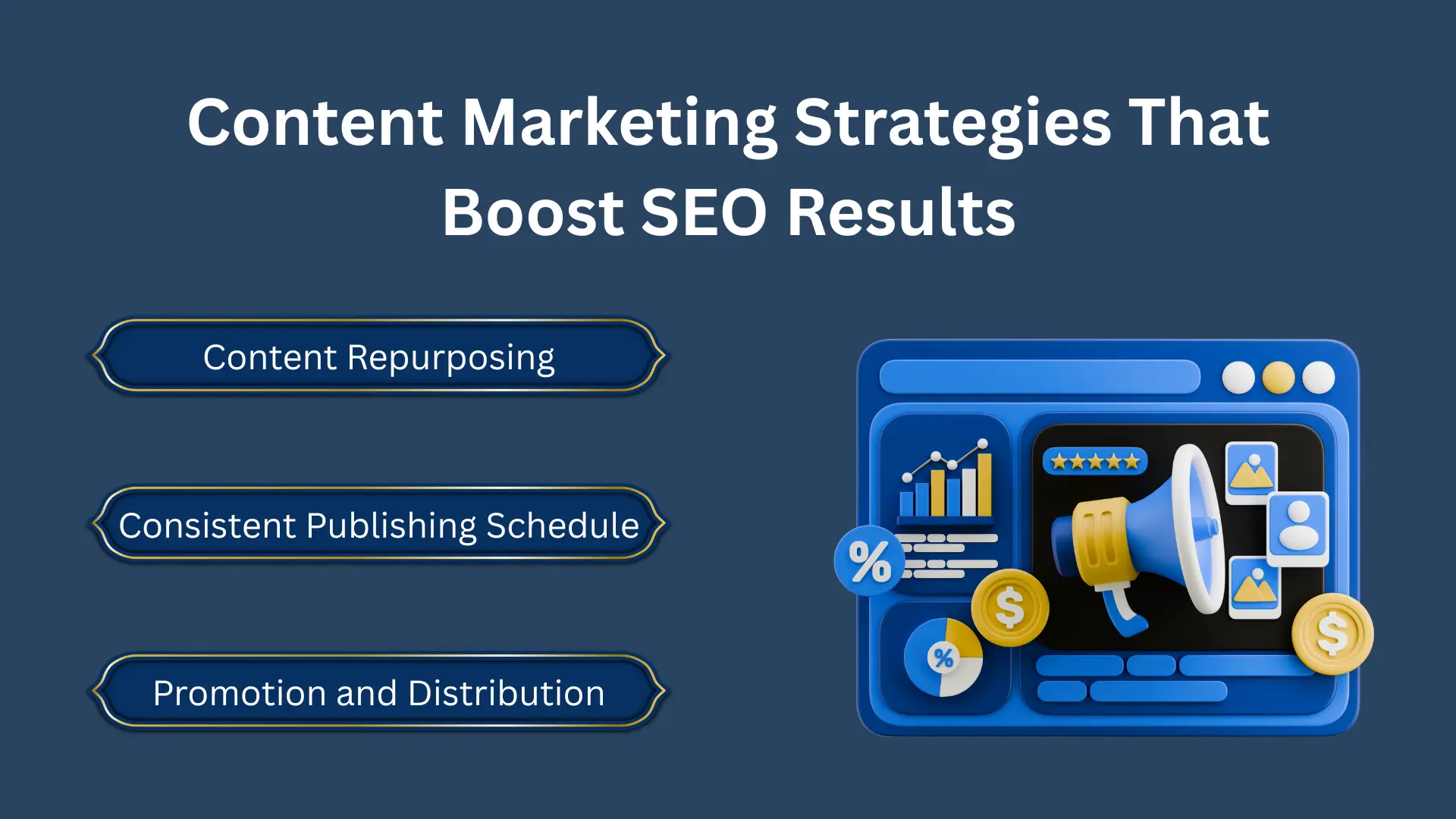
Content Marketing Strategies That Boost SEO Results
SEO does not work alone. Instead, it performs best when combined with smart content marketing strategies. Together, they increase reach, improve engagement, and support long-term search visibility.
Here are proven tactics.
1. Content Repurposing
One strong idea can create many content pieces.
For example:
- A blog post → social posts
- Blog post → email content
- Blog post → video script
Therefore, reach grows without extra effort.
2. Consistent Publishing Schedule
Search engines prefer active websites. Because of this, consistency matters more than posting often. Even one quality post each week builds momentum, strengthens trust, and supports steady SEO growth.
3. Promotion and Distribution
Content needs visibility. Without promotion, even great content stays hidden.
Share content through:
- Email newsletters
- Social platforms
- Industry communities
This increases engagement signals. As a result, rankings improve.
Measuring SEO Content Strategy Performance
Tracking results keeps your strategy effective.
Important metrics include:
- Organic traffic
- Keyword rankings
- Click-through rate
- Time on page
- Conversions
Use this data to improve weak content. Over time, optimization compounds results.
Advanced SEO Content Strategy Tactics
Once the basics work well, advanced SEO tactics add a strong advantage. Therefore, they improve rankings, increase visibility, and help content perform better in competitive search results.
Semantic SEO
Search engines now understand meaning, not just keywords. Therefore, using related terms naturally improves clarity, builds topical relevance, and helps content rank for more search queries.
Internal Linking Strategy
Internal links guide users smoothly through your site. At the same time, they help search engines understand structure, share authority, and improve rankings for related pages.
Content Gap Analysis
By reviewing competitors, you find missing topics. Then, creating stronger content fills those gaps, improves coverage, and reveals new ranking opportunities across important keywords.
SEO Content Strategy vs Content Marketing Strategy
These two terms often overlap. However, they are not the same.
A content marketing strategy focuses on brand awareness, engagement, and storytelling. Meanwhile, an SEO content strategy focuses on ranking, traffic, and intent.
That said, the best results happen when both work together.
SEO brings traffic. Content marketing builds trust. Together, they support a complete SEO strategy.
Common SEO Content Strategy Mistakes
Avoiding common SEO mistakes saves both time and money. Moreover, it protects rankings and improves results. Therefore, understanding these issues early helps content perform better for longer.
1. Writing Without Intent
Content fails when it ignores user intent. Therefore, always start by understanding what the searcher wants. When content matches goals, users stay longer and search engines reward relevance.
2. Keyword Overuse
Keyword stuffing damages readability and user trust. Also, it harms search rankings. Instead, use natural language and related terms. This improves flow, clarity, and overall search performance.
3. Ignoring On-Page SEO
Even high-quality content needs structure. Without proper headings, links, and optimization, visibility drops. Therefore, on-page SEO helps search engines read, rank, and understand content better.
4. Publishing and Forgetting
SEO content needs regular updates. Otherwise, rankings decline. Therefore, refresh content often, improve accuracy, and add new insights. Fresh content signals relevance to search engines.
How to Use the Content Strategy Effectively
For better results and ROI, follow your strategies in this way.
1. Define Clear Goals and Objectives
First, set specific content goals that align with business needs. Then, prioritize topics and formats that achieve measurable results, ensuring each piece serves a purpose, drives engagement, and supportsthe overall strategy.
2. Understand Your Audience Deeply
Next, research audience needs, preferences, and pain points. As a result, create content that resonates with readers, answers questions, builds trust, and encourages action, improving both engagement and conversions consistently.
3. Plan and Organize Content Consistently
After that, develop a structured content calendar. Therefore, publishing stays regular, topics connect logically, and teams can coordinate. Consequently, content quality, relevance, and SEO performance improve over time significantly.
4. Optimize Content for SEO
Meanwhile, use keywords naturally, add headings, meta descriptions, and internal links. At the same time, focus on readability and user intent. As a result, content ranks higher and attracts more organic traffic.
5. Measure, Analyze, and Improve
Finally, track performance metrics, including engagement, conversions, and rankings. Then, adjust topics, formats, and optimization based on data. Therefore, content becomes stronger, more relevant, and continually drives business results.

When You Should Hire A Professional Support
Building SEO authority takes time. However, backlinks still matter for rankings. Therefore, hiring professional support makes sense when growth feels slow or competition feels strong. Also, expert help reduces costly mistakes.
You should consider professional SEO support when:
- Rankings stay flat despite good content
- Competitors outrank you with fewer pages
- Backlink growth feels inconsistent
- Internal resources feel limited
Tips to Choose the Right SEO Services
First, look for proven experience. Then, check real case studies and clear methods. Also, avoid services that promise instant results. Instead, choose teams that focus on quality, relevance, and long-term gains. Moreover, transparency and reporting should always come first.
For brands that want faster growth and trusted placements, Guest Posting Solutions delivers strategic outreach that builds strong SEO authority while avoiding risky links or search engine penalties.
Overall, professional support saves time, improves results, and helps your SEO strategy scale with.
Final Thoughts: Build SEO Content That Lasts
A strong SEO content strategy is not about tricks. It is about clarity, value, and consistency.
When content matches intent, uses smart structure, and supports users, rankings follow naturally. Combined with search engine marketing, On-Page SEO Services, and modern content marketing strategies, SEO becomes a long-term growth engine.
Start with strategy. Focus on users. Optimize with purpose. That is how SEO content wins, today and in the future.
FAQs
How often should I update my content strategy?
Review and refine your strategy regularly, ideally quarterly. Use performance metrics, competitor analysis, and new trends to improve content marketing strategies and SEO results.
What tools help implement a content strategy effectively?
Tools like Google Analytics, SEMrush, Ahrefs, and content calendars streamline planning, keyword research, optimization, and performance tracking efficiently.
How long does it take to see results from a content strategy?
Typically, results appear in 3–6 months for organic traffic growth. Consistency, optimization, and SEO content strategy alignment accelerate performance.