Website Maintenance Services to Keep Your Site Secure & Smooth
A website needs care to stay useful and strong. In the same way, a business needs support to grow. That is why Website Maintenance Services are very important today.
First, a website works like a digital store. A physical store needs cleaning and repairs. It also needs safety checks. In the same way, a website needs regular care.
This care includes:
- Updates
- Security checks
- Bug fixes
Without these steps, problems begin to show.
Moreover, regular maintenance keeps your website safe. It helps stop hackers. It also lowers the risk of data loss. At the same time, it improves website speed. Faster websites load quickly. Because of this, visitors stay longer.
As a result, users enjoy a smooth experience. In addition, search engines trust well-maintained websites. This trust helps improve rankings.
Although maintenance costs money, it saves more over time. Small fixes today stop big problems later. Therefore, Website Maintenance Services help build trust, support growth, and protect long-term business success.
What Are Website Maintenance Services?
Website Maintenance Services keep a website working the right way. In simple terms, they help a site stay safe, fast, and up to date. Just like a machine, a website needs regular care. Without care, problems start to appear.
- First, these services handle updates. Themes, plugins, and core software need updates often. These updates fix bugs and stop errors before they grow.
- Next, backups play a key role. Backups save all website data. If something breaks, the site can be restored quickly. This step prevents data loss and stress.
- After that, security checks protect the website. These checks stop hackers, malware, and harmful attacks. As a result, user data stays safe.
- At the same time, performance optimization improves site speed. Faster loading pages give users a better experience. They also help with search engine rankings.
Moreover, every website needs maintenance. Small websites use it to build trust and avoid downtime. Large websites rely on it to manage traffic and protect large amounts of data.
Because of this, regular Website Maintenance Services support stability. They also improve safety and performance. In the long run, they help websites grow and succeed.
Why Website Maintenance Is Crucial
Website maintenance is essential. It is not optional for any website that wants to succeed. Without regular care, a site can break, slow down, or become unsafe. This is why Website Maintenance Services are important. They help businesses stay secure and ready.
First, maintenance improves security. Hackers always look for weak websites. Regular updates close these gaps. Routine security checks reduce risks. Backups protect your data. Even if a problem occurs, you can restore your site quickly.
Next, maintenance boosts website speed. Slow websites push visitors away. When pages load slowly, users leave fast. Simple steps help a lot, such as:
- Optimizing images
- Clearing cache
- Updating plugins
With these actions, your website runs smoothly. Users stay longer. Search engines also rank the site higher.
Then, maintenance keeps your website up to date. Technology changes often. Old software can cause errors and bugs. It also lowers trust. Regular updates keep the site modern, clean, and reliable.
Finally, maintenance saves money in the long run. Small problems grow if ignored. Fixing them later costs more and takes longer. Early fixes are faster and cheaper.
Website maintenance includes several key tasks:
- Updating themes, plugins, and core software
- Taking regular website backups
- Monitoring security and removing malware
- Improving performance and load speed
- Fixing broken links and site errors
- Updating content and checking SEO health
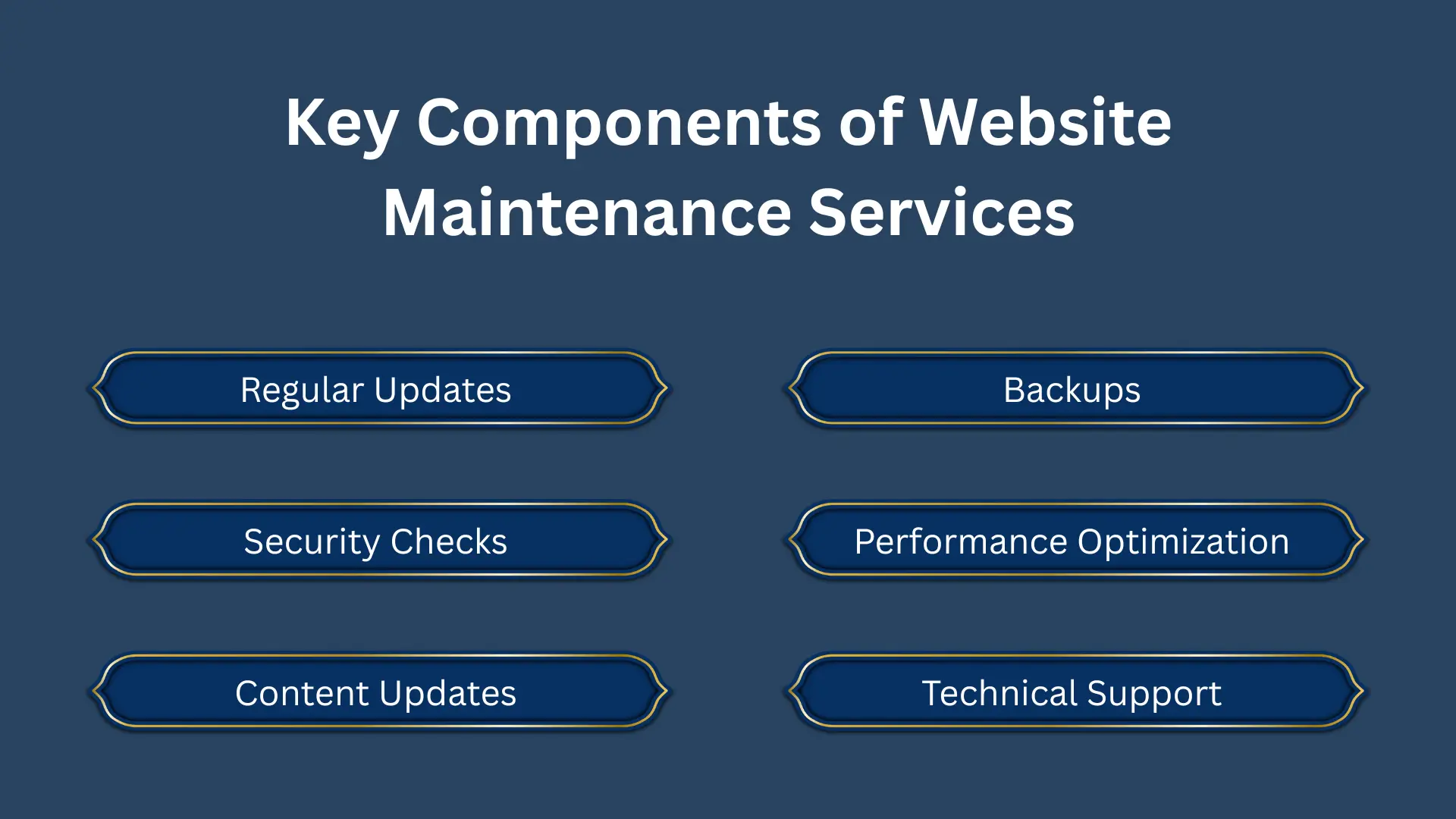
Key Components of Website Maintenance Services
Website Maintenance Services cover many key tasks. These tasks keep a website safe and fast. They also make the site easy to use. Regular maintenance helps the website grow online.
If a website is not cared for, problems can happen. Pages may load slowly. Links can break. Security risks can rise. This can make visitors leave the site quickly.
1. Regular Updates
First, websites need regular updates. Themes must stay updated. Plugins also need updates. In addition, core software requires updates.
Updates fix errors. They also improve features. Most importantly, updates close security gaps. Because of this, regular updates protect your website from attacks.
2. Backups
Next, backups are essential. Backups save your website data. If something goes wrong, you can restore the site quickly.
Most businesses run backups weekly or monthly. At the same time, cloud backups add extra safety. Therefore, backups reduce data loss and stress.
3. Security Checks
Moreover, security is a key component. Hackers try to steal information or damage websites. Regular security checks include:
- Malware scanning
- Firewall updates
- SSL certificate checks
These tasks keep the website safe and trustworthy.
4. Performance Optimization
Additionally, performance optimization improves speed. Fast websites attract more visitors. Optimization tasks include:
- Compressing images
- Cleaning unnecessary files
- Optimizing databases
As a result, users have a smooth browsing experience.
5. Content Updates
Finally, content updates keep the website fresh. New blogs, images, and pages make the site more engaging. They also help in search engine rankings.
6. Technical Support
In fact, websites may face unexpected issues. Maintenance services often provide technical help:
- Troubleshooting errors.
- Fixing downtime problems.
- Assisting with server or hosting issues.
Website Maintenance Services include updates, backups, security checks, performance fixes, content management, and support. All these tasks work together to keep your website fast, safe, and easy to use. Businesses that use these services get better website performance, happier visitors, and lasting success.
Website Maintenance Plans
Website Maintenance Plans help businesses keep their websites running well. Without a plan, sites can have problems like slow speed, broken links, or security risks. That is why having a maintenance plan is very important. It saves time, money, and stress.
Regular Updates
A maintenance plan gives regular updates. These updates include:
- Software updates – keep your system current
- Plugin updates – make sure tools work properly
- Theme updates – improve design and features
Backups
Backups are also important. They protect your website from crashes or data loss. Good plans include:
- Daily or weekly backups – based on your website size
- Easy restore options – so you can recover quickly
Security Checks
Maintenance plans include security checks. They prevent hackers and malware. These checks often cover:
- Malware scans
- Firewall updates
- Login monitoring
Performance Optimization
Fast websites keep visitors happy. Plans usually include:
- Speed tests and improvements
- Image and file compression
- Database cleaning
Custom Plans
Plans can be made to fit your website. Small sites may choose basic plans with updates and backups. Large sites may need full plans with security and speed optimization.
Better User Experience
A good plan also helps your visitors. For example:
- Broken links are fixed fast
- Forms and checkout work smoothly
- Mobile responsiveness is checked
Save Money
Finally, maintenance plans save money over time. Instead of paying for emergency fixes, problems can be prevented. They also build trust. Visitors feel safe on websites that are secure and fast.
With a plan in place, businesses enjoy:
- Better website performance
- Higher security
- Improved user experience
- Long-term cost savings
Therefore, investing in a Website Maintenance Plan is not just a choice. However, it is a smart strategy to keep your online presence strong and reliable.
How Maintenance Ensures Security
Website security is very important for every business. Without proper protection, websites can face hacking, data loss, or malware attacks. Therefore, regular maintenance is key. It helps prevent problems before they happen.
Regular Software Updates
Updating software is very important. Websites use platforms like WordPress, Joomla, or custom systems. They also use plugins, themes, and other tools. If these are not updated:
- Hackers can find weak spots.
- Malware can infect the site.
- Visitors’ data can be in danger.
When updates are done on time:
- Security issues are fixed fast.
- The website stays protected from threats.
- Performance and safety both improve.
Backups and Recovery
Backups are another key part of website security. They save all your data, files, and databases. If a hacker attacks or the system crashes, backups let you restore everything. Without them:
- Data can be lost forever.
- Business may stop working.
- Visitors may lose trust in your site.
Regular backups make recovery quick and simple. This keeps your website safe and running smoothly.
Monitoring and Malware Scans
Moreover, monitoring the website regularly helps detect issues early. Security tools can scan for malware, suspicious activities, or unauthorized logins.
They can also alert you when something unusual happens. Therefore:
- Threats are detected before damage occurs.
- Unauthorized access is stopped immediately.
- Visitors’ trust in your site is maintained.
Strong Passwords and User Access
Finally, maintenance includes managing user accounts and passwords. Weak passwords or too many users increase risk. By updating passwords and controlling access:
- Only authorized users can make changes.
- Hackers find it harder to break in.
- Overall, website security improves significantly.
Technical Support
Technical support is a key part of Website Maintenance Services. It helps fix problems quickly and keeps the website running smoothly.
Troubleshooting Errors
Websites can face errors anytime. Technical support helps by:
- Finding the cause of errors
- Applying fixes step by step
- Testing to make sure everything works
This ensures users do not face interruptions while visiting your site.
Fixing Bugs
Bugs are tiny problems in a website’s code. Maintenance services find and fix them. This keeps the website running smoothly and stops bigger issues from happening.
Solving Downtime Problems
Downtime can lower visitors and sales. Technical support fixes downtime by:
- Checking the server and hosting
- Restoring backup files
- Watching uptime all the time
24/7 Support
Some maintenance services work all day and night. This way, any problem is fixed right away, no matter the hour.
If you want, I can also make it even more
WordPress Website Maintenance
WordPress websites need regular care. Proper maintenance helps them run fast, stay safe, and stay error-free. Small problems can grow into big ones if ignored.
Why Plugin and Theme Updates Matter
Plugins and themes are the tools that make WordPress work. Updates fix bugs and add new features. If you skip updates, your website can slow down or get hacked.
Database Optimization
A messy database can make your site slow. Too much extra data can cause pages to load slowly. Maintenance includes:
- Removing unnecessary data
- Optimizing tables
- Boosting loading speed
A clean and optimized database keeps your website smooth and easy to use.
WordPress-Specific Security Measures
WordPress sites are often attacked by hackers. That is why security is very important. Some key steps are:
- Limit login attempts
- Install security plugins
- Watch for malware
Doing these steps helps protect your website and lowers the risk of attacks.
Update Core Files
WordPress core files need updates often. These updates fix problems and make the site faster. They also help your plugins and themes work well. Keeping WordPress updated is very important for both security and speed.
Website Maintenance Costs
The cost of maintaining a website depends on a few key things.
Factors That Affect Cost
- Website size and traffic
- Type of maintenance plan (basic, standard, or advanced)
- Technical complexity and special features
Hourly Maintenance Rates
Some providers charge by the hour. Rates usually range from $50 to $150 per hour. The exact cost depends on the tasks.
Why Maintenance Is Worth It
Even though maintenance costs money, it saves more in the long run. Fixing small problems early stops big issues. This prevents costly repairs and website downtime.
Benefits of Regular Maintenance
- Better Security: Protects your website from hackers and malware.
- Improved User Experience: Keeps your website fast and smooth.
- Higher SEO Rankings: Search engines like well-maintained sites.
- Less Downtime: Your website stays online without interruptions.
- Steady Growth: Helps increase traffic, engagement, and conversions.
Guest Posting Solution & Content Maintenance
Content maintenance is important for website growth. Guest posting solution is one way to keep content active and grow your site’s authority.
- Bring more visitors to your website
- Builds your brand’s credibility
- Helps SEO with backlinks
It also supports your site’s technical maintenance by increasing visibility and reach.
How to Choose the Right Maintenance Provider
Choosing the right provider is essential.
Experience and Expertise
First, check how long the company has been doing website maintenance. Experienced providers fix problems faster. Their skills help your website run smoothly. They also prevent the same issues from happening again.
Service Inclusions
Next, make sure the plan covers updates, security, backups, and technical support. A complete plan lowers the risk of downtime. It also keeps your website safe and working properly.
Customer Support
Good providers give quick and 24/7 support for emergencies. You can get help anytime you need it. Fast support stops small problems from becoming big ones.
Pricing
Finally, look at pricing compared to services. Very cheap options may not give good quality. Choose a provider that balances cost and value for the best results.
Conclusion
Website maintenance is essential. It protects your site and keeps it running well. It also helps your business grow.
Hiring professionals for maintenance brings long-term benefits. These include better security and faster performance. Every website owner should see maintenance as key to online success.
FAQs
What do website maintenance services include?
Website maintenance includes updates, backups, security checks, technical support, and performance optimization. Moreover, these tasks help your website run smoothly and stay reliable.
How often should a website be maintained?
A website should be checked at least once a month. However, busy sites, like e-commerce stores, may need weekly or even daily maintenance to work properly.
What happens if a website is not maintained?
If a website is not maintained, several problems can occur. First, it can slow down, have errors, and face security problems. As a result, this can make visitors leave and create a poor user experience.