Grey Hat SEO: The Risky Mix Between Safe and Spammy Tactics
Grey Hat SEO sits in a unique space between what is considered “safe” and what is seen as “risky” in the SEO world. It exists between the approved strategies of White Hat SEO and the dangerous shortcuts of Black Hat SEO. Because of this, many marketers see it as the middle path. It promises faster results, yet it also carries the possibility of penalties.
However, before using this approach, it is important to understand what it truly means. When you learn how Grey Hat SEO works, you can make smarter decisions. You can also decide whether the potential gains outweigh the risks.
In this guide, you will learn what Grey Hat SEO is, how it works, its benefits, the techniques involved, and the possible dangers you need to watch for. You will also discover ways to use it more safely without hurting your website’s long-term growth.
What Is Grey Hat SEO?
Grey Hat SEO refers to optimization practices that are not directly against search engine rules but still push boundaries. These methods sit in the “gray zone.” They can help you rank faster, yet if used too aggressively, they may trigger penalties.
Unlike White Hat SEO, which follows search engine guidelines strictly, Grey Hat SEO uses strategies that stretch those guidelines. As a result, you might see improvements quickly. However, those gains are not always stable.
Therefore, when using Grey Hat SEO, you need balance and caution. If done responsibly, it can offer benefits without major consequences. Yet, if you rely on it too heavily, it can harm your site in the long run.
Is Grey Hat SEO Safe?
Grey Hat SEO is safe only when you use it sparingly. While it does not break the rules, it gets close to them. This is why search engines sometimes treat these techniques as warning signs.
Because of this, many marketers use Grey Hat SEO only when they want faster results without taking the extreme risks of Black Hat SEO. However, even then, you must use judgment and moderation. A small mistake can turn a harmless tactic into a penalty trigger.
In short, the safety of Grey Hat SEO depends on how well you manage it. If you use it carefully, it can help you. If you overdo it, it can hurt you.
Examples of Grey Hat SEO Techniques
Grey Hat SEO includes many tactics that feel edgy but not illegal. These methods may help you grow your online presence quickly. Still, each one has potential downsides. Here are some common examples:
- Buying aged or expired domains for their authority
- Using clickbait-style meta descriptions
- Slightly spinning or repurposing content
- Using private blog networks (PBNs) carefully
- Manipulating internal linking patterns
- Adding keywords more often than usual, but in a controlled way
Each of these methods can improve rankings. However, they also demand careful monitoring so you do not cross into Black Hat territory.
Short-Term Benefits of Grey Hat SEO
Even though Grey Hat SEO is not the safest approach for long-term growth, it does offer several short-term advantages. Many businesses rely on these benefits when they want quicker wins or when competition is extremely high.
1. Faster Results Than White Hat SEO
Grey Hat SEO often delivers results much faster than White Hat techniques. Because it pushes boundaries, you can climb search rankings quickly. This is appealing for new websites or competitive niches.
2. Increased Flexibility
Grey Hat SEO gives you more freedom to experiment. You are not limited by strict guidelines. As a result, you can change strategies quickly and adjust to trends faster.
3. Competitive Edge
If your competitors follow only White Hat SEO, Grey Hat techniques can help you jump ahead. You can gain visibility faster and capture market attention before others catch up.
4. Cost-Effective Solutions
Some Grey Hat methods cost less than traditional strategies. For instance, repurposing old content or using well-chosen PBN links can be cheaper than producing large amounts of new content or running paid ads.
5. Better Traffic Generation
Eye-catching titles, optimized descriptions, and creative tweaks can increase click-through rates. More clicks often lead to more engagement and higher traffic.
6. Experimentation and Learning
Grey Hat SEO lets you test ideas without committing fully. This helps you learn what works and what doesn’t. Later, you can apply these insights to your White Hat strategy.
What Are Some Grey Hat SEO Techniques?
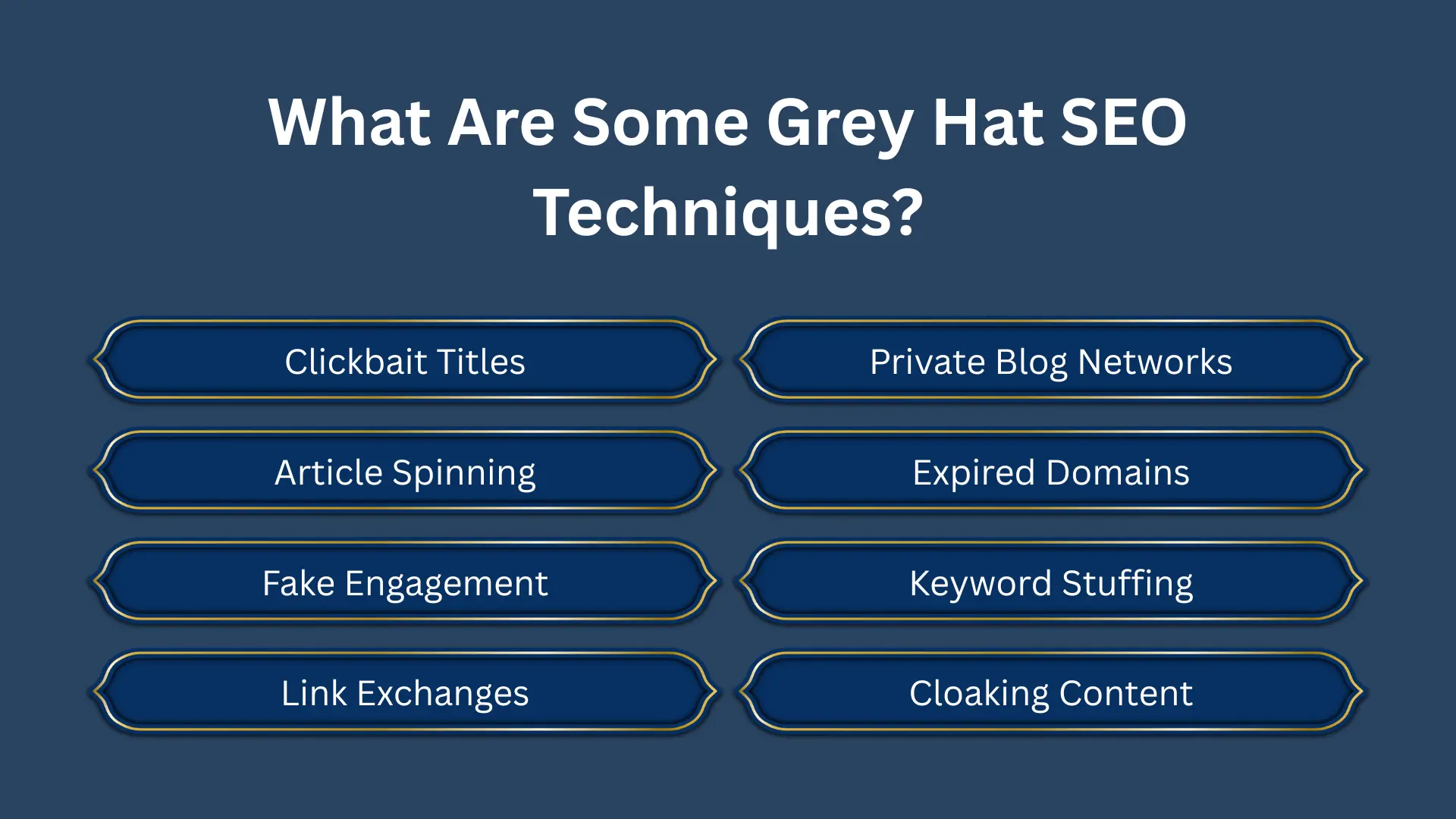
Grey Hat SEO includes many methods that improve search visibility. Although none of them are outright illegal, some may raise concerns if used poorly. Therefore, use them with caution and always watch how search engines respond.
Below are ten popular Grey Hat SEO tactics many marketers use today.
1. Clickbait Titles and Meta Descriptions
Clickbait can increase clicks by creating curiosity. Higher engagement often signals quality to search engines. However, you must still deliver what you promise. If you mislead visitors, your bounce rate may rise. That can hurt your rankings.
2. Private Blog Networks (PBNs)
PBNs are groups of sites created to link back to your main site. They can increase authority temporarily. However, search engines have become smarter at detecting them. Because of this, you must use PBNs very carefully, especially when building links.
3. Article Spinning
Article spinning involves reworking existing content so it appears unique. While tools help, the output often sounds artificial. Therefore, manual editing is important. When you combine automated and human input, the content becomes clearer and more natural.
4. Buying Expired Domains
Acquiring expired domains with existing backlinks can give your site a quick SEO boost. However, not all expired domains are valuable.
Therefore, thoroughly check domain history, relevancy, and spam scores before purchase.
5. Click Fraud or Fake Engagement
Some marketers artificially increase clicks, social shares, or engagement to trick algorithms.
Although this can provide short-term ranking benefits, search engines are increasingly detecting fake signals.
Hence, this technique carries significant risk.
6. Keyword Stuffing in Moderation
Extreme keyword stuffing is a clear violation. Yet, repeating keywords moderately can improve relevance. The key is to stay natural. Use keywords in headings, subheadings, and the body, but avoid sounding robotic.
7. Link Exchanges
Mutual backlinking agreements can increase domain authority. However, overdoing it can appear manipulative.
So, focus on exchanging links with relevant, reputable sites to retain SEO value while avoiding penalties.
8. Cloaking Content
Cloaking involves showing different content to users and search engines. This is extremely risky. Some marketers use it for device-specific needs or regional targeting. However, you must handle it carefully to avoid penalties.
9. Automated Content Generation
AI or software-generated content can save time and produce scalable material. Yet, it often lacks nuance and depth.
Therefore, combining automated content with human editing ensures quality while boosting efficiency.
10. Guest Posting with Hidden Links
Guest posting is safe, but hiding your links or placing them in irrelevant content looks suspicious. It is important to keep placements natural and helpful.
Thus, focus on relevant placements that offer value to readers and maintain ethical boundaries. It is better to work with a trusted Guest Posting Company for clean, ethical placements.
Risks and Ethical Concerns of Grey Hat SEO
Although Grey Hat SEO offers benefits, it also brings several risks. Understanding these risks helps you decide whether it fits your long-term strategy.
1. Penalties
Search engines may penalize your site if any technique seems manipulative. Once penalized, recovery can take months.
2. Reputation Damage
Visitors may view aggressive tactics as spammy. When this happens, trust falls and conversion rates drop.
3. Unstable Results
Grey Hat results often change quickly. Short-term success does not always turn into long-term stability.
4. Ethical Issues
Some marketers feel uncomfortable using borderline strategies. Ethical concerns may affect your brand identity and public perception.
This is more similar to black hat SEO shortcuts that can damage your rankings.
Grey Hat SEO Best Practices to Minimize Risk
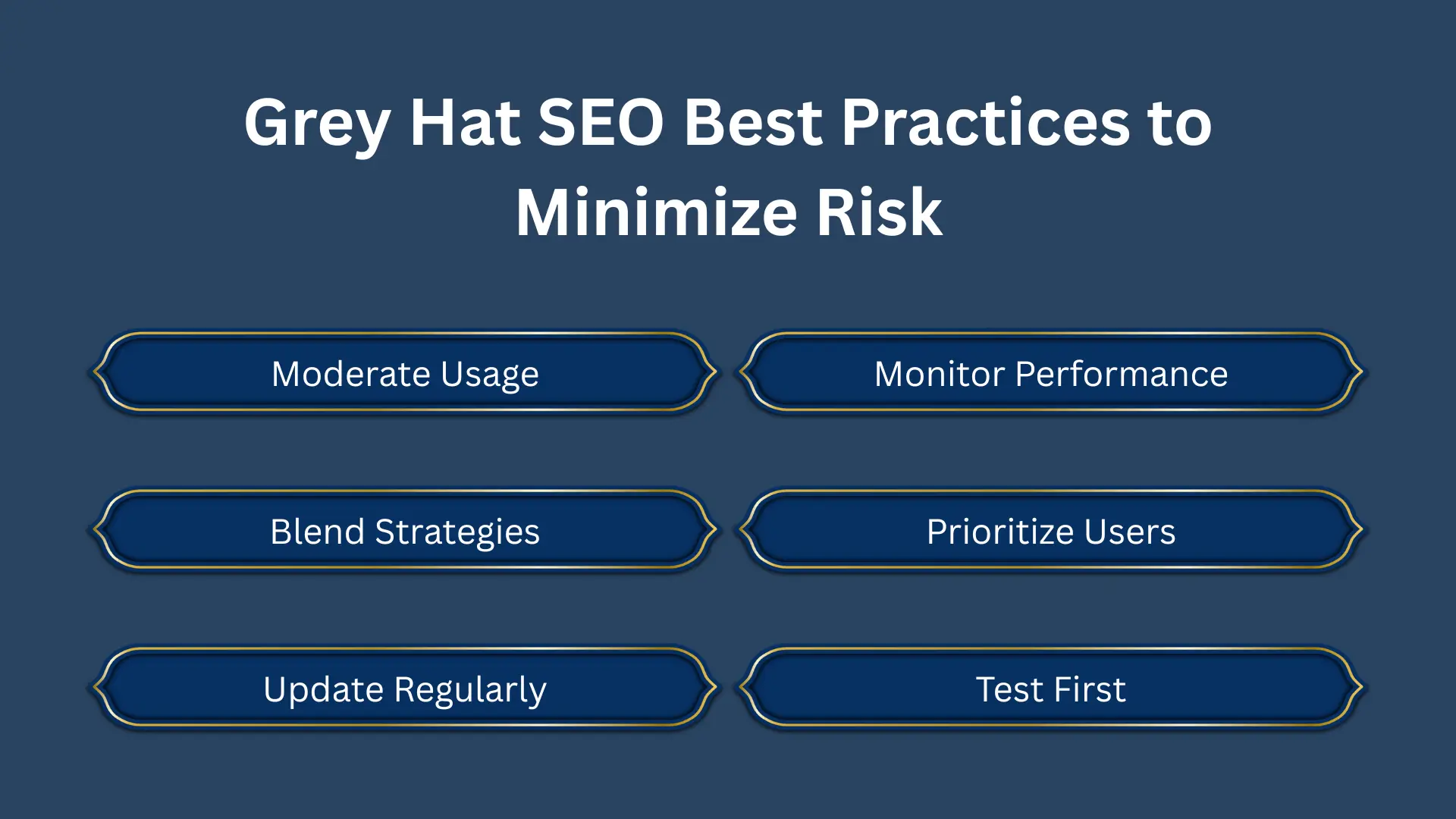
If you choose to use Grey Hat SEO, you must follow a few guidelines to stay safe.
1. Use Every Tactic in Moderation
Small steps are better than extreme actions. When you use a tactic too often, it becomes unsafe.
2. Monitor Performance Regularly
Always track rankings, bounce rate, click-through rate, and traffic. These signals help you see early warnings.
3. Blend Grey Hat and White Hat SEO
The safest strategy is a balanced one. Use Grey Hat techniques lightly while relying on strong White Hat practices.
4. Focus on User Value
Even when pushing boundaries, make value your top priority. Search engines reward helpful content.
5. Stay Updated With Algorithm Changes
Google updates rules often. When you know what changed, you can adapt quickly.
6. Test Before Scaling
Try new techniques on smaller pages first. If they work well, then consider applying them more broadly.
Conclusion
A successful SEO strategy always depends on ethics, value, and long-term planning. Still, understanding Grey Hat SEO helps you make smarter decisions. When you know the benefits and risks, you can find the right balance.
While Grey Hat methods can bring faster results, they require careful use. It is important to monitor your site, improve your content, and make adjustments before problems appear.
If you want even better results, review your current SEO plan and strengthen weak areas. And if you need expert support, don’t hesitate to reach out. With the right guidance, you can improve your traffic safely and confidently.
FAQs
Is it illegal to use Grey Hat SEO techniques?
No, Grey Hat SEO is not illegal. It doesn’t break laws but may violate search engine guidelines if overdone.
Can Grey Hat SEO be a long-term strategy?
It can, but it’s riskier for long-term stability. Many successful marketers use a mix of White and Grey Hat tactics for sustainable growth.
How can I transition from Grey Hat to White Hat SEO?
Start by improving content quality, building natural links, and focusing on user experience. Also, remove risky tactics slowly while tracking performance.